 how-to
7 Steps to Choose a Refrigerator for a Small Apartment in 2026
Last Updated: October 24, 2026
Quick Summary
To choose a small apartment refrigerator, measure your opening's width, height and depth first, then match capacity to how you cook: about 4 to 6 cubic feet for one person who eats out, or 7 to 10 cubic feet for one or two people cooking most nights. Confirm door clearance, ventilation, freezer type, noise and energy use before buying.
- Measure the alcove at its tightest point and subtract an inch of breathing room on each side.
- A mini fridge suits drinks and snacks, while an apartment-size refrigerator has a real freezer compartment.
- Two people who bulk shop or meal prep need about 10 to 12 cubic feet of capacity.
- Never push a refrigerator flush against a wall or into a sealed cabinet, which blocks vents.
- Check your lease rules, grounded outlet and disposal plan before delivery day.
Table of Contents
- Start With a Tape Measure: Small Refrigerator Dimensions That Actually Fit
- Mini Fridge vs. Apartment-Size Refrigerator: Which One Fits Your Life
- Refrigerator Capacity for One or Two People: Cubic Feet That Make Sense
- Refrigerator Door Clearance and Ventilation: The Fit Mistakes to Avoid
- Freezer Type and Temperature Control: What Matters in a Compact Design
- Noise Level, Energy Efficiency, and Total Cost of Ownership
- Lease Rules, Electrical Limits, and Disposal Before You Buy
- Order Your Small Apartment Refrigerator From Fast Appliances LLC
- Frequently Asked Questions
Start With a Tape Measure: Small Refrigerator Dimensions That Actually Fit
The most common reason a small apartment refrigerator gets returned is not a defect. It is a measurement error.
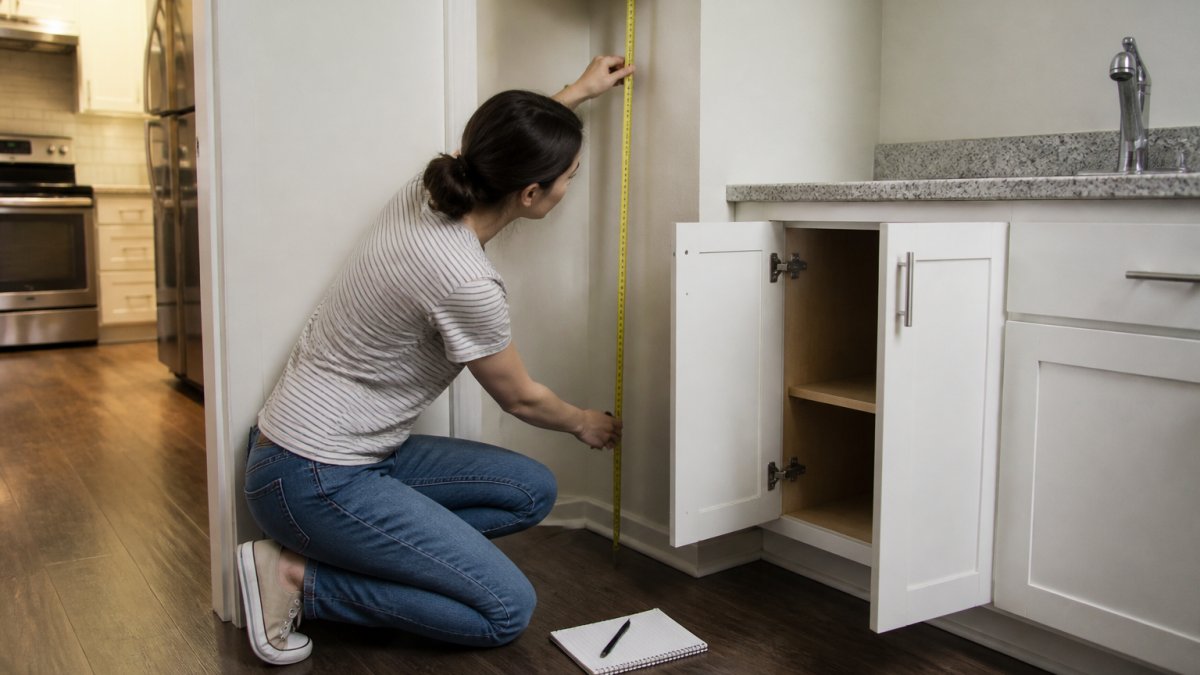
At Fast Appliances LLC, we see this constantly with online orders: a shopper falls for a compact design, then discovers the door swing hits the counter or the unit will not clear the stairwell.
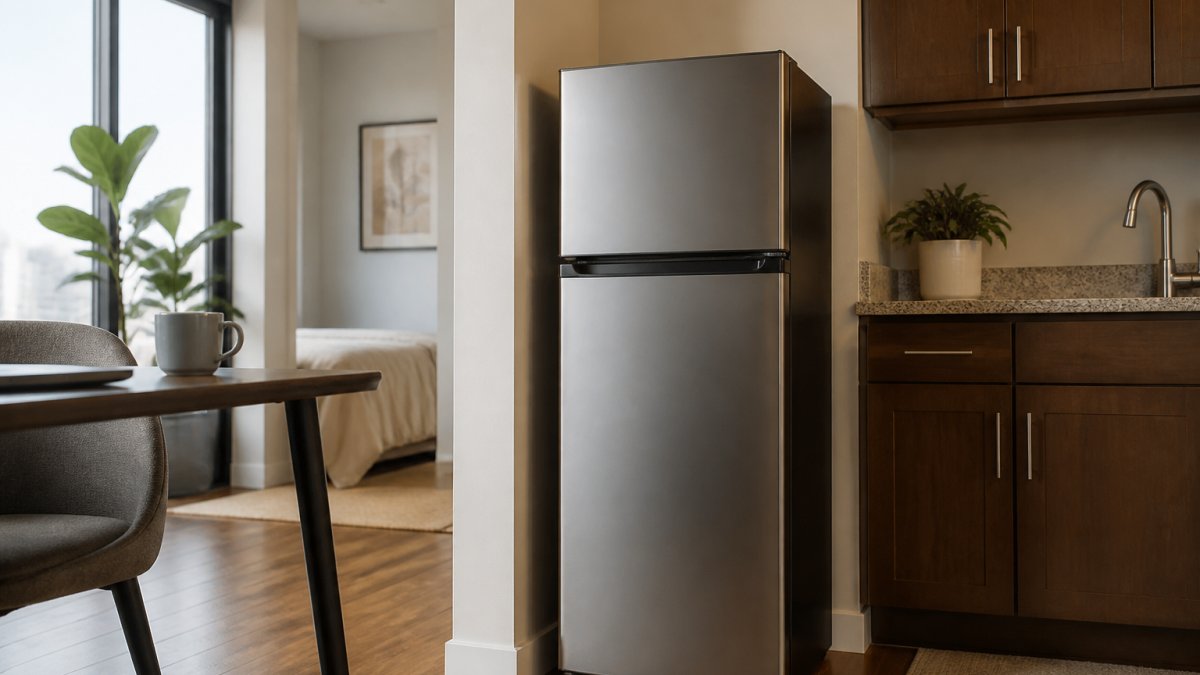
Small refrigerator dimensions vary widely, but apartment-size models typically run narrower than full-size units, often in the low-to-mid twenties in inches of width. Mini fridges are narrower still.
How to Measure Your Apartment Kitchen and Delivery Path
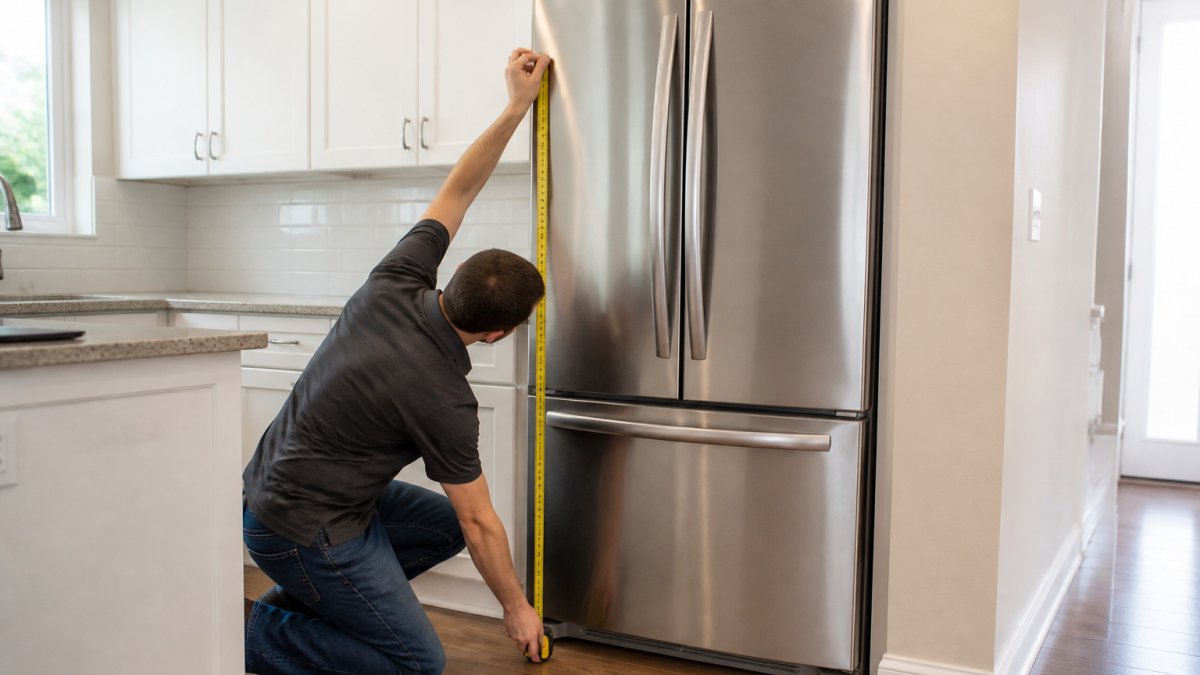
Measure the alcove at its tightest point, not the widest, cabinets, baseboards, and outlet covers steal fractions of an inch. Note width, height, and depth, then subtract an inch of breathing room on each side.
Then walk the delivery path: measure every doorway, hallway turn, stairwell, and elevator opening. For a step-by-step checklist covering space, doors, and door swing, use our measuring guide for a new refrigerator.
Mini Fridge vs. Apartment-Size Refrigerator: Which One Fits Your Life
A mini fridge is a compact refrigerator built for drinks, snacks, and short-term food storage.
A mini fridge suits a dorm room, office, or home bar for drinks and snacks. An apartment-size refrigerator suits anyone cooking real meals who needs a freezer that holds more than an ice tray.
For deeper guidance on which styles and widths work in tight layouts, see our breakdown of refrigerator styles for narrow kitchen layouts.
| Option | Best For | Trade-Off |
|---|---|---|
| Mini fridge | Dorms, offices, bars, drinks and snacks | Tiny freezer, limited fresh food space |
| Apartment-size refrigerator | One or two people cooking regularly | Needs more clearance and a dedicated outlet |
| Full-size refrigerator | Families, bulk shopping | Often will not fit small kitchens or doorways |
Refrigerator Capacity for One or Two People: Cubic Feet That Make Sense
Refrigerator capacity is measured in cubic feet, and the right number depends less on square footage than on how you shop, cook, and freeze. The common mistake is treating every compact refrigerator as interchangeable: a 4.5-cubic-foot mini fridge and a 10-cubic-foot apartment-size unit support completely different eating habits.
Match Cubic Feet to Household Size and Cooking Style
Use these ranges as a starting point, then adjust for your routine:
| Household and habit | Practical capacity range | What it looks like in practice |
|---|---|---|
| One person, eats out most nights, shops every few days | About 4 to 6 cubic feet | Mini fridge or small compact unit; drinks, snacks, a few fresh items, ice tray freezer |
| One or two people, cooks most nights, shops weekly | About 7 to 10 cubic feet | Apartment-size refrigerator with a real freezer compartment and a produce drawer |
| Two people, bulk shopping or frequent meal prep | About 10 to 12 cubic feet | Larger apartment-size or narrow full-depth unit; room for a stockpot and frozen portions |
| Three or more, or anyone cooking daily from scratch | About 12 cubic feet and up | Full-size or narrow full-size refrigerator, if the opening and delivery path allow |
Many apartment dwellers buy a mini fridge for a first place, then upgrade within a year because the freezer cannot hold a week of leftovers. If you cook at all, lean toward the upper end of your range; if you eat most meals elsewhere, a mini fridge is the honest choice.
Full-Size Apartment Refrigerators vs. Mini Fridges
Most shopping content lumps all compact refrigerators together. It should not. A full-size apartment refrigerator, often 24 to 30 inches wide and 60 to 70 inches tall, gives you a separate freezer, adjustable shelves, and door bins that hold more than a few cans. A mini fridge is built for drinks, snacks, and short-term storage, and its ice-box compartment is not a real freezer.
The decision comes down to three questions:
- Do you freeze food or only ice cubes? If you freeze portions, you need a true freezer compartment.
- Do you buy more than a few days of fresh food at once? If yes, a mini fridge will frustrate you.
- Does your opening and delivery path allow a taller, deeper unit? Measure before you fall in love with a full-size apartment model.
Interior Layout, Adjustable Shelves, and Door Storage
Capacity on the spec sheet is not the same as usable storage space. Adjustable shelves let you reconfigure for tall bottles or a stockpot, and door storage bins free up shelf space for food. A freezer compartment that is a separate box with its own door beats a tiny ice box every time, it holds temperature better and keeps frozen and fresh air from mixing.
Check three things before you commit:
- Whether shelves adjust or are fixed, and whether at least one shelf can be removed for tall items
- How much door storage the model offers, and whether the bins are deep enough for a gallon jug
- Whether the interior layout leaves room for a milk jug, a produce drawer, and a leftover container at the same time
For deeper guidance on which styles and widths work in tight layouts, see our breakdown of refrigerator styles for narrow kitchen layouts.
Refrigerator Door Clearance and Ventilation: The Fit Mistakes to Avoid
Refrigerator door clearance is the space the door needs to swing open fully, and it is the fit mistake we see most often. A freestanding unit needs room for the door to open past 90 degrees so you can pull out drawers.
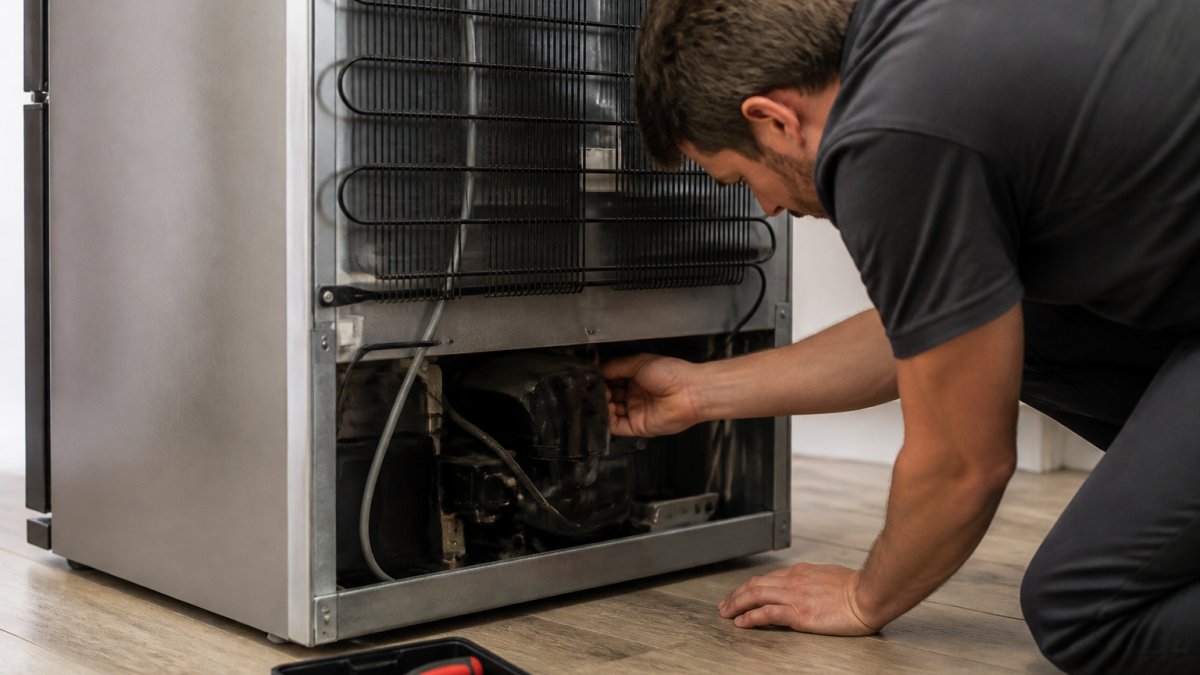
Ventilation matters just as much. Compact refrigerators need airflow around the compressor, usually at the back and sides. If yours already runs warm, our guide to troubleshooting refrigerator ventilation problems walks through the fixes.
Freezer Type and Temperature Control: What Matters in a Compact Design
Temperature control separates a fridge that keeps food safe from one that freezes your lettuce.
On freezer type, compact designs usually offer a small top freezer or an ice-box compartment. A true top freezer holds more and stays colder. An ice box is fine for ice cubes and a frozen dinner. Match the freezer type to how much you actually freeze.
Noise Level, Energy Efficiency, and Total Cost of Ownership
Noise level is the sleeper issue in apartment living, and it is where a cheap refrigerator becomes expensive. A loud compressor hums through thin walls and small rooms, and near a bedroom wall that hum becomes the sound of your home. Energy efficiency drives your operating cost, and together with purchase price, maintenance, and lifespan it makes up the total cost of ownership.
Apartment-Specific Noise and Vibration
Refrigerator noise comes from three sources: the compressor cycling, the evaporator fan moving air, and vibration through the floor or cabinet. In a house that noise dissipates; in an apartment it reflects off hard floors and shared walls.
A few practical rules:
- Check the decibel rating on the spec sheet. Quieter compact models are often rated in the low 30s to low 40s, while standard units run higher. Read reviews for vibration complaints, a unit that rattles on a wood floor is worse than one that simply hums.
- Place the refrigerator away from shared walls and bedroom walls when the layout allows. A few feet of distance and a cabinet between the fridge and the wall make a real difference.
- Level the unit and check that it does not rock. Most refrigerators have adjustable leveling feet, and a unit that sits flat vibrates less.
Energy Efficiency and Operating Cost
Energy efficiency is listed on the yellow EnergyGuide label required on most new refrigerators, showing estimated annual electricity use in kilowatt-hours and estimated annual cost based on national average prices.
To estimate your own operating cost, multiply the label's annual kilowatt-hour figure by your local electricity rate, use your own bill rather than a national average. A compact refrigerator generally uses less electricity than a full-size unit, but an old, inefficient mini fridge can cost more to run than a modern apartment-size model.
Total Cost of Ownership
Total cost of ownership is purchase price plus years of electricity and maintenance, minus avoided food waste and avoided replacement. Weigh these factors:
- Purchase price: the sticker price, plus delivery and any haul-away fee.
- Electricity: annual kilowatt-hours from the EnergyGuide label times your rate, times expected years of service.
- Maintenance: coil cleaning and occasional gasket replacement. A fridge that runs hot because of poor ventilation needs more of both.
For a full breakdown of efficiency and long-term running costs, see our guide to buying an energy-efficient refrigerator online. Compare models on annual energy use and decibel rating together, the quietest, most efficient model usually costs least to live with.
Lease Rules, Electrical Limits, and Disposal Before You Buy
Your lease may limit what you can install. Check rules on appliance additions, water lines for ice makers, and removal at move-out. A freestanding unit is usually fine; anything requiring plumbing or cabinet modification often is not.
Electrical limits matter too. A refrigerator needs its own grounded outlet, and older apartment wiring may not handle a large unit on a shared circuit. Confirm the outlet is grounded and not already loaded.
Order Your Small Apartment Refrigerator From Fast Appliances LLC
Once you have your measurements, capacity target, and clearance numbers, buying gets simple. Fast Appliances LLC offers a wide variety of home appliances, including refrigerators, so you can find a unit that matches the space you measured.
Before delivery day, prep the space: clear the path, confirm the outlet, and have the old unit ready to go. Our guide to preparing your home for appliance delivery covers the practical steps so the new fridge arrives and installs without problems.
Frequently Asked Questions
What size refrigerator is best for a small apartment?
Most small apartment kitchens work best with a refrigerator between 10 and 18 cubic feet, provided the unit fits your measured alcove with room for door swing and airflow. Measure the width, height, and depth of the opening, then subtract clearance space before you shop. For one or two people, a top-freezer model in that range usually covers a week of groceries without crowding the kitchen.
Is a mini fridge big enough for everyday use?
A mini fridge works for drinks, snacks, and short stays, but most models hold under 6 cubic feet, which is tight for full-time cooking and fresh produce. If you cook at home regularly, an apartment-size refrigerator gives you a real freezer compartment, adjustable shelves, and steadier temperature control. A mini fridge fits best as a secondary unit in a dorm room, office, or home bar.
How do you measure a space for a refrigerator?
Measure the width, height, and depth of the opening at its narrowest points, then check the delivery path through hallways, stairwells, and doorways. Add clearance for the door swing and ventilation at the back and sides, since compact units still need airflow to cool efficiently. Write down the numbers and compare them against the listed dimensions of any small apartment refrigerator before ordering.
What refrigerator features matter most in a small apartment?
Prioritize accurate dimensions, a freezer type that suits your cooking, adjustable shelves, and a noise level you can live with in a small floor plan. Energy efficiency matters too, because a refrigerator runs all day and shows up on every power bill. Temperature consistency and reliable door seals round out the list, and Fast Appliances LLC can help you compare models before you order.
Choosing a refrigerator for a small apartment comes down to measuring before you shop, then matching capacity, clearance, and noise to how you actually live. Fast Appliances LLC makes that final step easy with a broad online selection of refrigerators and other essential appliances, convenient ordering, and delivery to your door. Get started with Fast Appliances LLC and find a small apartment refrigerator that fits your space the first time.