 how-to
Measuring for a French Door Refrigerator: 2026 Guide
Last Updated: October 23, 2026
Quick Summary
To measure for a french door refrigerator, record the opening's width, height, and depth at their narrowest points, then compare those numbers to the exact model's spec sheet and installation guide. Add the model's required clearances for airflow, hinge swing, and the freezer drawer, plus the space needed with the doors open.
- Measure width at the top, middle, and bottom, and use the smallest number.
- Pull clearance numbers from the installation guide for your exact model number, not a generic chart.
- Open the door to 90 degrees and measure from the hinge cover to the nearest obstruction.
- The freezer drawer pulls straight out, usually 18 to 24 inches, so keep that space clear.
- Add 2 inches to your widest appliance dimension for hands and padding.
Table of Contents
- Step 1: Measure the Opening Width, Height, and Depth
- Step 2: Take Refrigerator Opening Measurements at Multiple Points
- Step 3: Plan for Refrigerator Clearance Requirements
- Step 4: Account for Refrigerator Depth With Doors Open
- Step 5: Map Your Refrigerator Delivery Path Measurements
- Step 6: Compare the Opening to the Appliance Specs
- Frequently Asked Questions
Step 1: Measure the Opening Width, Height, and Depth
Measuring for a French door refrigerator installation starts with three numbers: width, height, and depth. Get these wrong and the fridge won't fit, the doors won't swing, or it will sit proud of your counters.
A French door refrigerator is a fridge with two side-by-side doors on top and a freezer drawer below. That layout changes what you need to measure compared with a standard top-freezer unit.
Width, Height, and Depth: Where to Place the Tape
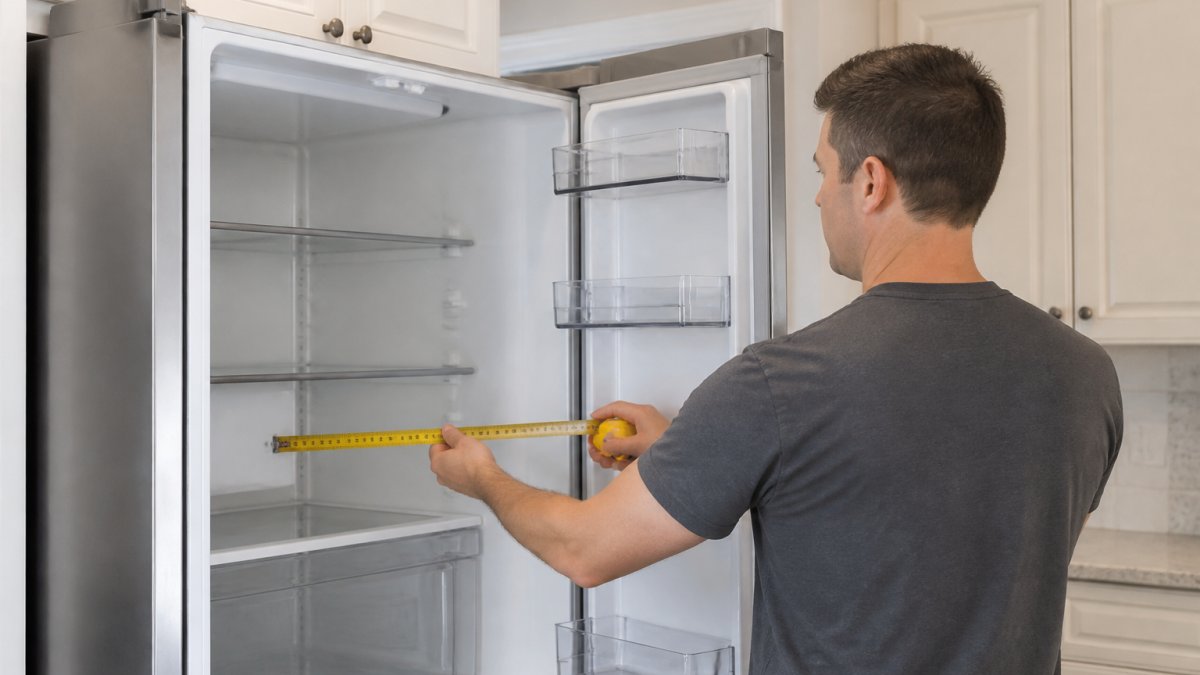
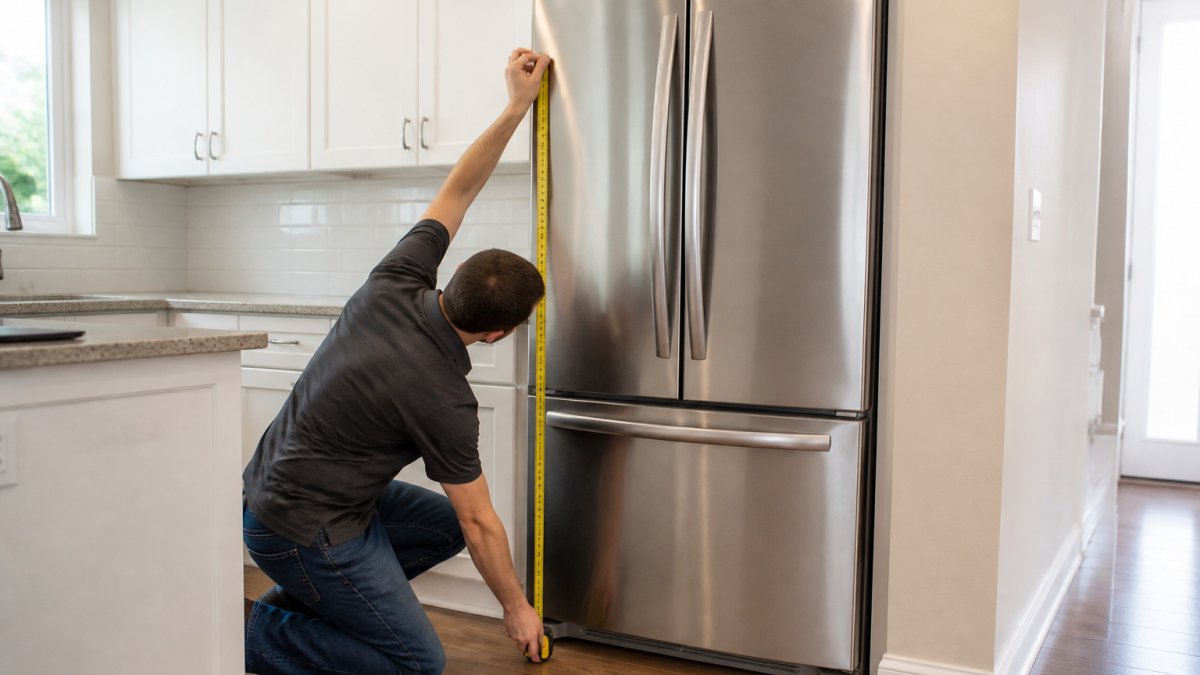
Run your tape across the opening in three places. Width goes wall to wall or cabinet to cabinet at the narrowest point. Height runs floor to the underside of the upper cabinet. Depth goes from the back wall to the front edge of your countertop.
Write each number down in inches. Don't round down. A quarter inch matters when a fridge is 36 inches wide and the opening is 35 3/4.
Step 2: Take Refrigerator Opening Measurements at Multiple Points
One measurement is not enough. Openings are rarely square. Walls bow, floors slope, and cabinet installers are human.
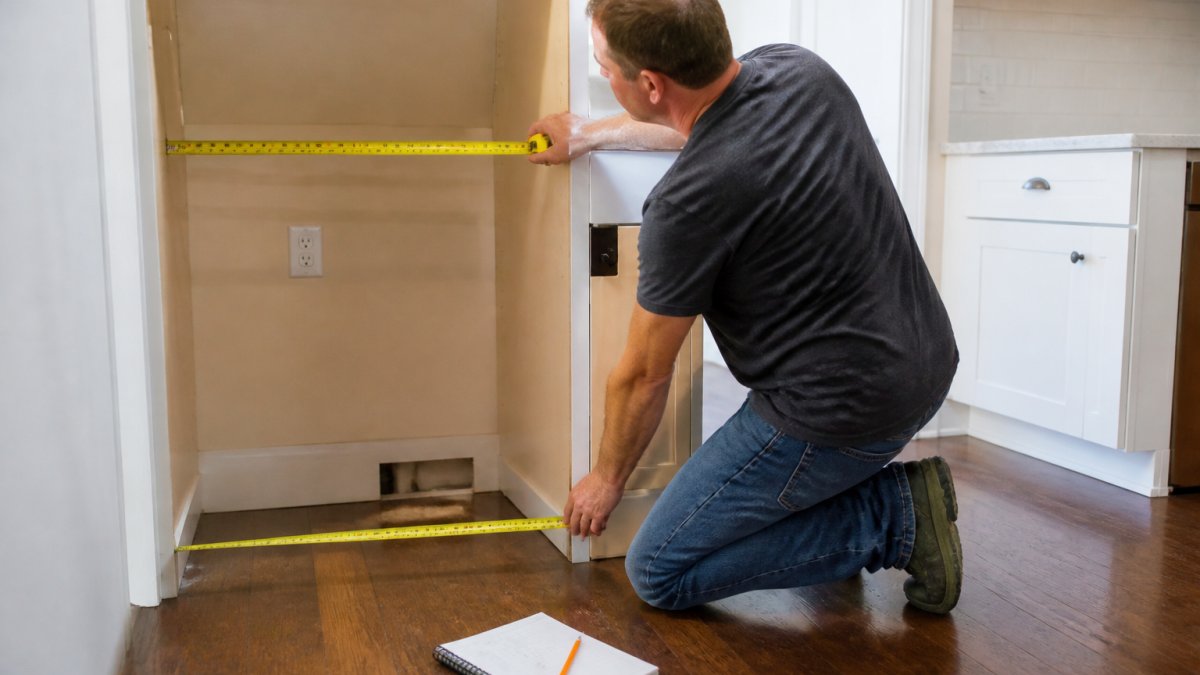
Take refrigerator opening measurements at the top, middle, and bottom for width. Do the same for height at the left, center, and right.
Your smallest number is the one that counts.
Check for obstructions too. Baseboards, trim, outlet covers, and door casings all eat into usable space.
Step 3: Plan for Refrigerator Clearance Requirements
Refrigerator clearance requirements cover the gaps you leave around the unit for airflow, door swing, and installation. Skip them and you get a fridge that overheats, a door that won't open, or a unit you can't slide into place.
Pull the Clearances From the Model's Installation Guide, Not a Generic Chart
Most buying guides give you a single set of clearance numbers as if every French door refrigerator were built the same. They are not. Side, top, rear, hinge-side, and water-line clearances vary by model, by cabinet style, and by whether the unit is standard-depth or counter-depth. The only number that matters is the one printed in the installation guide for the exact model number you are buying.
Here is how to find and use it:
- Locate the installation guide, not the spec sheet. The spec sheet lists overall dimensions. The installation guide lists the required clearances. Search the manufacturer's site for the model number plus "installation guide" or "owner's manual."
- Find the clearance diagram. Most guides include a top-down and side-view drawing with letters or arrows for side, top, rear, and hinge clearance. Copy those numbers onto your measurement sheet.
- Check the hinge-side note. French door models often require more clearance on the hinge side than the handle side so the door can swing past 90 degrees. Some guides specify a minimum wall-to-hinge distance; others require a filler strip or extended hinge cover.
- Check the water-line and electrical note. The guide will state whether the water line and outlet must sit outside the refrigerator's footprint or can sit behind it. If they must sit outside, you need adjacent cabinet or wall space, not just rear clearance.
- Check the anti-tip and leveling note. Some guides require the rear of the unit to be slightly higher than the front for door self-closing. That changes how much rear clearance you actually have.
A common pattern across major brands is roughly 1/8 to 1/2 inch on each side for a slide-in fit, 1 inch or more at the top for ventilation, and 1 to 2 inches at the rear for the water line and airflow. Treat those as starting points only. If the guide for your model says 1/4 inch on each side and 2 inches at the rear, those are your numbers.
French Door Hinge and Drawer Geometry
French door refrigerators need clearance on both hinge sides because each door folds open from the center.
Measure the hinge-side clearance with the door open, not closed. A practical check is to open the door to 90 degrees and measure from the hinge cover to the nearest obstruction.
The freezer drawer adds a second geometry problem. The drawer pulls straight out, usually 18 to 24 inches, and the drawer front often sits proud of the doors when closed.
Plan the Water Line and Outlet Before Delivery
The water line and outlet are part of the clearance plan, not an afterthought. If the shutoff valve or outlet sits directly behind the refrigerator, it eats into your rear clearance and can prevent the unit from reaching its intended position.
A common approach is to place the outlet and shutoff valve in the adjacent cabinet or in the wall to the side of the refrigerator, so the unit can slide back until the anti-tip bracket or rear clearance stop is reached.
If your setup needs a water line, plan that before delivery day. If your French door fridge needs one, follow our guide on how to install a refrigerator water line step by step. To anticipate installation costs and avoid hidden appliance installation fees, work through our complete checklist.
Step 4: Account for Refrigerator Depth With Doors Open
Refrigerator depth with doors open is the number most people forget.
Measure from the back wall to the farthest point the open door reaches. Now check what's in that space.
Drawers need room too. The freezer drawer pulls straight out, usually 18 to 24 inches.
Counter-depth models sit flush with your cabinets but hold less food. Standard-depth models stick out past the counter.
Step 5: Map Your Refrigerator Delivery Path Measurements
The fridge has to get from the truck to your kitchen. That path is where most delivery headaches start. A complete delivery-path measurement checklist covers every opening, turn, and vertical change between the front door and the installation opening, not just the kitchen doorway.
The Delivery-Path Measurement Checklist
Measure each of these and write the number on your worksheet. Measure the narrowest point, not the widest.
- Exterior entry door: width and height with the door open. Measure between the door stop and the opposite jamb, and from the threshold to the top of the frame. A standard 36-inch door often has a clear opening closer to 32 inches once the stop and hinges are counted.
- Interior doorways: width and height of every doorway along the route, including the kitchen entry. Measure with the door removed if the door can be taken off its hinges.
- Hallways: width at the narrowest point, and height to any low soffit, light fixture, or handrail.
- Corners: measure the wall-to-wall distance on both legs of the corner and note any baseboard, chair rail, or trim that reduces the clear width.
Add 2 inches to your widest appliance dimension for hands and padding. A 36-inch refrigerator needs a 38-inch path at minimum. For a French door model, also measure the width with the doors removed, because most delivery crews remove the doors and the freezer drawer to gain 2 to 4 inches.
Corner and Stair Geometry
A corner is not just a width measurement. The refrigerator is a box, and a box has to pivot around the corner.
Stairs add a vertical problem. Measure the width between handrails and the height from the tread to any overhead obstruction. A refrigerator that fits the stair width can still fail if the turn landing is too short to let the crew tilt the unit.
The Door-Removal Decision
Most refrigerator doors come off with a few screws, and delivery crews do this routinely. Removing the doors and the freezer drawer can reduce the effective width by 2 to 4 inches and the effective depth by several inches.
If the path is still too tight with the doors off, the next options are removing the entry door and its frame, removing a window, or choosing a smaller model. Once the path is measured, learn how to find reliable appliance delivery that won't damage the fridge.
Step 6: Compare the Opening to the Appliance Specs
Now put your numbers next to the manufacturer's. For a deeper walkthrough on checking appliance dimensions before buying online, see our full guide. Check four specs on the label or product page:
| Spec | What to Compare | Rule of Thumb |
|---|---|---|
| Overall width | Opening width at narrowest point | Appliance width must be smaller |
| Overall height | Floor to upper cabinet | Leave top clearance per manual |
| Depth with handles | Counter depth plus walkway | Handles add 2-3 inches |
| Depth with doors open | Clear floor space | Add 20-24 inches to closed depth |
Once your numbers line up, order with confidence. Fast Appliances LLC stocks many refrigerators, washers, dryers, stoves, microwaves, dishwashers, cooktops, and ovens, all delivered to your door. Check the spec sheet on each product page before you buy, and measure twice.
Frequently Asked Questions
How much clearance do you need for a French door refrigerator?
Most French door models call for about 1/8 to 1/4 inch on each side, 1 to 2 inches at the top, and 1 to 2 inches behind for the water line and ventilation. Hinge-side clearance matters more than the other sides because the doors swing outward. Always check the manufacturer's installation guide for your exact model, since refrigerator clearance requirements vary by brand and by whether the unit is counter-depth or standard-depth.
Are all French door refrigerators 36 inches wide?
No. The 36-inch width is common, but French door refrigerators range from roughly 30 to 48 inches depending on capacity and brand. That is why you measure your opening first and then shop, not the other way around. A 36-inch opening does not guarantee a 36-inch fridge fits, either, because you still need side clearance and room for the hinges and doors to swing.
How do you measure a doorway to see if a refrigerator will fit?
Measure the doorway's width and height at the narrowest point, then measure the hallway width, stairwell turns, and any low soffits or light fixtures along the route. Remove the refrigerator doors and drawers before delivery if the path is tight, which is standard practice for French door units. Compare the smallest measurement on the path to the refrigerator's case depth and overall width with the doors off.
How much space should you leave behind a refrigerator?
Plan for at least 1 inch, and often 2 inches, between the back of the fridge and the wall. That gap holds the cold water line and shutoff valve, lets the rear ventilation breathe, and keeps the refrigerator from sitting flush against the drywall. If your model uses a rear coil, do not push it tight to the wall; check the installation guide for the exact rear clearance figure.
Measuring for a French door refrigerator installation comes down to one habit: measure the tightest point, not the average. Most fit problems trace back to a single number taken in the wrong spot. Fast Appliances LLC makes the buying side simple with a full online catalog of home appliances and direct delivery, so you can compare specs from your kitchen instead of a showroom floor. Get started with Fast Appliances LLC and find the refrigerator that fits your space the first time.