 how-to
How to Troubleshoot Refrigerator Ventilation Problems
Table of Contents
- Start With the Symptoms of Poor Refrigerator Ventilation
- Clear Blocked Vents and Coils Before Anything Else
- Refrigerator Condenser Fan Troubleshooting: Spin, Sound, and Airflow
- Set Proper Clearance for Refrigerator Ventilation
- Refrigerator Not Cooling but Freezer Is: What Ventilation Tells You
- Common Mistakes to Avoid When Troubleshooting Ventilation
- When to Call a Technician or Replace the Refrigerator
- Frequently Asked Questions
Last Updated: October 20, 2026
Start With the Symptoms of Poor Refrigerator Ventilation
If your fridge runs hot, cycles constantly, or cools poorly, it likely has a ventilation problem. Learning how to troubleshoot refrigerator ventilation problems starts with reading the symptoms before you touch a single screw.
Refrigerator ventilation is the movement of air across the condenser coils and out through the surrounding space. When that airflow stops, heat stays trapped. The compressor works harder, and cooling drops.
The tricky part? Ventilation problems rarely announce themselves. They mimic other failures, so most people replace parts that were never broken.
Warning Signs You Should Not Ignore
Watch for these signals:
- The back or sides feel hot to the touch
- The motor runs almost nonstop
- Food spoils faster than usual
- The fridge hums louder than it used to
- Condensation or warmth builds near the base
- Your electric bill creeps up with no other explanation
Two or more of these point to airflow trouble. One alone could be anything. Check the U.S. Department of Energy appliance guidance for baseline efficiency expectations before assuming the worst.
Clear Blocked Vents and Coils Before Anything Else
Blocked coils cause most ventilation failures, and clearing them costs nothing. Pull the fridge out, unplug it, and look at the condenser coils, usually a black grid on the back or behind a front grille at the base.
Dust, pet hair, and kitchen grease coat those coils like a blanket. That blanket traps heat. A vacuum with a brush attachment lifts most of it. A coil brush reaches the tight gaps.
Inside the fridge, check that food containers aren't pressed against the rear air vents. A stuffed shelf can block cold air from circulating. Leave a finger-width of space around every vent.
- Unplug the refrigerator
- Pull it out and vacuum the coils
- Brush between coil fins
- Clear interior vents of food and containers
- Vacuum the floor and wall behind the unit
- Plug back in and listen for normal cycling
Most airflow complaints end here. If yours doesn't, keep reading.
Refrigerator Condenser Fan Troubleshooting: Spin, Sound, and Airflow
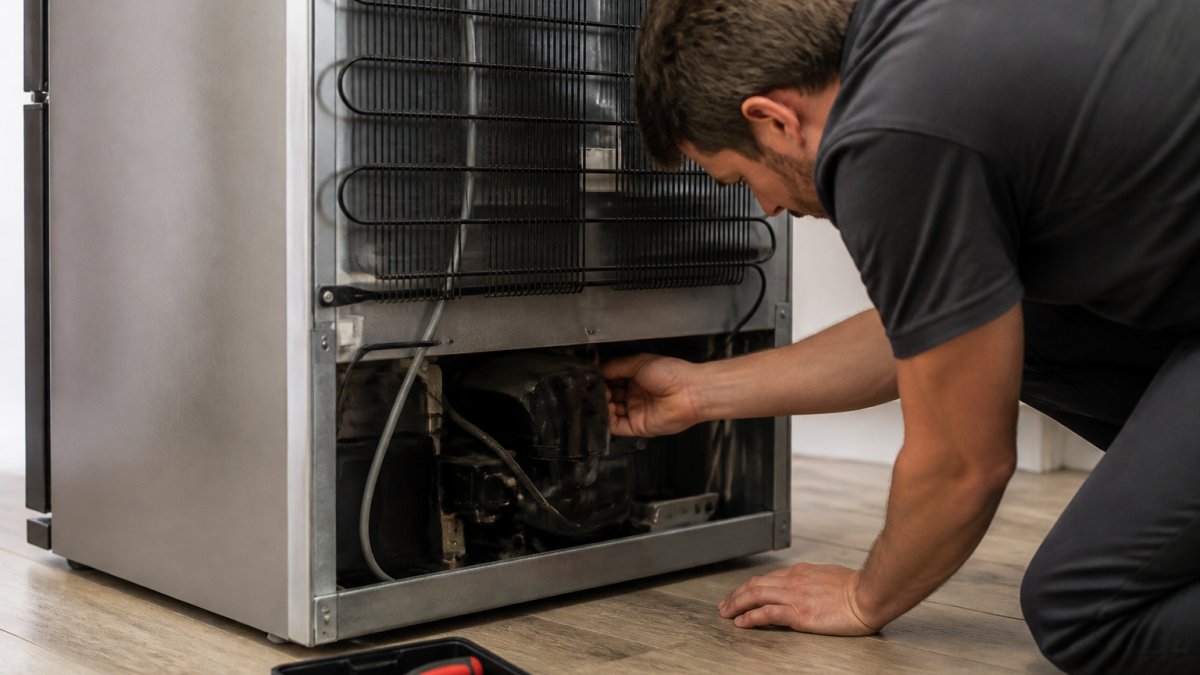
The condenser fan pushes air across the coils, and refrigerator condenser fan troubleshooting takes about five minutes. With the fridge unplugged, find the fan near the compressor at the back or base. Spin the blade with a finger. It should turn freely and quietly.
Listen for grinding, rattling, or silence when the fridge runs. A fan that won't spin, wobbles, or screeches is failing. So is one that spins only when nudged.
How to Test the Fan Safely
- Unplug the refrigerator completely.
- Remove the rear access panel with a nut driver.
- Inspect the blade for cracks or debris wrapped around the shaft.
- Spin the blade by hand and feel for resistance.
- Check that wires are seated and not frayed.
- Plug in briefly and confirm the fan spins when the compressor kicks on.
- Unplug again before reassembling.
Expected result: smooth, quiet spin with steady airflow toward the coils. If the blade catches, hums, or stays still, replace the fan motor.
Set Proper Clearance for Refrigerator Ventilation
Proper clearance for refrigerator ventilation means leaving enough open space for heat to escape, and most manufacturers publish a minimum in the owner's manual. Common guidance calls for a couple of inches behind the unit, a small gap on each side, and room above. Follow your manual's numbers over any generic rule.
Tight cabinets and built-in surrounds choke airflow. So does pushing the fridge flush against the wall to look tidy. That tidy look costs you cooling performance.

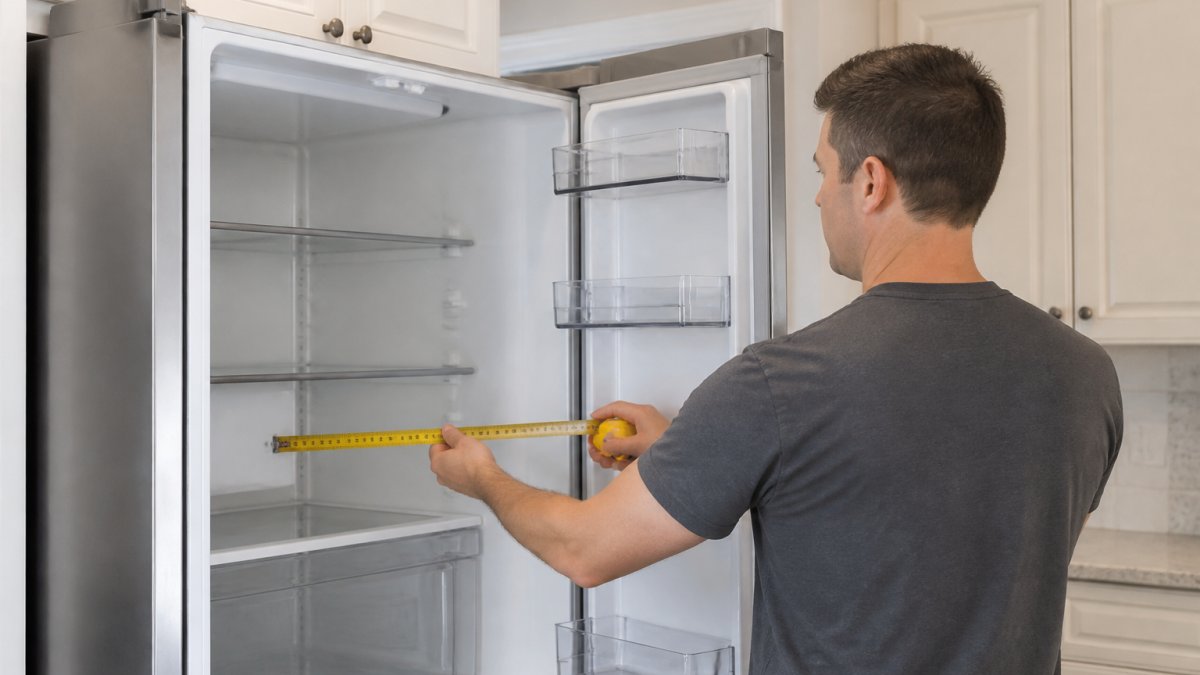
Measure the actual gap, not the gap you assume is there. Baseboards, trim, and outlet covers eat space you didn't count. If the fridge sits in a tight alcove, add a small fan to move air through the space.
Refrigerator Not Cooling but Freezer Is: What Ventilation Tells You
A refrigerator not cooling but freezer is a classic airflow symptom, and it usually points to blocked air movement between the two compartments rather than a dead compressor. Cold air should travel from the freezer into the fridge section through a damper or vent. When that path ices over or gets blocked, the freezer stays frozen while the fridge warms.
Check these in order:
- Ice buildup around the interior vent between compartments
- Food blocking the fridge-side air outlet
- A stuck or frozen air damper
- A failing evaporator fan inside the freezer
If you see heavy frost on the back wall of the freezer, the defrost system may be the real culprit. That's a technician job. Ventilation checks come first because they're free.
Common Mistakes to Avoid When Troubleshooting Ventilation
The biggest mistake is replacing parts before checking airflow. A new fan won't fix coils packed with pet hair.
Others we see often:
- Pushing the fridge flush to the wall after cleaning
- Vacuuming the coils once and never again
- Ignoring a fridge tucked beside a hot oven
- Blocking interior vents with oversized containers
- Skipping the owner's manual clearance specs
Also skip the urge to crank the temperature setting to its coldest point. That won't fix airflow. It just makes the compressor run longer while the real problem stays put.
When to Call a Technician or Replace the Refrigerator
Call a technician when the compressor runs but nothing cools, when you smell burning, or when frost keeps returning after a defrost cycle. Those point to sealed-system or electrical faults that need licensed hands.
Consider replacement when the fridge is old, repairs cost a large share of a new unit, or the cabinet itself blocks airflow no matter what you do. A fridge jammed into a space that was never designed for it will keep failing.
When that day comes, Fast Appliances LLC carries refrigerators in a range of sizes and styles, with delivery to your door. Measure your opening first, then shop with those numbers in hand.
Frequently Asked Questions
How do I know if my refrigerator vents are blocked?
Check the front toe grille and the space behind and above the unit. If the grille is packed with dust, pet hair, or debris, airflow is restricted. You may also notice the exterior sides feeling hot, the compressor running nonstop, or food spoiling faster than usual. Pull the fridge out and inspect the coils and rear panel for dust buildup or objects pressed against the back. A blocked vent forces the compressor to work harder and can push temperatures above safe levels.
Can poor ventilation cause a refrigerator to stop cooling?
Yes. A refrigerator releases heat through its condenser coils, and those coils need airflow to shed that heat. When ventilation is blocked, heat builds up around the unit, the compressor overheats, and cooling performance drops. In severe cases the compressor cycles off on overload protection and the fridge stops cooling entirely. Clearing dust, restoring proper clearance for refrigerator ventilation, and confirming the condenser fan spins freely often restores normal operation without any parts replacement.
How much space does a refrigerator need for proper ventilation?
Most manufacturers call for about 1 inch of clearance on each side, 1 to 2 inches at the back, and 1 inch above the top. Check your owner's manual, because built-in and counter-depth models often have different requirements. Proper clearance for refrigerator ventilation lets heat escape instead of trapping it against cabinets and walls. If your kitchen is tight, leave at least the minimum on the hinge side and the rear, and never push the fridge flush against the wall.
What are the signs of a failing refrigerator condenser fan?
Listen for grinding, rattling, or humming from the back or bottom of the fridge, and check whether the fan blade spins freely when you turn it by hand with the unit unplugged. A fan that wobbles, stalls, or shows visible dust clumps on the blades is a likely culprit. You may also feel little to no warm air exiting the rear. Refrigerator condenser fan troubleshooting usually starts with cleaning the blades and testing for obstruction before assuming the motor needs replacement.
Ventilation problems rarely need a new appliance, just patience and a vacuum. If the diagnosis points to replacement, Fast Appliances LLC offers a wide selection of refrigerators, plus washers, dryers, stoves, and more, all delivered to your home. Browse our online catalog and find the right fit for your kitchen.