 how-to
Why Your Electric Stove Burner Isn't Heating Evenly
Table of Contents
- Uneven Heating vs. No Heat: Know Which Problem You Have
- Start With the Simple Fixes: Cookware and Coil Contact
- When Your Electric Stove Burner Is Not Getting Hot Enough
- How to Test an Electric Stove Heating Element Safely
- Faulty Burner Switches, Receptacles, and Wiring
- Electric Stove Burner Replacement: When Repair Beats a New Range
- Coil, Radiant, and Induction Cooktops: Different Causes, Different Fixes
- Frequently Asked Questions
Last Updated: October 21, 2026
Uneven Heating vs. No Heat: Know Which Problem You Have
If your burner heating is uneven, the cause is usually contact, not failure. A burner that heats in patches still works; it just isn't transferring heat well.
Uneven heating is a heat transfer problem. No heat is an electrical problem. One calls for a pan swap and a coil check.
Diagnose before you shop, from the simplest checks to the ones that need a screwdriver.
| Symptom | Likely Cause | First Step |
|---|---|---|
| Hot spots, cool patches | Warped pan or coil not flat | Swap the pan |
| One coil weaker than others | Worn element or poor socket contact | Swap-test the element |
| Burner stays cold | Open circuit, bad switch, or tripped breaker | Check the breaker, then test continuity |
| All burners weak | Power supply issue | Check the double-pole breaker |
Start With the Simple Fixes: Cookware and Coil Contact
The most common cause of uneven burner heating is a pan that doesn't sit flush. Electric coil burners transfer heat by direct contact, so any gap becomes a cool zone and any high spot becomes a scorch mark.
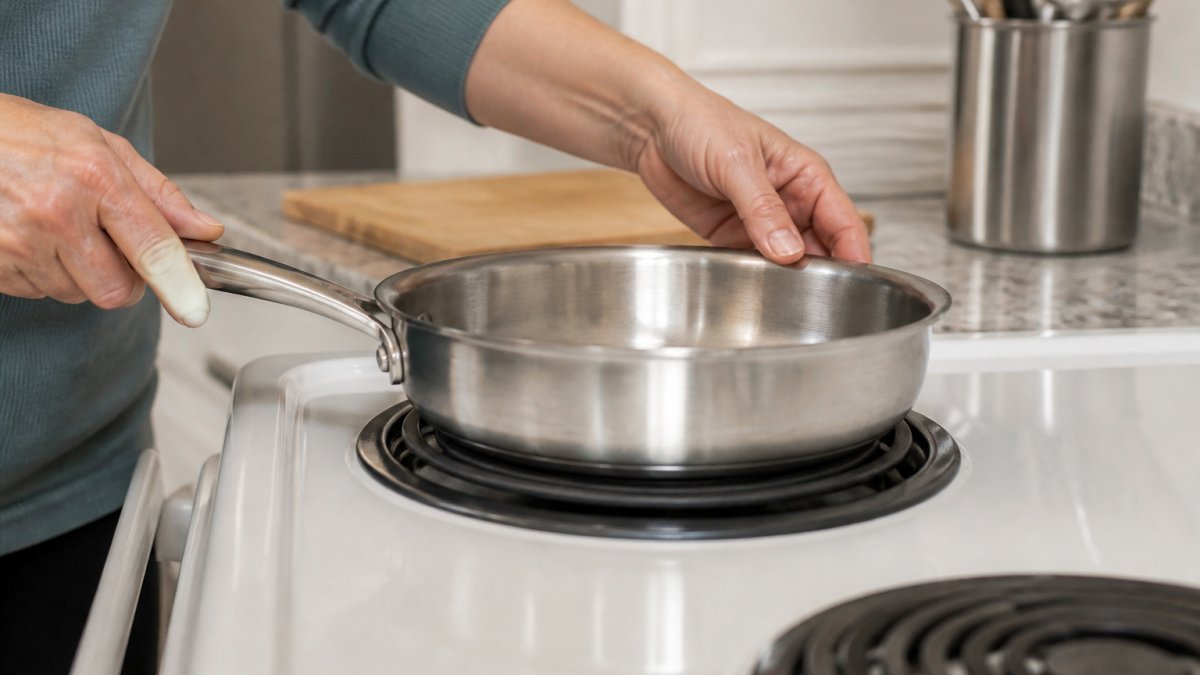
Test Pan Flatness Before Anything Else
A pan can look flat and still be warped. Three checks:
- Straight-edge test. Lay a metal ruler or the edge of a level across the pan bottom, front to back and side to side. If you can see daylight under the middle, the pan is warped and will always leave a cool center.
- Spin test. Set the pan on a known-flat counter and press one edge. If it rocks, the bottom is convex or concave.
- Water-film test. Wet the bottom lightly and set it on a flat surface. Water pooling at the edges instead of the center means the pan is bowed.
A pan that fails any of these will heat unevenly on any coil burner. Retire it or reserve it for oven use.
Match Pan Size to Coil Size
Coil burners are commonly 6-inch and 8-inch. The pan bottom should be within about an inch of the coil diameter:
- Pan smaller than the coil: the outer coil ring radiates heat past the pan, wasting energy and overheating the coil, which shortens element life.
- Pan larger than the coil: the outer pan ring never gets direct contact, so the perimeter stays cool and food around the edge undercooks.
- Pan matched to the coil: full contact across the coil face, the most even heat a coil burner can deliver.
If you routinely cook with one small saucepan, use the small burner.
Pan Material Changes How Even the Heat Feels
The pan must also spread the heat it receives:
- Thin aluminum: heats fast but develops hot spots directly over the coil and cool spots between coil turns. Common on inexpensive cookware.
- Heavy-gauge stainless with an aluminum or copper core: spreads heat laterally, so the pan bottom evens out the coil's ring pattern.
- Cast iron: excellent heat spreading but slow to respond; uneven heating here usually means the pan is not fully seated, not that the burner is failing.
Field test: put a known-good flat pan on the suspect burner, set it to medium, and watch where flour or a tortilla browns. Even browning means the burner is fine and the pan was the problem.
Why an Electric Coil Burner Not Sitting Flat Causes Hot Spots
An electric coil burner not sitting flat is the most overlooked cause of patchy heat. Coil elements rest in a receptacle and are held level by their own shape.
The contact points overheat, the rest of the pan stays cool, and food scorches in a ring. Press the coil down gently with a pot holder; it should sit level and rock-free.
When Your Electric Stove Burner Is Not Getting Hot Enough
An electric stove burner not getting hot enough usually points to a worn element or a weak socket connection. The coil still glows but never reaches full output, so pans simmer when they should sear.
A few causes cover most cases:
- Aged element. Coil elements degrade over years of heating cycles. Output drops gradually, so you notice it only when a new burner feels dramatically stronger.
- Loose element plug. The coil's terminals push into a receptacle. Corrosion or a loose fit adds resistance, which steals voltage from the element.
- Weak burner control switch. The switch cycles the element on and off to hold temperature. A failing switch can shorten the on-time.
If only one burner is weak, the element or its socket is the suspect. If every burner is weak, look at the power supply.
How to Test an Electric Stove Heating Element Safely
Testing an element takes about 15 minutes and a basic multimeter. Confirm continuity and correct resistance, then rule out the socket and switch. Do the steps in order so you replace one part, not three.
What you'll need: a multimeter, a screwdriver, and a notebook. Total time: 15-20 minutes.
Before You Start: Know Your Range and Gate the Work
Confirm three things first:
- Range type. Coil ranges let you pull the element from the front. Smooth-top radiant and induction cooktops hide the element under glass and are not user-serviceable, stop here and book service.
- Power source. Most ranges are 240-volt, fed by a double-pole breaker. A few small ranges and cooktops are 120-volt. The breaker you shut off must match.
- Your comfort level. If you are not confident working around 240 volts, the safe answer is to stop and call a qualified appliance technician. No repair is worth a shock.
Step-by-Step Element Test
- Kill the power. Flip the range's double-pole breaker at the panel. A 240-volt range uses two hot legs, so both must be off.
- Confirm it's dead. With the multimeter set to AC voltage, test the burner terminals. Zero volts means safe to proceed. If you read voltage, stop, you have the wrong breaker.
- Pull the element. Grip the coil and lift it straight out of the receptacle. Note how it seats so you can reinstall it the same way.
- Test continuity. Set the meter to resistance and probe the two element terminals. A working element shows a measurable resistance reading. No reading means an open circuit, the element is dead.
- Test for a short. Probe each terminal to the element's metal sheath. Any reading here means the element is grounded and must be replaced.
- Inspect the receptacle. Look for corrosion, burnt plastic, or loose terminals inside the socket. A burnt socket will destroy a new element.
The Swap Test: Separate Element From Receptacle and Switch
Continuity tells you the element is intact, but not whether the socket or switch is stealing voltage. The fastest way to isolate the fault is a swap test between two compatible coil burners:
- Pick a compatible pair. On most coil ranges, the same-size burners (for example, the two 8-inch elements) use identical elements and receptacles. Do not swap different sizes.
- Swap the elements. Move the suspect element to a burner that heats correctly, and move the known-good element to the suspect burner.
- Read the result.
- Suspect element still heats unevenly in the good socket: the element is the fault. Replace it.
- Known-good element heats unevenly in the suspect socket: the receptacle or switch is the fault. Move to the next section.
- Both heat evenly after the swap: the original problem was seating or contact, not a part.
This prevents the most common wasted repair: replacing a fine element while the real fault sits in the socket.
Continuity and Resistance Checks With a Multimeter
A continuity test tells you whether the element's internal wire is intact; no reading means an open circuit and a dead element. A resistance test goes further, showing whether the element has drifted out of spec.
For a voltage test at the socket, set the meter to AC volts and have a helper switch the burner on while you probe the receptacle contacts.
Faulty Burner Switches, Receptacles, and Wiring
The burner control switch is the most common failure after the element itself. Contacts pit and burn over time, adding resistance and cutting output.
The receptacle is where the coil plugs in.
The wiring between switch and receptacle can char or loosen at the connectors. Look for discolored insulation or blackened terminals.
If you find scorched wiring or a melted receptacle, stop and call a qualified appliance technician.
Electric Stove Burner Replacement: When Repair Beats a New Range
Electric stove burner replacement is cheap and simple for coil ranges: the element lifts out, the new one pushes in, and the job is done in minutes.
Use this rule of thumb:
- One bad coil element: replace the element. It's the cheapest fix on the list.
- Bad element plus a burnt receptacle: replace both. A new element in a damaged socket will fail again.
- Multiple failed burners and a dead oven: the range is near the end of its life. Compare repair cost against a new unit.
When repair no longer makes sense, Fast Appliances LLC offers a comprehensive online selection of essential home appliances, providing convenient access to everything from washers, dryers, and refrigerators to stoves, microwaves, dishwashers, cooktops, and ovens.
Coil, Radiant, and Induction Cooktops: Different Causes, Different Fixes
Not every electric cooktop fails the same way, and the fix changes with the technology.
- Coil cooktops: uneven heat comes from warped coils, worn sockets, or bad switches. Most parts are user-replaceable.
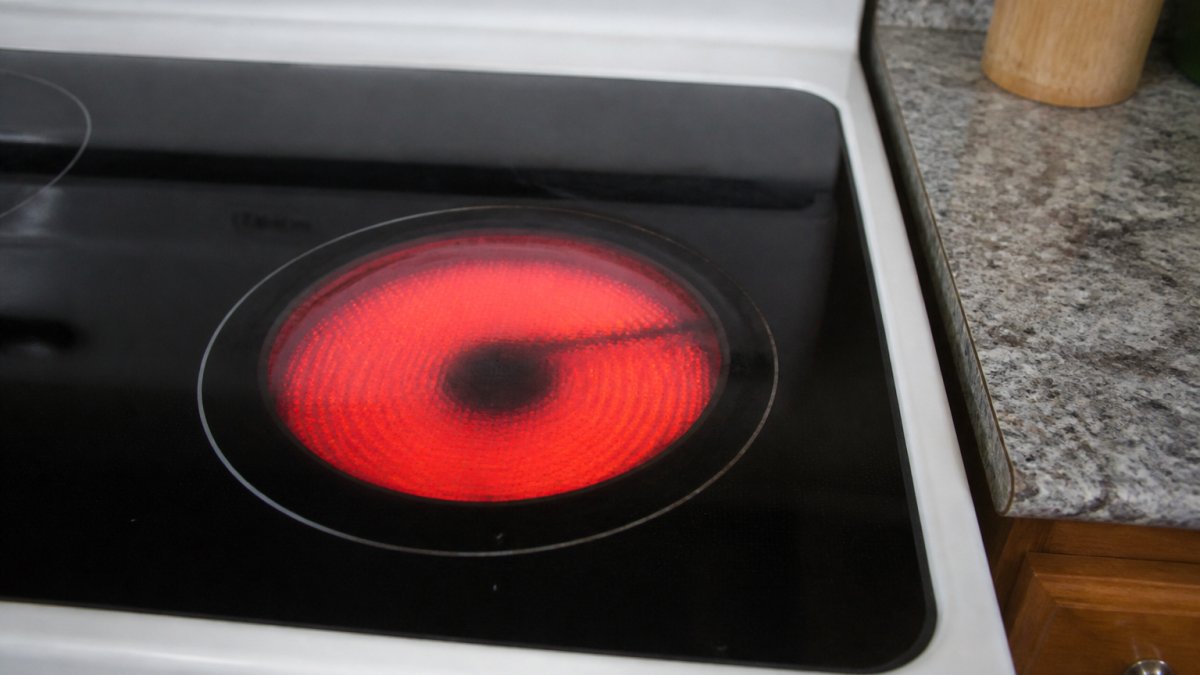
- Smooth-top radiant cooktops: the heating element sits under glass. Uneven heat often means a warped pan that doesn't contact the flat surface, or a failing element beneath the glass. Surface repairs need a technician.
- Induction cooktops: heat comes from a magnetic field, so the pan must be magnetic and flat. Uneven heating here is almost always a pan problem, not a burner problem.
For radiant and induction surfaces, start with the pan. If a known-good flat pan still heats unevenly, the element or control board is the suspect, and that's a service call.
Frequently Asked Questions
Why does my electric stove burner heat unevenly?
The most common causes are a pan that doesn't sit flat, a coil element that is tilted or not seated in its receptacle, or a failing heating element with a partial break. Less often, a faulty burner control switch or a loose wire at the receptacle causes uneven burner heating. Start by swapping the pan and the coil with a known-good burner on the same cooktop. If the problem follows the coil, replace the element; if it stays with the burner position, test the switch and receptacle.
Can a warped or damaged burner cause uneven heating?
Yes. A coil element that has warped, cracked, or developed a partial break in its internal wire will heat in patches rather than across the full coil. You can confirm this with a swap test: move the suspect coil to a different burner position on the same stove. If the uneven heating moves with the coil, the element is the problem and needs replacement. A coil that no longer sits flat in its receptacle is also a sign of warping.
How do I test an electric stove heating element with a multimeter?
Unplug the range or shut off the double-pole breaker first. Pull the coil and inspect the element for cracks or blistering. Set your multimeter to resistance and probe the two terminals of the element. A healthy coil reads a low resistance value, typically in the tens of ohms; an open reading means the element has failed. Also check the burner receptacle for scorched or loose contacts, and test the burner control switch for continuity in each heat setting.
When should I replace the burner instead of repairing it?
Replace the burner when the coil itself tests open or shows visible damage, when the receptacle is scorched and no longer grips the element pins, or when the burner control switch fails continuity. Coil elements and receptacles are inexpensive parts and usually worth replacing on a stove that otherwise works. If the cooktop surface, wiring harness, or multiple burners have failed at once, price a new range against the repair and compare warranties before deciding.
A burner that heats unevenly is usually a contact problem you can fix in minutes. A burner that won't heat at all needs a meter and a careful hand. Work from the pan outward, test before you replace, and know when to stop.
If diagnosis leads to a replacement, Fast Appliances LLC carries a full range of stoves, cooktops, and ovens with convenient online ordering and home delivery. Browse our selection, confirm the fit for your kitchen, and get your range back to even heat.