 how-to
Electric Cooktop Installation Cost: A Complete Guide
Table of Contents
- What Affects Electric Cooktop Installation Cost
- Labor Costs: Electrician Hourly Rate for Appliance Installation
- Electrical Upgrades: Cost to Upgrade Electrical Circuit for Cooktop
- Gas to Electric Cooktop Conversion Cost
- Additional Installation Expenses
- Breaking Down Labor vs. Material Costs
- Professional Installation vs. DIY Considerations
- Energy Efficiency ROI and Long-Term Savings
- Frequently Asked Questions
Last Updated: September 30, 2026
What Affects Electric Cooktop Installation Cost
Understanding the electric cooktop installation cost requires considering several factors beyond the appliance price itself. Your home's current electrical setup, the type of cooktop you choose, and whether you're converting from gas all influence the final bill.
Start by understanding what you're working with. An older home with limited electrical capacity will need more upgrades than a newer one. The distance from your breaker box to the cooktop location matters. So does whether you need new countertop cutouts or modifications to existing ones.
Labor costs vary by location and electrician experience. Material costs depend on what upgrades your home needs. Permit fees and disposal costs add to the total. Breaking down each component helps you budget accurately.
National Electrical Code requirements for appliance installation specify safety standards that all installations must follow. Understanding these requirements helps you anticipate what your electrician will need to do.
Labor Costs: Electrician Hourly Rate for Appliance Installation
Most electricians charge hourly rates for appliance installation work. The rate depends on your location, the electrician's experience level, and local demand. Urban areas typically cost more than rural ones.
A typical electrician hourly rate for appliance installation ranges based on regional factors and complexity. Simple installations take 2-4 hours. Complex ones requiring panel upgrades or extensive rewiring take 8-16 hours.
Get multiple quotes before hiring. Ask each electrician to provide a written estimate that breaks down labor hours and what they'll do. Compare what's included in each quote.
Electrical Upgrades: Cost to Upgrade Electrical Circuit for Cooktop
Most electric cooktops require a dedicated 240-volt circuit. If your home doesn't have one, you'll need to add it. This is often the largest installation expense, but the true cost depends on whether your electrical panel has capacity or needs a major upgrade.
240-Volt Circuit Requirements
A 240-volt circuit supplies the high power that electric cooktops demand. Your cooktop's amperage requirements determine the wire gauge and breaker size needed. Most cooktops need 40-50 amps.
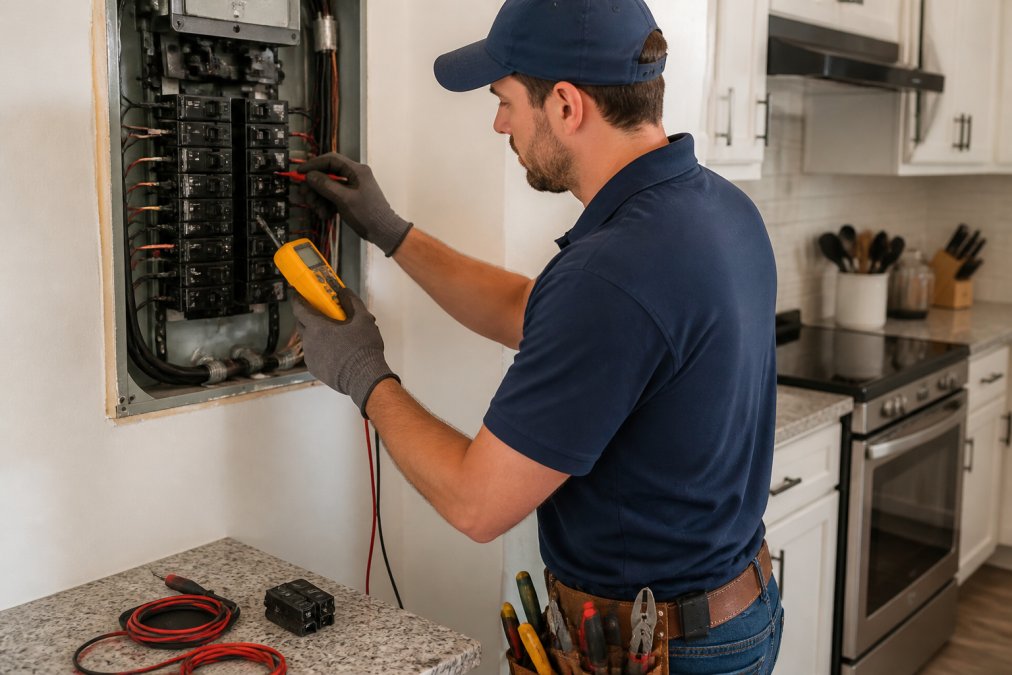
The electrician must run new wire from your breaker box to the cooktop location. Wire gauge depends on the distance and amperage. Longer runs require thicker wire to prevent voltage drop.
Rough-in work includes running the wire through walls and installing the outlet box where your cooktop will connect. This is labor-intensive and depends on your home's construction. Finished walls require more cutting and patching than unfinished basements.
Breaker Box and Panel Capacity Assessment
Your breaker box must have space for a new breaker. If it's full, you'll need a sub-panel or an upgrade to a larger main panel. Panel upgrades are expensive but sometimes unavoidable, and this is the hidden cost that derails most projects.
How to assess your panel before calling an electrician:
Open your breaker box and count the total number of breaker slots. A standard 100-amp panel has 20-24 slots; a 150-amp panel has 24-40 slots; a 200-amp panel has 40+ slots. Look for empty slots on the right side of the panel. If you see 2-4 empty slots, you likely have room for a new 240-volt cooktop breaker without a major upgrade.
If your panel is full or nearly full, an electrician will need to assess your total electrical load. They'll calculate the amperage used by all your current appliances and circuits, then determine whether adding a 40-50 amp cooktop circuit will exceed your panel's capacity. Homes built before 1980 often have 100-amp service, which may be insufficient for modern appliances plus a new cooktop.
Panel upgrade costs and scenarios:
- No upgrade needed (empty slots available): You pay only for the new breaker ($15-$50), wire, and labor to run the circuit. Total electrical cost: $500-$1,500 depending on distance and complexity.
- Sub-panel installation (main panel full but service adequate): A sub-panel is a smaller secondary breaker box installed closer to the cooktop, fed by a new circuit from the main panel. This avoids upgrading the main panel. Cost: $1,500-$3,000 in labor and materials.
- Main panel upgrade from 100-amp to 150-amp or 200-amp (service insufficient): This requires utility company involvement, a building permit, and an inspection. The utility may need to upgrade the service entrance (the lines running from the street to your home). Cost: $3,000-$6,000+, depending on whether the utility work is required.
Panel upgrades are the primary reason homeowners abandon cooktop installation projects. Before committing to a purchase, have an electrician do a 15-minute panel assessment (often free or $50-$100). This single step prevents costly surprises.
An electrician's panel assessment is the most important pre-purchase step. A full panel requiring a main upgrade can double or triple your total installation cost. Knowing this upfront lets you decide whether to proceed, choose a different appliance, or budget for the full scope.
Gas to Electric Cooktop Conversion Cost
Converting from a gas cooktop to electric involves more than installing the new appliance. You need to handle the gas line and add electrical infrastructure.
The gas line must be capped off safely. Most gas companies charge a service fee for this. You can hire a licensed plumber or gas technician, or in some cases your utility handles it.
Removing the old gas cooktop and disposing of it adds to labor costs. If your kitchen has a gas line running to the cooktop location, you won't need new gas work, but you will need electrical work installed.
The electrical requirements are the same as any cooktop installation. You still need the 240-volt dedicated circuit and all associated upgrades.
Additional Installation Expenses
Beyond labor and electrical work, several other costs can add up. Understanding them helps you avoid budget surprises.
Countertop Modifications and Cutout Dimensions
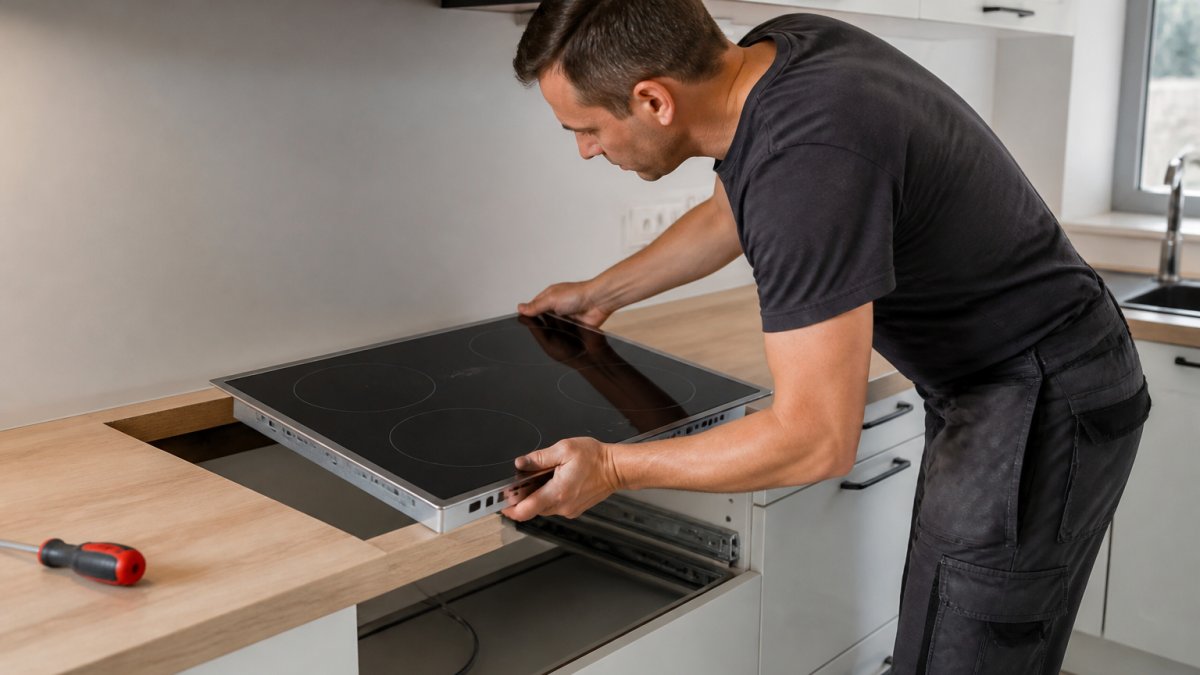
Your cooktop needs a properly sized cutout in your countertop. If you're replacing an existing cooktop of the same size, you may not need modifications. If you're changing sizes or types, countertop work is necessary.
Permit Fees and Code Compliance
Most jurisdictions require electrical permits for cooktop installation. Permit fees vary by location. They typically range based on the scope of work and local regulations.
Appliance Removal and Disposal
Your old cooktop needs to be removed and disposed of. Some installers include this in their labor estimate. Others charge separately.
Breaking Down Labor vs. Material Costs
Labor typically represents 40-60% of the total installation cost. Materials include the wire, breaker, outlet box, and any panel upgrades. The breakdown varies based on your home's needs.
Professional Installation vs. DIY Considerations
Electric cooktop installation requires licensed electrical work in most jurisdictions. Building codes exist for safety reasons. Improper installation can cause electrical fires or damage your home.
Energy Efficiency ROI and Long-Term Savings
Electric cooktops are more energy-efficient than gas. Induction cooktops are the most efficient type. They heat cookware directly instead of heating air around it.
| Cost Component | What It Includes | Typical Scope |
|---|---|---|
| Labor | Electrician time for installation and upgrades | 2-16 hours depending on complexity |
| 240-Volt Circuit | Wire, breaker, outlet box, rough-in work | Required for all cooktop installations |
| Panel Upgrades | New breaker or sub-panel if needed | Only if current panel lacks capacity |
| Countertop Work | Cutout modifications or new installation | Depends on cooktop size change |
| Permits & Inspection | Building permit and code compliance | Required in most jurisdictions |
| Removal & Disposal | Old cooktop removal and waste handling | Included by some installers, separate for others |
Frequently Asked Questions
How much does it typically cost for an electrician to install a cooktop?
Electrician labor for cooktop installation typically ranges based on job complexity and local rates. A licensed electrician's hourly rate for appliance installation varies by region and experience level. The total labor cost depends on whether you need a simple hardwired connection to an existing 240-volt circuit or extensive electrical upgrades. Site conditions, accessibility, and whether your electrical panel has available capacity all influence the final bill. Contact local licensed electricians for accurate quotes based on your specific installation needs.
What does it cost to upgrade an electrical circuit for a cooktop?
Upgrading an electrical circuit for cooktop installation depends on your current electrical infrastructure. If you need a new dedicated 240-volt circuit, costs cover wire gauge appropriate for amperage requirements, circuit breaker installation, and labor. A breaker box upgrade or sub-panel installation adds significantly to the expense. Simple circuit additions to an existing panel with available capacity cost less than retrofitting homes with limited electrical capacity. Electrical code compliance and permit requirements also factor into the total. Have a licensed electrician assess your panel capacity and provide a detailed estimate.
What is the cost to convert from a gas cooktop to an electric one?
Gas to electric cooktop conversion cost includes removing the existing gas appliance, capping the gas line, and installing a new 240-volt hardwired connection. If your home lacks a dedicated 240-volt circuit, you'll need electrical upgrades, which significantly increases the project cost. Countertop modifications may be necessary if cutout dimensions differ between your old and new cooktop. Disposal and recycling fees for the old gas appliance apply. Professional installation ensures electrical code compliance and proper ventilation for downdraft or range hood requirements. Obtain quotes from licensed electricians to understand your specific conversion expenses.
Does the electric cooktop installation cost include electrical upgrades?
No, electrical upgrades are typically separate from the cooktop purchase price and installation labor. The cost to upgrade electrical circuits, install a sub-panel, or expand breaker box capacity is billed separately by your electrician. Some installations may only require connecting to an existing 240-volt circuit, which is simpler and less expensive. Others require full electrical retrofitting, which adds substantial cost. When budgeting for your project, account for the cooktop itself, electrician labor, electrical materials and upgrades, permits, and any necessary countertop modifications as distinct line items.