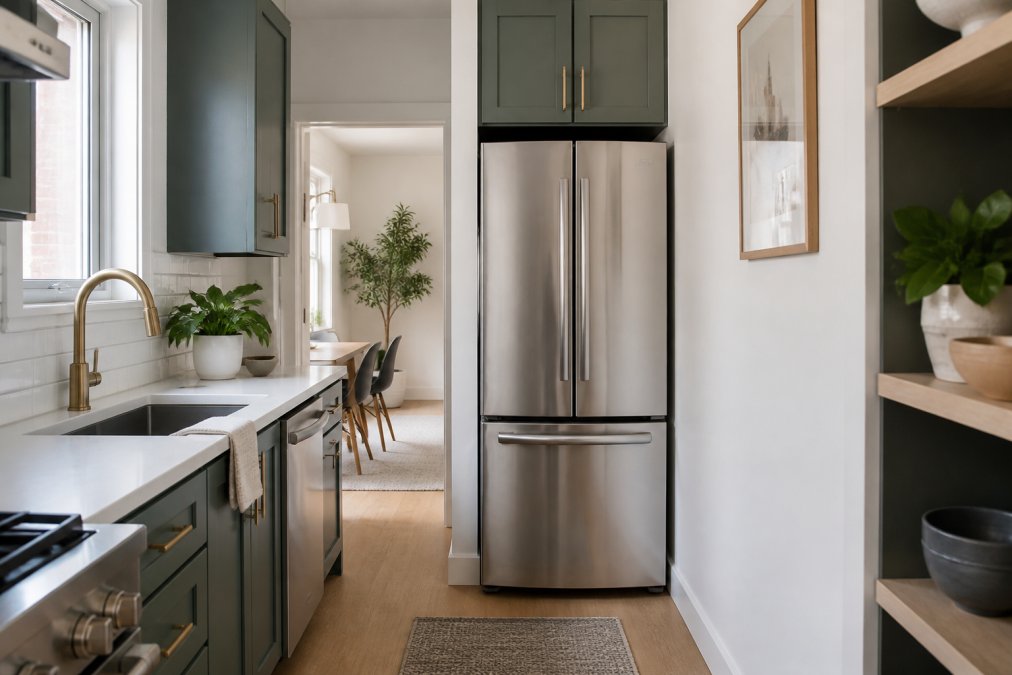
 listicle
Best Refrigerator Styles for Narrow Kitchen Layouts
Table of Contents
- Refrigerator Styles That Fit Narrow Kitchen Layouts
- Top-Freezer vs. Bottom-Freezer for Tight Floor Plans
- French Door and Side-by-Side Configurations for Tight Aisles
- Counter-Depth Refrigerator Benefits for Small Kitchens
- Measuring for a New Refrigerator: A Step-by-Step Guide
- Ventilation and Installation: Built-In vs. Freestanding
- Maximizing Storage in a Compact Footprint
- ADA Compliance and Accessibility for Small Kitchens
- Frequently Asked Questions
Last Updated: September 20, 2026
Refrigerator Styles That Fit Narrow Kitchen Layouts
Finding the best refrigerator styles for narrow kitchen layouts comes down to one number: usable width between cabinets. Standard refrigerators run 30 to 36 inches wide, but compact and counter-depth models drop to 24 to 30 inches. This guide covers the configurations that fit tight spaces, how to measure before you buy, and the clearance rules most shoppers learn too late.
A narrow kitchen forces a trade-off between storage capacity and walkway clearance: you can have a slim profile or a big interior, but rarely both at full size. Hinge design, depth, and interior layout now let compact units hold far more than their footprint suggests.
Below, we break down the five configurations worth considering, plus a measurement method that prevents the most expensive mistake in kitchen remodels: ordering a fridge that won't fit through the door swing.
Top-Freezer vs. Bottom-Freezer for Tight Floor Plans
Top-freezer models win on storage-to-footprint ratio. Because the freezer sits above the fresh food compartment, the unit shares one compressor and one cabinet depth, keeping the exterior compact while maximizing cubic feet inside.
Bottom-freezer units put fresh food at eye level for better ergonomics, but the freezer drawer needs floor space to pull open, which matters in a galley kitchen.
| Configuration | Footprint Efficiency | Best For | Watch Out For |
|---|---|---|---|
| Top-freezer | Highest | Tight floor plans, budget builds | Bending to reach fresh food |
| Bottom-freezer | Moderate | Ergonomic kitchens | Drawer needs pull-out room |
| Side-by-side | Lower | Narrow door swing zones | Slim shelves |
| French door | Lower | Wide aisles only | Two doors swinging open |
A common mistake is choosing a bottom-freezer for a narrow galley without checking drawer clearance. That drawer can block the entire walkway when open, defeating the purpose of a compact footprint.
French Door and Side-by-Side Configurations for Tight Aisles
Side-by-side refrigerators are the smarter pick for genuinely narrow aisles. Each door is about half the unit's width, so the swing radius stays small and you never block the whole walkway.
French door models offer wide shelves, but both doors open outward at once. In an aisle under 40 inches, you can't stand back far enough to open both sides comfortably; they work best with at least 42 inches of aisle width.
The catch with side-by-sides is shelf depth: a vertical split means narrower shelves, so large platters, pizza boxes, and wide sheet pans may not fit.
Counter-Depth Refrigerator Benefits for Small Kitchens
A counter-depth refrigerator sits roughly flush with your cabinets rather than protruding into the walkway. Standard fridges stick out several inches past the counter, eating into aisle width and making a narrow kitchen feel tighter than it is.
The benefits stack up quickly:
- Reclaimed walkway space, less protrusion means a wider-feeling aisle without moving a single cabinet
- Cleaner sightlines, flush installation aligns the fridge with cabinetry for a built-in look
- Better workflow, you're not dodging a fridge box while carrying groceries or hot pans
- Easier cabinetry alignment, the unit reads as part of the kitchen, not an afterthought
Measuring for a New Refrigerator: A Step-by-Step Guide
Measuring for a new refrigerator means capturing three dimensions plus two clearances before you shop. Get these wrong and the unit either won't fit the alcove or won't open once installed.
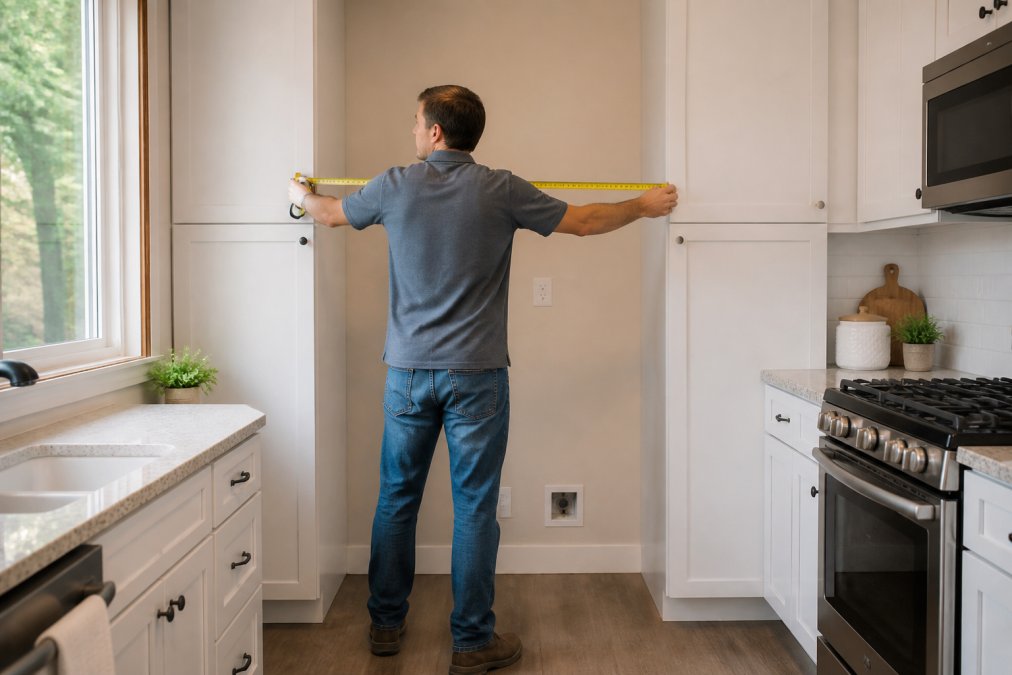
Follow this sequence:
- Measure the alcove width at the narrowest point, usually between cabinet faces or countertop edges. Take it at the top, middle, and bottom, cabinet frames and baseboards often pinch the opening by a quarter inch or more.
- Measure the height from floor to the underside of any upper cabinet or soffit, and again at the front and back of the alcove. Floors slope and soffits are rarely level.
- Measure the depth from the back wall to the front edge of your counter. Note whether a baseboard, outlet, or water line eats into that depth.
- Measure every doorway the fridge must pass through, including the entry door and any interior turns. Measure the door opening with the door removed if possible, the frame, not the door slab, is the true limit.
- Note the door swing direction and how much room it needs to open fully. This is the measurement most buyers underestimate.
Door Swing Clearance and Aisle Width Requirements
| Door type | Typical swing behavior | Clearance to plan for |
|---|---|---|
| Single door (top- or bottom-mount) | One door swings out and across | Door width plus hinge offset; wall-side hinges need extra |
| Side-by-side | Two narrow doors, each about half the unit width | Smallest swing radius of the full-size options |
| French door | Two doors swing outward simultaneously | Widest swing zone; needs room to stand back |
| Bottom-freezer drawer | Drawer pulls straight out | Full drawer depth plus standing room |
One more clearance most guides skip: leave enough room at the front to pull the unit out for cleaning and service without removing cabinet trim.
Ventilation and Installation: Built-In vs. Freestanding
What this means in practice for a narrow layout:
- Freestanding in an alcove: leave the clearance the manufacturer specifies on the sides, top, and back. A common pattern is a small gap on each side and a bit more at the top, but the exact numbers vary by model, check the installation guide, not a general rule.
- Freestanding against a wall: don't push the unit tight to a side wall if the coils are on that side. Blocking one side can cut airflow enough to matter.
- Built-in or integrated: follow the grille clearance in the spec sheet. These units need unobstructed air at the intake and exhaust, and blocking the toe grille with a rug or cabinet panel defeats the design.
- Panel-ready models: confirm the panel doesn't cover the vent path. A decorative panel that looks flush can starve the unit of air.
If you're remodeling and want a seamless narrow profile, built-in is the answer. If you're replacing a fridge in an existing freestanding alcove, match the new unit's ventilation requirements to the space you have rather than forcing a flush look that traps heat. Narrow kitchens are often where airflow matters most, because there's less surrounding air to absorb the heat the fridge rejects.
Maximizing Storage in a Compact Footprint
Storage efficiency in a narrow fridge comes from layout, not size. Adjustable shelves, door bins, and crisper drawers let you reconfigure the interior to match what you buy each week.
Interior organization hacks that work:
- Move adjustable shelves up to create tall zones for pitchers and bottles
- Use door bins for condiments to free up shelf space
- Add clear stackable bins to corral small items and stop shelf clutter
- Keep the crisper drawers for produce and use the deli drawer for cheeses and meats
- Group like items together so you're not digging past the front row
ADA Compliance and Accessibility for Small Kitchens
Accessibility matters more in small kitchens because tight clearances and high shelves create real barriers. The ADA Standards for Accessible Design set the guidelines that apply when a kitchen needs to accommodate someone using a wheelchair or with limited reach.
Key points to plan around:
- Keep a clear turning space in the kitchen so a wheelchair can maneuver
- Place frequently used items within comfortable reach range
- Choose a refrigerator with a door that opens easily and doesn't block the path
- Ensure controls and handles are reachable without excessive bending or stretching
Frequently Asked Questions
What type of refrigerator is best for a narrow space?
Top-freezer and bottom-freezer models typically work best for narrow kitchens because they have the smallest footprints and require less door swing clearance. Counter-depth refrigerators are also a strong choice since they sit flush with cabinets and don't protrude into walkways. French door and side-by-side styles can work if you have at least 36 inches of aisle width and enough room for the doors to open fully.
Are counter-depth refrigerators better for narrow kitchens?
Counter-depth refrigerator benefits include a shallower profile that aligns with standard cabinetry, reducing how far the unit sticks into your kitchen. This keeps aisles clearer and helps the space feel larger. However, counter-depth models offer less interior depth than standard refrigerators, so you may sacrifice some cubic feet of storage. They work best when you need to maintain a narrow walkway but can accept slightly reduced capacity.
How do I measure my kitchen for a new refrigerator?
Measure the width, height, and depth of the opening where the refrigerator will sit. Add at least 1 inch of clearance on each side and 2 inches at the back for ventilation. Measure the aisle width in front of the unit and account for door swing: most refrigerators need 30 to 36 inches of clearance to open fully. Also check that doorways and hallways along the delivery path are wide enough for the unit to pass through.
Can I fit a French door refrigerator in a narrow kitchen?
French door refrigerators can work in narrow kitchens if the space meets specific requirements. You need at least 36 inches of aisle width for the doors to open without hitting walls or cabinets. Counter-depth French door models are available and reduce protrusion. Check the hinge design and door swing radius before buying, since some models require more clearance than others. If your aisle is tighter than 36 inches, a top-freezer or side-by-side may be a better fit.