 ultimate-guide
Energy-Efficient Laundry Appliances: Real Savings Explained
Last Updated: November 3, 2026
Quick Summary
Energy efficient laundry appliances cut household costs in two places at once: the electricity that spins the drum and heats the air, and the water that fills the tub. If you replace only one appliance, the dryer usually delivers the bigger electricity reduction, while front-load washers save through lower water consumption and reduced hot-water demand.
- Heating is where most laundry energy goes, so the dryer usually delivers the bigger electricity reduction.
- Front-load washers use less water per load because they tumble clothes through a shallow pool.
- Compare models using the yellow EnergyGuide label's annual energy use and operating cost, not the brochure.
- For washers, a high IMEF and a low WF mean more cleaning per unit of energy and water.
- Divide the price difference by annual savings to get the number of years to break even.
Table of Contents
- Where Energy-Efficient Laundry Appliances Save You Money
- ENERGY STAR Laundry Appliance Savings, Explained
- Washer and Dryer Efficiency vs. Conventional Models
- Benefits of Heat Pump Dryers and Heat-Pump Technology
- Rebates for Energy Efficient Appliances and Other Incentives
- Average Lifespan of Energy Efficient Washers and Lifetime Cost
- Choosing Your Energy-Efficient Laundry Pair
- Frequently Asked Questions
Where Energy-Efficient Laundry Appliances Save You Money
Energy-efficient laundry appliances cut household costs in two places at once: the electricity that spins the drum and heats the air, and the water that fills the tub. This guide breaks down what the benefits of energy efficient laundry appliances actually look like on a utility bill, which savings are real and which are marketing, and how to calculate payback before you buy. Below, we walk through the numbers that matter and the specs that quietly decide them.
Electricity and Energy Use Per Load
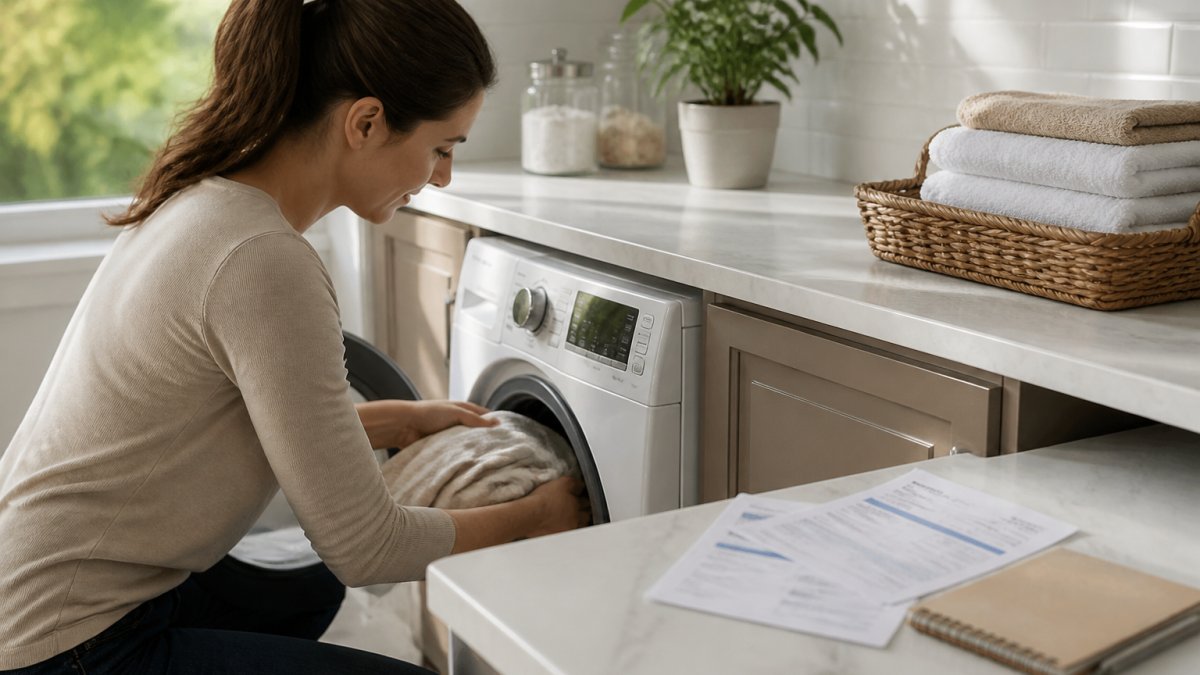
Heating is where most laundry energy goes. A conventional dryer with a resistance heating element draws far more electricity per cycle than a heat-pump dryer, which moves heat rather than generating it. Washers matter too, but less: the motor and the water heating do the work, and a front-load washer uses less hot water to begin with.
The practical takeaway is simple. If you replace only one appliance, the dryer usually delivers the bigger electricity reduction.
Water Consumption and Water Savings
Front-load washers generally use less water per load than top-load agitator models because they clean by tumbling clothes through a shallow pool rather than submerging them.
Multiply those gallons by your weekly load frequency and the annual water savings become meaningful for larger households.
Energy-efficient laundry appliances cut costs in two places at once: the electricity that spins the drum and heats the air, and the water that fills the tub.
| Area | What drives the savings | Note |
|---|---|---|
| Electricity | Heating is where most laundry energy goes | Dryer usually delivers the bigger electricity reduction |
| Water | Front-load washers use less water per load | Fewer gallons means lower water bills and less heating energy |
| Dryer technology | Heat-pump dryers move heat rather than generate it | Resistance heating elements draw far more electricity per cycle |
| Washer design | Front-load washers clean by tumbling through a shallow pool | Top-load agitator models submerge clothes |
ENERGY STAR Laundry Appliance Savings, Explained
ENERGY STAR laundry appliance savings come from certified models meeting efficiency thresholds set by the ENERGY STAR program. Certification does not guarantee a specific dollar figure, because savings depend on your usage, local utility rates, and what you replaced.
Most guides stop there. The useful part is knowing which numbers on the label drive the savings claim and how to compare two certified models without relying on the marketing copy.
How to Read the Yellow EnergyGuide Label
Every new washer and dryer carries a yellow EnergyGuide label showing estimated annual energy use and estimated yearly operating cost. Compare two models side by side using that label, not the brochure.
- Estimated annual energy use, in kilowatt-hours (kWh)
- Estimated annual operating cost at a stated utility rate
- The range of similar models, for context
The label's annual cost estimate assumes a standardized number of loads per year and a stated utility rate. If your household runs more loads than the assumption, scale the estimate upward proportionally; if you run fewer, scale it down.
The Metrics That Actually Decide Savings
For washers, the integrated modified energy factor (IMEF) combines energy use, water use, and drum capacity into one number; higher is better. The water factor (WF) measures gallons per cubic foot of capacity per cycle; lower is better.
For dryers, the comparable metric is the combined energy factor (CEF), expressed in pounds of clothes dried per kWh; higher is better (Clothes Dryers Key Product Criteria).
Capacity matters more than most shoppers expect.
Where the Label Stops and Your Household Begins
The label cannot know your utility rate, your hot-water source, or how often you run the machine. Two adjustments close most of that gap:
- Recalculate annual cost using your actual electricity and water rates rather than the label's stated rate.
- Multiply by your real annual load count, not the standardized assumption.
If you heat water with natural gas, the washer's hot-water savings show up on the gas bill, not the electric bill, so compare the combined utility impact rather than the electric line alone.
Watch out: the label's annual cost estimate is a standardized figure, not a prediction for your home; treating it as a bill forecast will overstate or understate savings depending on your rates and load frequency.
Washer and Dryer Efficiency vs. Conventional Models
Efficiency gains differ sharply between the two machines. An energy-efficient washer typically saves through lower water consumption and reduced hot-water demand, while an energy-efficient dryer saves through better moisture sensing and, in heat-pump models, a fundamentally different drying technology.
Conventional dryers often run a fixed cycle length regardless of how dry the clothes are. Sensor drying stops when moisture drops, which avoids the single most common waste in a laundry routine: over-drying a full load.
Performance Trade-Offs and Limitations
Efficiency is not free of compromise. Heat-pump dryers generally take longer per drying cycle than resistance dryers. Front-load washers need regular door-gasket cleaning to prevent odor and mold.
None of these are dealbreakers, but they are the details most guides skip. If you want a deeper comparison of drum orientation, front load vs top load washer pros and cons covers the trade-offs in detail.
Benefits of Heat Pump Dryers and Heat-Pump Technology
Heat-pump technology is a notable efficiency development in drying. Instead of generating heat with a resistance coil, a heat-pump dryer circulates refrigerant to move heat from one loop to another, drying clothes at lower temperatures.
The benefits of heat pump dryers stack up: lower electricity consumption per load, gentler treatment of fabrics, and no need for external venting on ventless models. For a closer look at that use case, ventless dryer benefits for apartments explains how these units work in practice.
Watch out: heat-pump dryers collect moisture in a reservoir or drain line, and forgetting to empty the reservoir will stop the cycle or leave clothes damp.
Rebates for Energy Efficient Appliances and Other Incentives
Rebates for energy efficient appliances vary by utility company and state, and they change often. Some utilities offer rebates on certified washers and dryers. Manufacturer promotions are separate and may be available alongside utility rebates.
Check three sources before you buy: your electric or gas utility's rebate page, your state energy office, and the manufacturer's current promotions. Ask your retailer whether they process the rebate at point of sale or whether you file afterward. Keep the receipt and the model number; most rebate claims require both.
Average Lifespan of Energy Efficient Washers and Lifetime Cost
Appliance lifespan depends on usage and maintenance, and efficient models are not guaranteed to last longer or shorter than conventional ones. The efficiency story is not about longevity; it is about operating cost across those years, plus the maintenance and repair costs that decide whether the machine actually reaches its expected lifespan.
Calculating Payback and Long-Term Savings
Here is the framework we recommend for a payback calculation:
- Find the estimated annual operating cost on each model's EnergyGuide label.
- Subtract the efficient model's annual cost from the conventional model's annual cost.
- Divide the price difference between the two models by that annual savings figure.
- The result is the number of years to break even.
If the efficient model costs more upfront but saves a meaningful amount each year, the payback period tells you whether you will still own the machine when it pays off. Factor in any rebate as a reduction to the upfront price before dividing.
A Transparent Example Across Household Sizes
Rather than quote a single savings figure, work the framework with your own inputs. The variables that move the answer most are annual load count, utility rates, and the price gap between the two models.
- A single-person household running a few loads a week accumulates fewer annual cycles, so the annual dollar savings are smaller and the payback period stretches out. For low-volume households, the efficient model may not pay back within its expected lifespan unless the upfront price gap is small or a rebate closes it.
- A family running a load or more per day multiplies the per-cycle savings across a much larger annual total, which typically shortens payback to a few years and makes the efficient model the lower lifetime-cost choice.
- Households with high electricity and water rates see larger annual savings from the same appliance, because the per-unit savings are worth more. Households with low rates see less.
Run the four-step calculation twice: once at your current load frequency and once at a higher frequency you might realistically reach. If payback only works at the higher number, the purchase is a bet on future usage, not a sure saving.
Maintenance, Repair, and the Costs the Label Ignores
Lifetime cost includes more than energy. Heat-pump dryers have a more complex refrigerant loop and typically cost more to repair when that loop fails; front-load washers need periodic gasket cleaning and, eventually, gasket replacement to prevent odor and mold.
Budget a modest annual maintenance allowance for any efficient model and compare it against the energy savings. A machine that saves a little each year but needs an expensive repair at year six can lose the lifetime-cost comparison even when its payback math looked favorable at purchase.
Factoring In Rebates and Disposal
Apply any utility or state rebate as a direct reduction to the upfront price before dividing, and account for the cost or credit of removing and recycling the old appliance.
Watch out: a payback calculation that ignores maintenance, repair, and disposal can make an efficient model look better than it is; include those costs before treating the payback period as a decision rule.
Choosing Your Energy-Efficient Laundry Pair
Matching a washer and dryer as a pair simplifies installation and usually keeps the controls and dimensions consistent.
When you are ready to compare specific models, browse energy efficient front load laundry pairs that cut utility bills on our site to see matched sets side by side.
Practical checks before ordering: measure your space, confirm the door swing and hookups, and verify the voltage requirement for the dryer.
Frequently Asked Questions
How much money can I save with an ENERGY STAR certified washer?
Savings depend on your utility rates and how often you run loads. An ENERGY STAR certified washer uses less energy and water per load than a conventional model, so the gap widens with every cycle. To estimate your own number, check the yellow EnergyGuide label for annual energy use, multiply by your electricity rate, and compare it with your current machine. Pair that with a heat-pump dryer and the combined energy efficient laundry savings add up further. Rebates can lower the upfront cost too.
Do energy-efficient dryers take longer to dry clothes?
Heat-pump dryers generally run longer cycles at lower temperatures than conventional electric or natural gas dryers. That is how they use less energy. The trade-off is time, not cleaning performance. Sensor drying modes and not overloading the drum help keep cycles reasonable. If speed matters most, a vented dryer may suit you better; if operating costs matter most, a heat-pump model wins over the years.
Are energy-efficient washers gentler on clothes?
Front-load and high-efficiency top-load washers typically use a gentler wash action with less agitation and lower water levels, which many users find easier on fabrics. Less mechanical wear and lower spin stress can help clothes last longer. Use a high-efficiency detergent, since these machines produce less suds, and run a cleaning cycle monthly to prevent odors.
How do rebates for energy efficient appliances work?
Rebates usually come from utility companies or state programs and are tied to specific certified models. Check your utility's appliance rebate page before you buy, confirm the exact model number qualifies, and keep your receipt and proof of installation. Some rebates are applied at checkout, others arrive as a check or bill credit. Ask about disposal incentives too if you are replacing an old washer or dryer.
The gap between a conventional set and an efficient pair is smaller than most people expect, and it compounds every week you run a load. Fast Appliances LLC stocks washers, dryers, and full laundry pairs with the specs listed clearly so you can compare before you commit, and our team can help you match capacity to your household. Get started with Fast Appliances LLC and put a set in your laundry room that costs less to run from the first cycle.