 blog
Energy Efficient Front Load Laundry Pairs That Cut Utility Bills
Last Updated: October 30, 2026
Quick Summary
Energy efficient front load laundry pairs cut utility bills by tumbling clothes through a shallow pool of water instead of submerging them, which means less hot water is heated per cycle. A high spin speed also pulls more moisture from fabric before the load reaches the dryer, usually the biggest energy user in the pair.
- Every washer carries a yellow EnergyGuide label showing estimated yearly electricity use and cost.
- Multiply annual kWh by your local rate to estimate yearly electricity cost before water and sewer charges.
- Front-load washers generally use less water per cycle than top-load washers, adding up to thousands of gallons over 300 loads a year.
- A heat pump dryer recycles heat in a closed loop and can be installed where a vented dryer cannot.
- Wash in cold water, run full loads, and clean the dryer lint filter before every cycle to cut real energy use.
Table of Contents
- Why Front Load Laundry Pairs Cost Less to Run
- Energy-Efficient Washer and Dryer Sets: What the Numbers Say
- ENERGY STAR Certified Washer and Dryer Models: What the Label Actually Means
- Heat Pump Dryer Technology and When It Pays Off
- Washer and Dryer Energy Use: Reading the Numbers Before You Buy
- Matching Capacity, Space, and Household Size
- Stackable Pairs, Combos, and Installation Constraints
- Choosing Your Energy Efficient Laundry Pair at Fast Appliances
- Frequently Asked Questions
Why Front Load Laundry Pairs Cost Less to Run
Energy efficient front load laundry pairs cost less to run because front-load washers tumble clothes through a shallow pool of water instead of submerging them in a full drum. That design difference drives most of the utility-bill savings. The answer usually comes down to water, heat, and spin speed rather than marketing claims.
How Front Loaders Use Less Water and Power
A front-load washer fills only part of the drum, so it heats far less water per cycle. Less hot water means less energy spent heating it, and a high spin speed pulls more moisture out of fabric before the load reaches the dryer, usually the biggest energy user in the pair. High-efficiency detergent and a low-suds cycle keep the machine working correctly with that smaller water volume.
Where the Savings Stop
Savings shrink when the machine is overloaded, when you run small loads on long cycles, or when a ventless dryer takes hours to finish a load. A front-load pair used carelessly can cost as much as a top-load set used well. Buyers comparing the two designs should check the specifications on each model before assuming the front loader always wins on cost.
Energy-Efficient Washer and Dryer Sets: What the Numbers Say
Energy-efficient washer and dryer sets are best judged on annual energy use and water consumption, not sticker price. Every washer carries a yellow EnergyGuide label showing estimated yearly electricity use and cost, the closest thing to a fair comparison between two models. Dryer labels are less standardized because drying time depends heavily on the washer's spin speed.
Here is how to compare pairs before buying:
| What to check | Where to find it | Why it matters |
|---|---|---|
| Annual energy use (kWh) | EnergyGuide label | Direct comparison between models |
| Annual water use (gallons) | Manufacturer spec sheet | Water and sewer bill impact |
| Spin speed (RPM) | Spec sheet | Faster spin means shorter drying |
| Dryer type | Spec sheet | Vented, ventless, or heat pump |
| Capacity (cu ft) | Spec sheet | Fewer loads per week |
Turning Labels Into a Real Operating-Cost Estimate
The EnergyGuide label gives you estimated annual electricity use in kilowatt-hours (kWh) and estimated annual cost in dollars, calculated at a national average rate, so your bill will differ. To estimate your own cost, multiply annual kWh by your local rate.
Water matters too. Front-load washers generally use less water per cycle than top-load washers. Over 300 loads a year, that difference adds up to thousands of gallons.
Payback Period: When Paying More Up Front Makes Sense
A pair with a higher purchase price but a lower annual energy figure can pay back the difference over time, depending on how often you run loads. Subtract the efficient pair's annual operating cost from the cheaper pair's, then divide the price difference by that annual savings to estimate payback.
What the Labels Don't Tell You
The EnergyGuide and ENERGY STAR labels do not measure cleaning performance, noise, or cycle time. Two washers with identical annual kWh can differ significantly in stain removal or cycle length, which changes real-world energy use through re-washing. Look for independent test results or retailer performance specs reporting cleaning scores and cycle times; otherwise, read owner reviews for patterns about repeat washing and cycle length.
ENERGY STAR Certified Washer and Dryer Models: What the Label Actually Means
ENERGY STAR certified washer and dryer models meet efficiency criteria set by the EPA ENERGY STAR appliance program, which publishes the current specification for washers and dryers. Browse the LG Front Load Washer available at our store.
What the label does not tell you: how well the machine cleans a heavily soiled load, how loud it runs, or how long a normal cycle takes. Those are the trade-offs that show up in daily use.
Heat Pump Dryer Technology and When It Pays Off
A heat pump dryer dries clothes at lower temperatures by recycling heat inside a closed loop rather than venting warm, moist air outside (Heat Pump Dryer).
When does it pay off? Households that dry several loads a week and homes without a vent path are the ones most likely to benefit. Occasional users who dry one load a week will wait much longer to recover the higher purchase price.
Washer and Dryer Energy Use: Reading the Numbers Before You Buy
Washer and dryer energy use is where most buyers guess instead of check. The washer's figure covers the motor, controls, and water heating if the machine heats its own water; the dryer's covers the heating element or heat pump. Water consumption adds a second cost on the water and sewer bill, which is why two machines with similar energy numbers can still differ in total cost.
Three habits change the real number more than the model choice:
- Wash in cold water whenever the fabric allows it
- Run full loads instead of half loads
- Clean the dryer lint filter before every cycle
Matching Capacity, Space, and Household Size
Capacity, measured in cubic feet, should match the household, not the showroom's biggest model. Smaller households often do well with a smaller washer, while larger families usually need more capacity.
Choosing by Household Needs, Not Just Headcount
Household size is a starting point, but laundry volume and fabric mix matter just as much. A household of two that washes bedding, towels, and workout gear daily may need the same capacity as a family of four doing three loads a week.
- One to two people, low volume: 3.5 to 4.0 cu ft washer; a compact dryer in the 4.0 to 6.0 cu ft range is usually sufficient.
- Three to four people, average volume: 4.0 to 4.5 cu ft washer; dryer capacity should be equal or slightly larger to handle bulky items.
- Five or more, or frequent bulky loads: 4.5 cu ft and up; look for a dryer with a large drum and a steam refresh cycle for bedding and towels.
If you frequently wash king-size comforters or sleeping bags, check the washer's drum depth and the dryer's door opening, a large nominal capacity can still struggle with a bulky item if the drum is shallow.
Installation and Real-World Compatibility
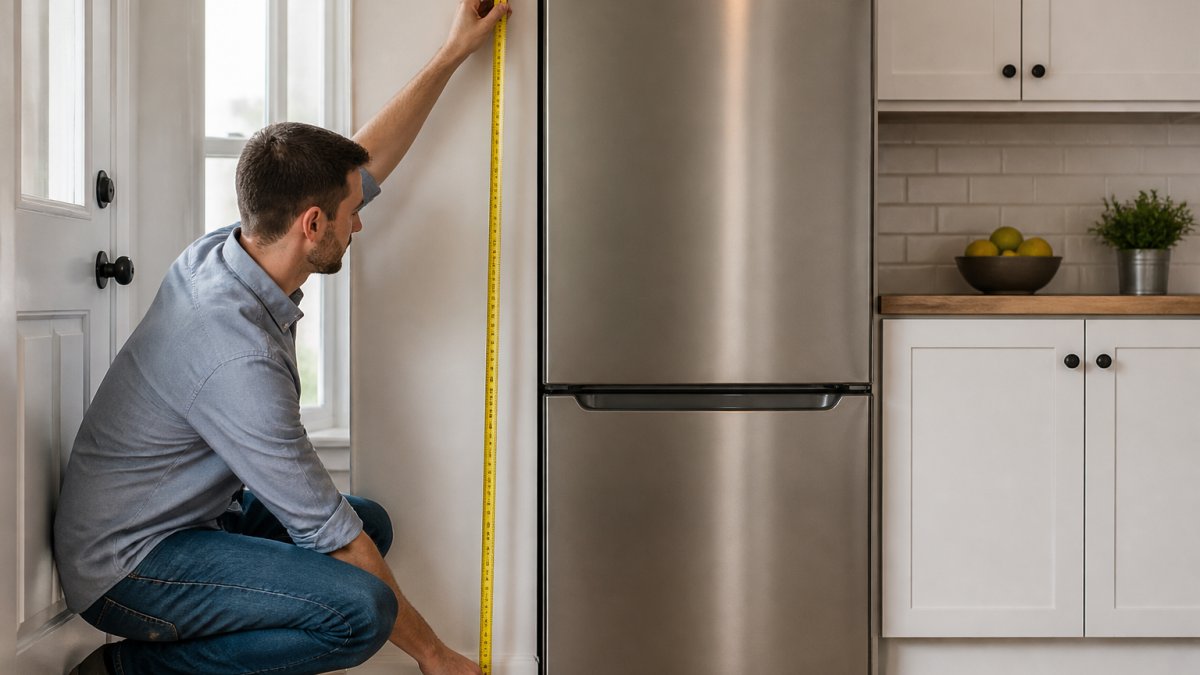
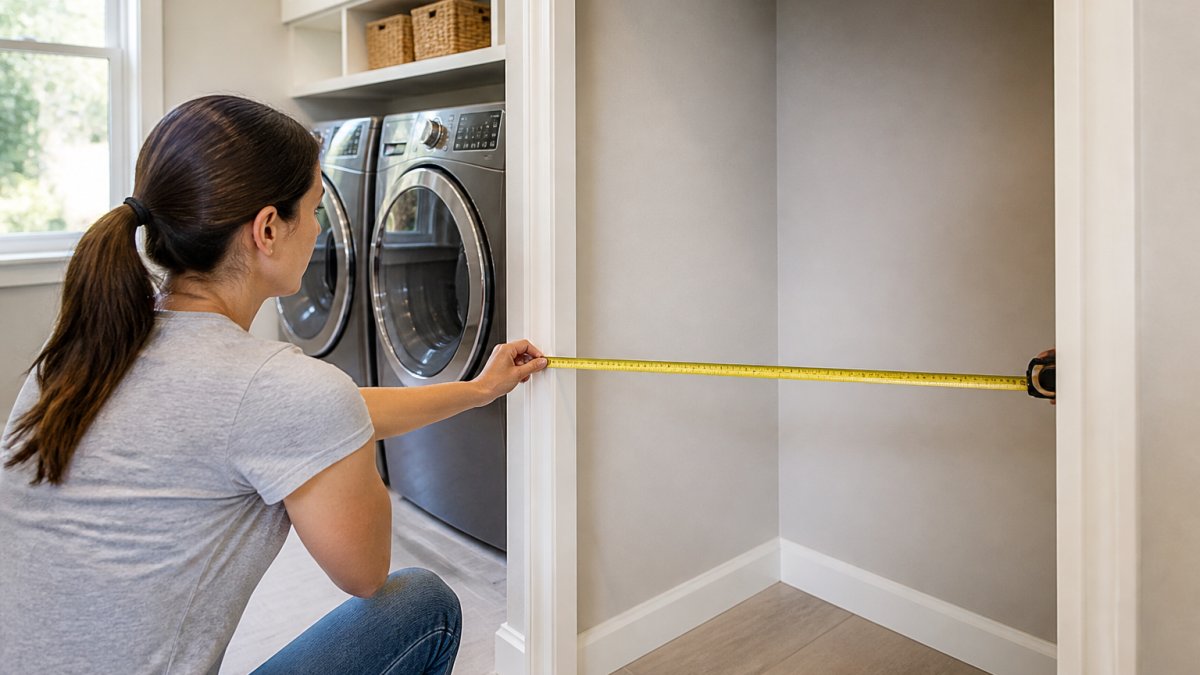
Measure the space before anything else. Front-load washers and dryers need clearance behind the unit for hoses and venting, plus room for the door to swing open. A matching set that fits the alcove on paper can still fail on door swing or vent path. Front loaders also spin fast, so an unbalanced load on a weak floor can walk the machine.
Beyond the tape measure, confirm these installation details before buying a pair:
- Electrical requirements: Electric dryers and gas dryers often have different electrical and gas requirements, so check the spec sheet for each model. Check the breaker panel and outlet type in your laundry area. If you are switching from gas to electric drying (or the reverse), the change may require an electrician or plumber.
- Venting: Vented dryers need a rigid or semi-rigid metal duct that exhausts outdoors, with a short, straight run and minimal elbows. Ventless heat-pump dryers need no exterior vent but require clearance around the unit for airflow. Never vent a dryer into a crawlspace or attic.
- Drain access: Washers need a standpipe or utility sink drain and hot and cold water hookups. A combo unit or heat-pump dryer may have different drain requirements; check the spec sheet.
Efficiency Trade-Offs and Limitations
Efficient cycles often take longer. A high-efficiency washer may run 60 to 90 minutes, and a heat-pump dryer can take two hours or more per load. That longer cycle time is part of how the machine saves energy, lower heat and slower tumbling.
Load sizing also affects savings: a half-full drum wastes the water and energy used to fill and heat it, so run full loads and use load-sensing or auto-fill if available.
Stackable Pairs, Combos, and Installation Constraints
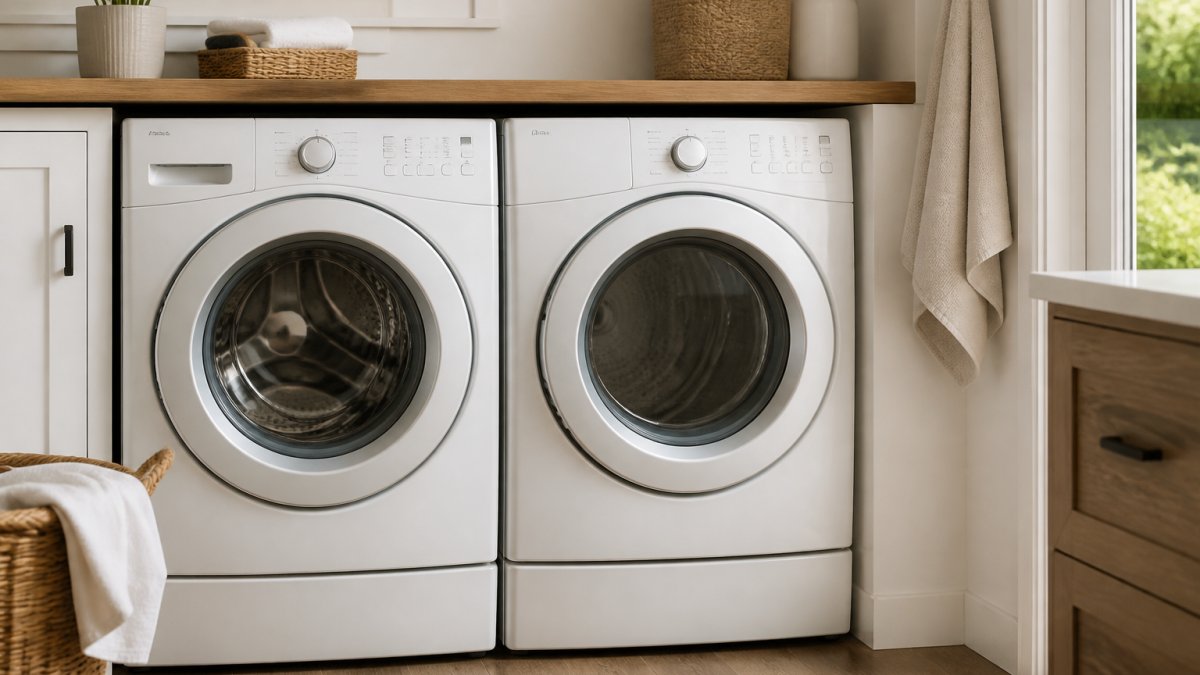
Stackable pairs and washer-dryer combos solve space problems separate units cannot. A stackable pair puts the dryer above the washer using a stacking kit, suiting closets and narrow alcoves. A combo unit washes and dries in a single drum, removing the transfer step and needing no dryer vent with heat pump technology.
Installation decides more of this than shoppers expect. Check the door swing direction, the electrical outlet type, the water hookups, and whether the floor can handle a fast spin.
Choosing Your Energy Efficient Laundry Pair at Fast Appliances
Choosing an energy efficient laundry pair comes down to four checks: the EnergyGuide numbers, the capacity your household actually needs, the installation constraints of your laundry room, and total cost over several years rather than sticker price. Buyers who run those checks in that order rarely regret the purchase. Budget-conscious shoppers can also read are scratch and dent appliances worth the savings.
When you are ready to buy, browse our selection online and check delivery timing before your old machine gives out. You can view the LG Washer + Dryer Washer + Electric Dryer Set in stock now.
Frequently Asked Questions
What is the most energy-efficient front-load washer and dryer pair?
The most efficient pairs combine a front-load washer with a low water factor and high modified energy factor with a heat pump dryer, which avoids the resistance heating that makes conventional dryers the biggest energy user in the laundry room. Look for the ENERGY STAR label on both units and check the yellow EnergyGuide tag for annual kWh and water use. A pair where both appliances are certified will generally use less energy than a certified washer paired with a standard vented dryer.
Do front-load washers use less water than top-loaders?
Yes. Front-load washers tumble clothes through a shallow pool of water rather than submerging them, so they typically use a fraction of the water a top-load agitator model needs per cycle. That lower water volume also means less energy spent heating water, which is where most of a washer's electricity goes. The gap widens on high-efficiency cycles and quick wash settings, where front-loaders are designed to work with concentrated detergent and minimal water.
Is a heat pump dryer worth it compared with a conventional electric dryer?
A heat pump dryer uses a closed-loop system that reheats air instead of venting it outside, so it draws far less electricity per load than a standard electric dryer. The trade-offs are a higher purchase price and longer cycle times. If you run several loads a week and plan to stay in the home for years, the lower operating cost can offset the upfront difference. If you dry occasionally or need fast turnaround, a conventional vented dryer may suit you better.
How do I compare washer and dryer energy use before buying a pair?
Start with the EnergyGuide label on each unit, which lists estimated annual electricity use in kWh and, for washers, annual water use in gallons. Compare those figures against the capacity in cubic feet so you are judging efficiency per load, not just per machine. Check whether both appliances carry ENERGY STAR certification, and ask about utility rebates in your area, since many providers offer incentives for certified washers and heat pump dryers that lower the real purchase price.
The real challenge is not finding an efficient pair; it is matching one to your space, your household, and your budget without guesswork. Fast Appliances LLC carries a wide variety of washers and dryers, states the condition and warranty on every listing, and delivers to your door. Get started with Fast Appliances LLC and put a pair in your laundry room that lowers the bill instead of raising it.