 comparison
Are Scratch and Dent Appliances Worth the Savings?
Last Updated: October 22, 2026
Quick Summary
Scratch and dent appliances are worth the savings when the damage is hidden, the warranty is intact, and the all-in price beats retail by enough to justify the risk. Savings typically land between 10% and 50% off retail, but delivery, installation, haul-away, and parts fees shrink that discount. If any one of those three conditions fails, the discount is not a discount.
- Scratch and dent appliances are brand-new, fully functional machines with cosmetic damage only.
- Add sticker price, delivery, installation, haul-away, parts, and protection plan to find real savings.
- A scratch and dent appliance warranty usually covers mechanical failure but excludes cosmetic damage.
- Return windows on scratch and dent units are often shorter and may exclude cosmetic damage.
- Pass on damage at a structural seam or control area, whatever the discount.
Table of Contents
- What Scratch and Dent Appliances Actually Are
- How Much Do You Really Save on Scratch and Dent Appliances?
- Pros and Cons of Buying Scratch and Dent
- What to Check When Buying Scratch and Dent Appliances
- Scratch and Dent Appliance Warranty: What's Covered and What Isn't
- Scratch and Dent Appliance Return Policy: Read This Before You Pay
- A Decision Framework: Damage Location, Discount Size, and Long-Term Costs
- Frequently Asked Questions
What Scratch and Dent Appliances Actually Are
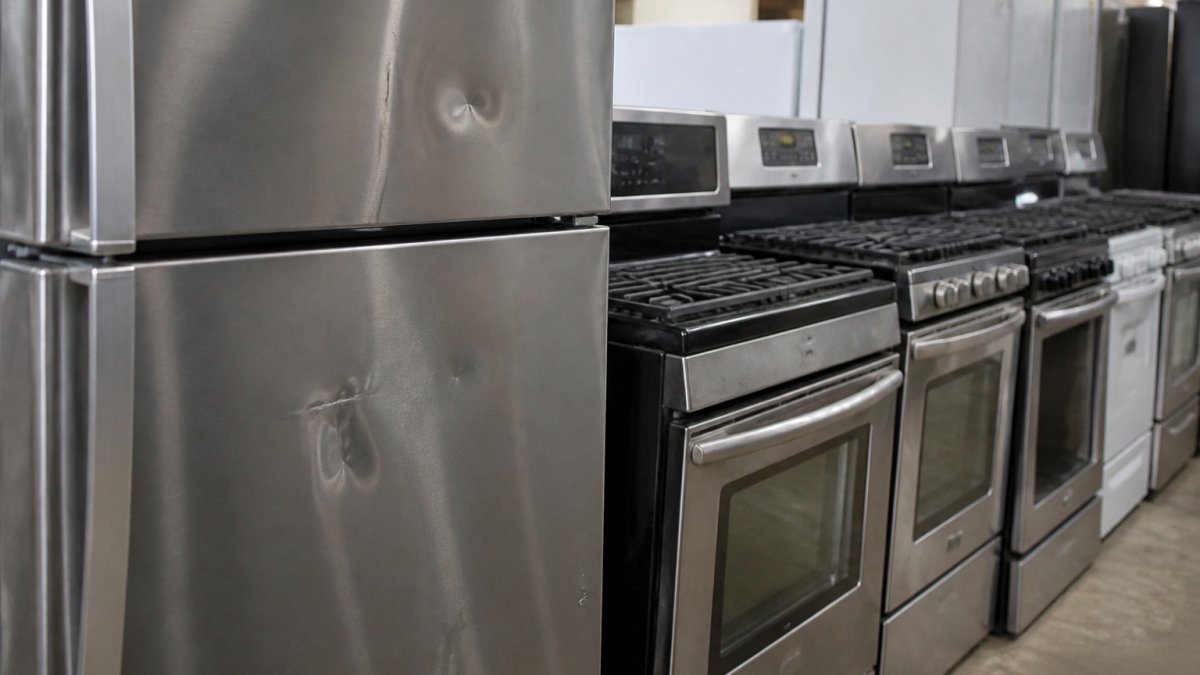
Scratch and dent appliances are brand-new, fully functional machines that carry cosmetic damage, usually a ding, scuff, or dent on a side panel. They are not used, refurbished, or floor models, though retailers sometimes display them side by side.
That distinction matters more than any single discount figure. A scratch-and-dent refrigerator that cools correctly is a working refrigerator. The only question is whether the blemish bothers you and whether the price reflects it.
Cosmetic Damage vs. Functional Damage
Cosmetic damage affects appearance only: scratches, dings, paint chips, and dents on panels that do not house controls or compressors. Functional damage affects how the machine runs, and it is not what the scratch-and-dent label is supposed to describe.
A common mistake is assuming every markdown hides a mechanical problem. It usually does not. What you should verify is that the damage is documented and confined to the exterior.
How Much Do You Really Save on Scratch and Dent Appliances?
Savings on scratch and dent appliances typically land between 10% and 50% off retail, according to retailer guidance from Appliance Solutions' buying guide, with the discount scaling with damage severity and location.
The percentage off is not the number that matters. The number that matters is what you pay after delivery, installation, haul-away, and any repair. Most buyers compare the sticker price to the retail price and stop there.
The Total-Cost Math Most Buyers Skip
A true total-cost comparison includes every line item that appears on the final receipt, not just the shelf tag. The categories below are the ones that most often turn a 40% markdown into a 15% markdown once the paperwork is done.
- Delivery fees. Sellers commonly charge a flat delivery fee that scales with distance and whether the unit requires a lift gate or stair carry. A fee quoted for a standard curbside drop can double when the appliance must be brought inside and up a flight of stairs.
- Installation charges. Dishwashers, ranges, over-the-range microwaves, and built-in refrigerators often require a licensed installer to connect water, gas, or hardwired electrical. Installation is frequently priced separately from delivery, and some sellers will not deliver without scheduling installation at the same time.
- Haul-away of your old appliance. Removing the old unit is a separate service at many retailers. If haul-away is not included, you either pay a fee or arrange disposal yourself, which in many municipalities means a bulky-item pickup fee.
A Simple Cost Worksheet
Before you commit, write down these six numbers side by side for the scratch-and-dent unit and for the comparable new retail unit:
- Sticker price after discount
- Delivery fee
- Installation charge
- Haul-away fee
- Parts or trim replacement cost
- Protection plan cost, if any
Add lines 1 through 6 for each unit. The difference between the two totals is your real savings, and it is almost always smaller than the percentage on the tag. If the real savings do not clear your threshold after fees, the discount is not a discount.
Pros and Cons of Buying Scratch and Dent
The case for buying is straightforward: you get a new appliance with full functionality at a lower price, and the damage is often on a surface nobody sees after installation. The case against is equally real, and it comes down to warranty terms, return restrictions, and resale value.
Pros:
- Lower purchase price on a new, unused machine
- Damage is frequently cosmetic and out of sight
- Same brand and model as the retail version
Cons:
- Manufacturer warranty may be reduced or voided
- Return and exchange windows are often shorter
- Damage can worsen if it sits on a structural seam
What to Check When Buying Scratch and Dent Appliances
What to check when buying scratch and dent appliances comes down to three things: where the damage sits, whether the machine runs, and what paperwork you leave with. Inspect the unit yourself, run it if the seller allows, and get the damage and warranty terms in writing before you pay.

Inspection Checklist by Appliance Type
Use this checklist on the floor or at delivery:
- Refrigerators: Check door alignment, gasket seal, and that the dent is not on the door face. Confirm it cools before it leaves the warehouse.
- Washers: Look for dents near the drum housing. Run a spin cycle if possible and listen for vibration.
- Dryers: Inspect the door latch and lint housing. Confirm the drum turns freely.
Scratch and Dent Appliance Warranty: What's Covered and What Isn't
A scratch and dent appliance warranty usually covers mechanical and electrical failure but excludes cosmetic damage. That split is the single most important term to confirm in writing. The manufacturer's warranty generally follows the machine, not the blemish, but some sellers sell units with a reduced or third-party warranty instead. Treat warranty coverage as a set of fine-print mechanics, not a yes-or-no answer.
The Four Warranty Terms That Decide Coverage
Most warranty disputes on scratch-and-dent units come down to four terms. Read each one before you pay.
- Who honors the warranty. The manufacturer, the retailer, or a third-party administrator can each be the obligor. A manufacturer warranty is generally the strongest because it is backed by the brand and honored through authorized service networks. A retailer-backed warranty depends on the retailer staying in business and on its service network. A third-party plan is only as good as its administrator's reputation and claims process.
- Exclusions for pre-existing damage. Many warranties exclude damage that existed at the time of sale. Because scratch-and-dent units are sold with disclosed damage, the seller may argue that a later functional failure stems from that same damage. Get the disclosed damage described in writing and confirm that the warranty does not treat it as a pre-existing exclusion.
- Cosmetic vs. functional coverage. Cosmetic damage is almost always excluded. The question is whether a cosmetic defect that later causes a functional failure, a dented door that misaligns a seal, for example, is covered. Ask the seller to state in writing whether consequential damage from a disclosed cosmetic defect is covered or excluded.
How Return Windows Interact With Warranty Coverage
A warranty and a return window are different protections, and the return window is often the shorter of the two. A typical return window is measured in days, while a warranty is measured in months or years.
Confirm these points in writing before you pay:
- The return window in days and whether it starts at purchase or delivery
- Whether cosmetic damage disqualifies a return
- Who pays return shipping or haul-away
The Federal Trade Commission's guidance on warranties explains the difference between full and limited warranties, which is the language you will see on the card in the box.
Scratch and Dent Appliance Return Policy: Read This Before You Pay
A scratch and dent appliance return policy is typically stricter than a standard retail return policy. Many sellers treat cosmetic damage as disclosed and final sale, and some charge a restocking fee or refuse returns on units marked down past a certain threshold.
Confirm these points in writing:
- The return window in days
- Whether cosmetic damage disqualifies a return
- Who pays return shipping or haul-away
A Decision Framework: Damage Location, Discount Size, and Long-Term Costs
Use this framework to make the call quickly.
| Damage Location | Typical Discount | Risk Level | Our Recommendation |
|---|---|---|---|
| Hidden side or back panel | 10-20% off | Low | Buy if warranty is intact |
| Visible side panel | 20-30% off | Low to moderate | Buy if it faces a wall |
| Front door, minor scuff | 30-40% off | Moderate | Buy if return policy is clear |
| Front door, deep dent | 40-50% off | Moderate to high | Negotiate further or pass |
| Structural seam or control area | Any discount | High | Pass |
Long-term costs swing the decision. A unit with a compromised door seal can raise energy use over time, and replacement parts for cosmetic trim are often not covered.
Buying scratch and dent appliances works best when you can see the condition, confirm the warranty, and get delivery and installation priced up front.
Frequently Asked Questions
How much do you save on scratch and dent appliances?
Discounts typically run from about 10% to 50% off retail, and the size of the markdown tracks the severity and location of the damage. A scuff on a side panel that faces a cabinet usually earns a deeper discount than a dent on a front door you see every day. Retailer guidance in the category puts average savings around 20% to 50% on clearance units. Always compare the scratch and dent price against the current retail price for the same model, not the original list price, so the savings are real.
Do scratch and dent appliances come with a warranty?
Many do, but the terms vary by seller. Some scratch and dent units carry the full manufacturer warranty because the damage is cosmetic and the unit was never used. Others are sold as-is with a limited store warranty or no coverage at all. Ask for the warranty in writing before you pay, and confirm whether it covers parts, labor, and the sealed refrigeration system. A scratch and dent appliance warranty that excludes cosmetic damage is normal; one that excludes mechanical failure is a red flag.
Can you return a scratch and dent appliance?
Return policies on scratch and dent units are stricter than on new appliances. Many sellers treat cosmetic damage as disclosed at the point of sale, which means you cannot return the unit later for a dent that was already there. Look for a policy that covers functional defects discovered after delivery, and confirm the return window in days. Get the damage documented on your receipt or delivery paperwork so there is no dispute about what was pre-existing.
Are scratch and dent appliances reliable?
A cosmetic dent or scratch does not affect how a compressor, motor, or control board performs, so a scratch and dent unit with only surface damage should run like a new one. The risk comes from units with hidden functional problems or damage near sealed components. Test the appliance before you buy when possible, ask why it was marked down, and check that doors, drawers, and hinges align properly. Reliability depends on the specific unit's condition, not on the scratch and dent label itself.
What should you check before buying a scratch and dent appliance?
Start with damage location: damage on the front, top, or door is visible daily, while side and back panel damage is often hidden after installation. Test power, controls, lights, and moving parts, and open and close every door and drawer. Confirm the model number, ask for the warranty and return policy in writing, and measure your space before you commit. Finally, add delivery, installation, haul-away, and any repair costs to the sticker price to see the true total.