 comparison
Pros and Cons of Counter-Depth Refrigerators
Table of Contents
- Counter-Depth vs Standard-Depth Refrigerator: The Core Trade-Off
- What a Counter-Depth Refrigerator Is and Who It Suits
- Counter-Depth Refrigerator Dimensions and How to Measure Your Space
- Counter-Depth Refrigerator Capacity: Why Usable Space Beats Cubic Feet
- Cost, Energy Use, and Total Cost of Ownership
- Best Counter-Depth Refrigerators: What to Look For in 2026
- Pros and Cons of Counter-Depth Refrigerators: A Household Decision Framework
- Frequently Asked Questions
Last Updated: October 15, 2026
Counter-Depth vs Standard-Depth Refrigerator: The Core Trade-Off
The pros and cons of counter-depth refrigerators come down to one trade: a cleaner, more integrated kitchen in exchange for less interior room.
This guide walks through the trade-off honestly, including the parts most buying guides skip: how to measure your alcove, why usable space matters more than the cubic-feet number on the tag, and which households come out ahead.
What a Counter-Depth Refrigerator Is and Who It Suits
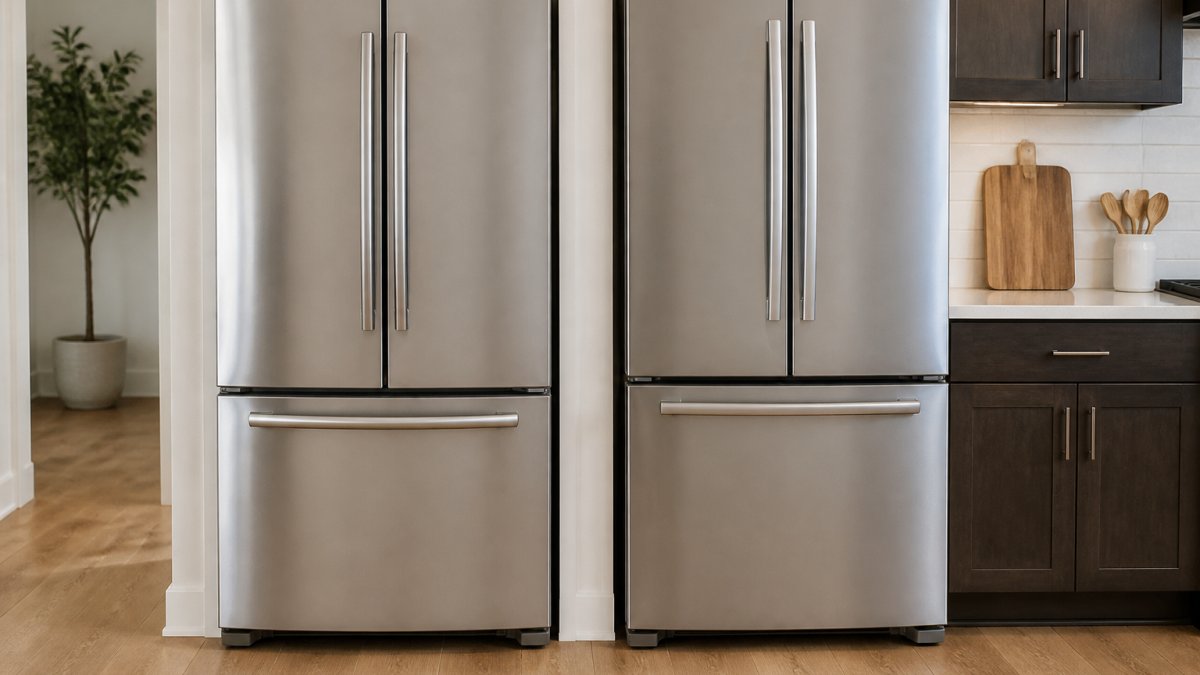
A counter-depth refrigerator is designed with a shallower cabinet depth so its front sits roughly flush with kitchen counters and cabinetry.
Industry guides describe the same distinction. KitchenAid's comparison explains that counter-depth models are shallower to achieve a built-in appearance, while standard-depth refrigerators generally offer more capacity (KitchenAid counter-depth vs standard-depth guide).
Counter-depth suits:
- Galley kitchens and narrow aisles where every inch of walkway counts
- Open-plan kitchens where the fridge is visible from the living area
- Households that shop fresh several times a week rather than stocking up monthly
It fits poorly in a busy household that fills a freezer to the brim, or in a kitchen with an oversized alcove that would leave awkward gaps around a shallower box.
Counter-Depth Refrigerator Dimensions and How to Measure Your Space
Counter-depth refrigerator dimensions vary by model, so measure your alcove before you shop. The label "counter-depth" describes a relationship to your counters, not one universal size. Most counter-depth refrigerators land in a cabinet depth of roughly 24 to 25 inches, with doors adding another 2 to 4 inches when closed, while standard-depth models commonly run 30 to 36 inches deep.
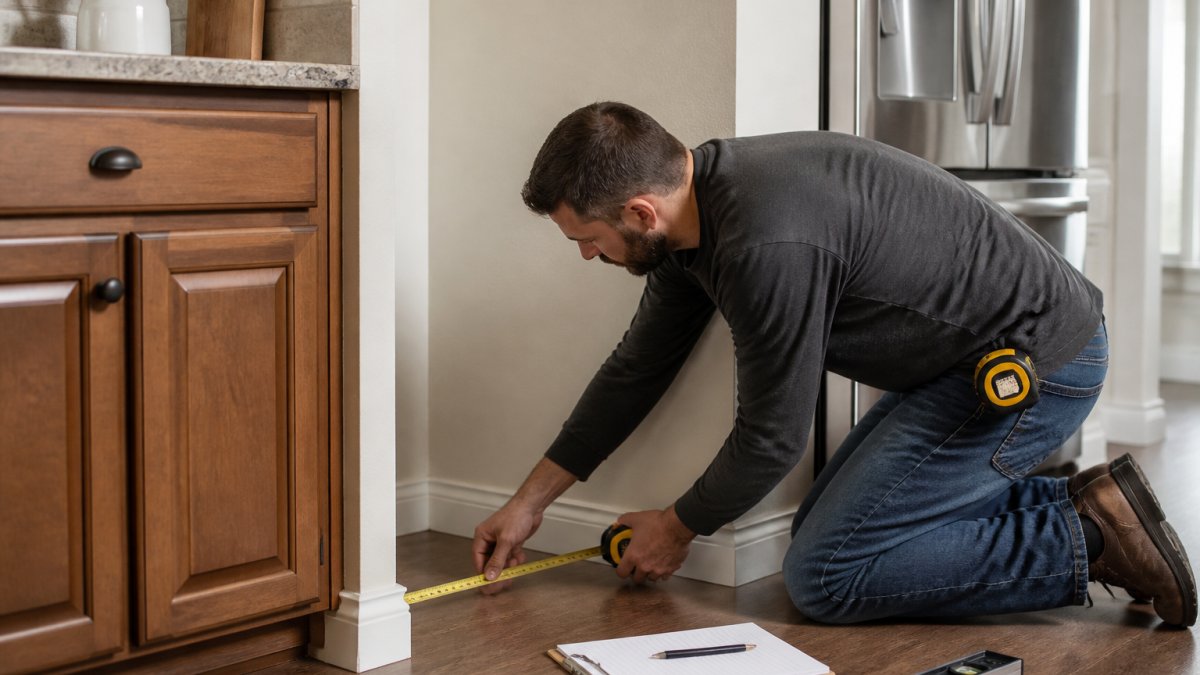
Measure These Numbers, In This Order
- Alcove depth from the back wall to the front edge of the counter. This is your target depth, not the fridge's spec sheet number.
- Width at the narrowest point, including any door trim, molding, or a protruding window sill.
- Height from floor to the underside of upper cabinets, measured at the lowest obstruction.
- Aisle space from the fridge front to the opposite counter or island.
- Hinge-side wall clearance from the side of the alcove to the nearest perpendicular wall or cabinet run.
- Door-swing arc with the doors open 90 degrees and 130 degrees, if the model allows it.
Write each number down in inches and keep the paper with you while you browse. "Counter-depth" tells you the fridge is shallower than a standard model. It does not guarantee it fits your specific opening.
Nominal Depth vs. Actual Depth
The depth printed on a spec sheet is usually the cabinet depth, measured at the box, not the door. Add door thickness, handle, and hinge cover, and a fridge listed at 24 inches deep can measure 27 to 29 inches from the back wall to the front of the handle. For a flush look, compare the spec sheet's "depth with doors" and "depth with handles" figures, not the headline number.
Ventilation and Breathing Room
Refrigerators need airflow to shed heat. Most manufacturers call for a 1-to-2-inch gap at the back, top, and sides; the exact figure is in the owner's manual. Sealing a fridge into a tight cabinet run without that gap forces the compressor to work harder and can shorten its life.
Door Swing, Drawers, and Installation Clearances
Door swing is the clearance most buyers forget. A French-door refrigerator needs room for both doors to open past 90 degrees, and the freezer drawer below must pull out fully. If a wall, island, or cabinet blocks that arc, you will fight the fridge every day.
Leave extra room on the hinge side: a door hinged against a wall needs clearance for the hinge to pivot without the door edge striking the wall.
A Quick Fit Test Before You Buy
Bring your measurements to the store and ask for the model's full specification sheet, not just the marketing depth. Confirm depth with doors and handles, required side and rear clearance, and door-swing radius. If the numbers leave less than an inch of margin, measure again at home before you commit.
Counter-Depth Refrigerator Capacity: Why Usable Space Beats Cubic Feet
Counter-depth refrigerator capacity is smaller than a comparable standard-depth model, but the headline cubic-foot number is not the whole story. Two fridges with the same listed capacity can hold very different amounts of food once you account for shelf spacing and interior division.
Abt's guide notes that some counter-depth models make up for reduced depth with greater width, which preserves room for party platters, cakes, and leftovers (Abt counter-depth refrigerator pros and cons). Width can offset depth more than shoppers expect.
What "usable" really means:
- Can a standard sheet pan or pizza box lie flat?
- Do tall bottles fit upright on a shelf, or must they lie down?
- Are the door bins deep enough for gallon jugs?
Interior Organization, Shelves, and Door Bins
Interior organization decides whether a smaller box feels cramped or adequate. Adjustable shelves create tall zones for pitchers and stacked containers, and split shelves that slide back make room for upright bottles.
Door bins are the quiet workhorse of a counter-depth fridge. Deep, adjustable bins hold condiments, cans, and dairy without eating shelf space. A full-width deli drawer and a crisper that actually seals will do more for your daily routine than an extra cubic foot you never fill.
Cost, Energy Use, and Total Cost of Ownership
Counter-depth refrigerators typically cost more than standard-depth models of similar size, and the gap can run into the hundreds of dollars depending on brand. Yale Appliance's analysis frames the purchase around trade-offs rather than appearance alone and notes that the price difference can be substantial (Yale Appliance on counter-depth refrigerators).
Purchase price is only the first line. Total cost of ownership includes:
- Delivery and installation, which can add fees on top of the sticker price, especially for a fridge that needs a water line run or a door removed to fit through a doorway
- Cabinetry or trim changes, if the alcove was built for a deeper fridge and now needs filler panels or a surround to look finished
- Repairs, since complex door and drawer mechanisms on some models cost more to service
Our advice: compare the delivered, installed price, not the shelf price. A cheaper fridge with a surprise installation fee is not cheaper.
How to Compare Energy Use Between Two Models
Every new refrigerator sold in the United States carries an EnergyGuide label, a yellow tag listing estimated annual electricity use in kilowatt-hours and estimated annual cost based on a national average rate.
To use it:
- Find the estimated annual kilowatt-hour figure on each label.
- Multiply each figure by your local electricity rate in dollars per kilowatt-hour, which appears on your utility bill.
- Compare the two results. A difference of 100 kWh per year at a typical residential rate is a modest but real annual gap, and it compounds over the life of the appliance.
A counter-depth fridge is not automatically more efficient than a standard-depth one. A smaller box has less volume to cool, but a poorly insulated or older design can still use more power than a larger, newer model.
Where the Money Actually Goes
The sticker price gap between a counter-depth and a comparable standard-depth fridge is often the smallest part of the difference. Installation, water-line work, and cabinetry adjustments close much of the remaining gap. Ask for the delivered and installed price in writing before you commit, and confirm whether haul-away of the old unit is included.
A Simple Ownership Comparison
Line up two candidate fridges and fill in four numbers for each: delivered price, installed price, estimated annual energy cost from the EnergyGuide label, and any cabinetry or trim cost. The lower sticker price is not always the cheaper fridge over ten years.
Best Counter-Depth Refrigerators: What to Look For in 2026
The best counter-depth refrigerators for 2026 share a few traits: honest dimensions, adjustable interiors, and doors that open cleanly in a real kitchen.
| What to Check | Why It Matters | Red Flag |
|---|---|---|
| Measured alcove depth | Confirms true counter-depth fit | "Counter-depth" with no depth spec listed |
| Door swing clearance | Doors and drawers must open fully | Hinges that need 6+ inches of side room |
| Usable shelf layout | Determines real storage, not cubic feet | Fixed shelves that waste vertical space |
| Delivered price | Reveals true cost | Low sticker price, high install fee |
| Configuration | French-door, side-by-side, or single-door | Style that fights your aisle space |
At Fast Appliances LLC, we carry refrigerators across these configurations, so you can compare depth, width, and layout side by side and match a model to the numbers you measured.
Pros and Cons of Counter-Depth Refrigerators: A Household Decision Framework
The pros and cons of counter-depth refrigerators resolve quickly once you match them to your household.
| Household Situation | Better Choice | Why |
|---|---|---|
| Narrow kitchen or tight aisle | Counter-depth | Preserves walkway and looks integrated |
| Large family, bulk shopping | Standard-depth | More usable capacity for volume |
| Open-plan kitchen, fridge on display | Counter-depth | Sits flush with counters |
| Tight budget | Standard-depth | Lower purchase price |
| Frequent fresh-food shopping | Counter-depth | Smaller capacity rarely becomes a problem |
| Freezer-heavy cooking and meal prep | Standard-depth | Bigger freezer compartment |
The honest summary: counter-depth refrigerators trade storage for looks and clearance. If your kitchen is tight or visible, that trade usually pays off. If your priority is maximum food storage at the lowest price, a standard-depth model is the smarter buy.
Choosing a refrigerator is really a question about your kitchen, not about which style is trending. If your aisle is tight or your fridge sits in view, a counter-depth model earns its place. Fast Appliances LLC carries a wide variety of refrigerators along with washers, dryers, stoves, microwaves, dishwashers, cooktops, and ovens, all orderable online with home delivery.
Frequently Asked Questions
What are the main disadvantages of a counter-depth refrigerator?
The two biggest drawbacks are less usable storage and a higher purchase price than standard-depth models. A counter-depth refrigerator is shallower, so it holds fewer groceries even when the headline cubic footage looks similar. Costs run higher because of the design and construction required to sit flush with counters. You also need to check door swing and drawer clearance carefully, since a tight kitchen layout can limit how far doors open.
How much less storage does a counter-depth refrigerator have?
The difference depends on the model, but counter-depth refrigerators generally offer less usable storage than standard-depth units of similar width. The depth reduction is the main factor. Some brands compensate by making the refrigerator wider, which helps with platters and wide items but does not fully close the gap. Check the interior dimensions and shelf configuration rather than relying only on the advertised cubic feet number.
Are counter-depth refrigerators more expensive than standard-depth models?
Yes, counter-depth refrigerators typically cost more than comparable standard-depth models. The price difference can reach hundreds of dollars depending on brand and features. Beyond the purchase price, factor in delivery, installation, and whether your cabinetry needs modification. Pricing varies by model and availability, so check current prices on the Fast Appliances LLC website.
Do counter-depth refrigerators actually line up with kitchen counters?
They come close, but true flush alignment depends on your counter depth and the refrigerator's actual dimensions. Standard kitchen counters are about 24 to 25 inches deep, and most counter-depth refrigerators are designed to sit near that range. Door handles and hinges often protrude slightly past the counter edge. Measure your counter depth and compare it to the refrigerator's spec sheet before buying, including the space handles add.
What should I measure before buying a counter-depth refrigerator?
Measure the width, height, and depth of your alcove, plus the distance to any island or opposing wall for aisle clearance. Check door swing clearance on both sides and whether drawers can pull out fully. Confirm the refrigerator's depth with handles included, not just the cabinet body. Write down your counter depth too, so you know how flush the unit will sit. Bring those numbers when comparing models.