 comparison
Front Load vs Top Load Washer: Pros and Cons
Table of Contents
- Front-Load Washer Pros and Cons
- Top-Load Washer Pros and Cons
- Front-Load vs. Top-Load Washer Efficiency
- Washer with Agitator vs. Impeller: What's the Difference
- Cleaning Performance and Stain Removal
- Cost Comparison: Purchase Price and Long-Term Value
- Which Washer Type Is Right for You
- Frequently Asked Questions
Last Updated: October 10, 2026
Front-Load Washer Pros and Cons
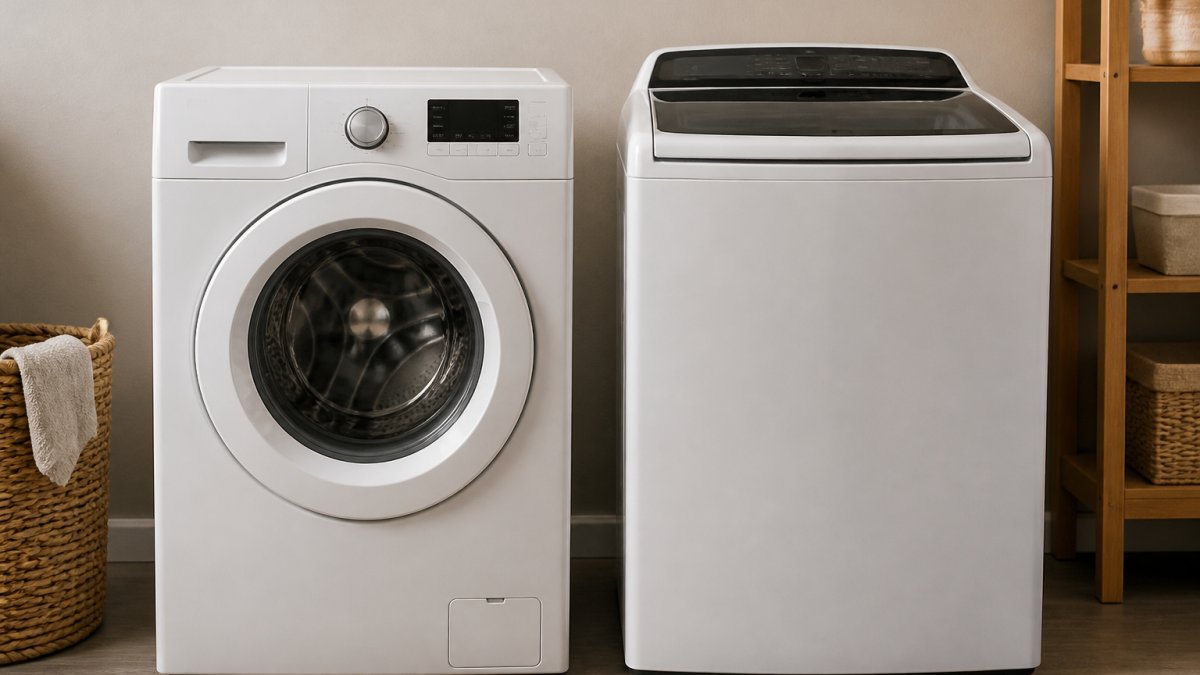
Front-load washers tumble clothes in a horizontal drum, using significantly less water and detergent than top-loaders. Their higher spin speeds remove more moisture from fabric before drying.
Front-loaders consume less energy and water per cycle, lowering utility bills over time. The tumbling action is gentler on delicate items and provides thorough cleaning for heavily soiled clothing.
The trade-off comes down to upfront cost and maintenance. Front-load washers typically cost more initially than comparable top-load models. They also require regular cleaning of the rubber gasket to prevent mold and odor buildup, a maintenance step top-loaders don't demand as urgently.
Top-Load Washer Pros and Cons
Top-load washers fill from the top and use an agitator or impeller to move clothes through water. The intuitive loading mechanism requires no bending, appealing to people with mobility concerns.
Top-loaders cost less upfront and complete most cycles in under 40 minutes. Simpler operation means fewer breakdowns and affordable repairs, making them ideal for families with large, heavily soiled loads.
Top-loaders use roughly 40-50% more water per cycle than front-loaders, resulting in higher water bills and longer drying times (Clothes Washers). Agitator-style models can be harder on delicate fabrics.
Front-Load vs. Top-Load Washer Efficiency
The efficiency gap between front load vs top load washer models is significant. Front-loaders use approximately 40-50% less water than top-loaders, according to Mr. Appliance's washer comparison guide, which also notes that front-loaders can reduce energy consumption substantially. The faster spin cycle in front-loaders extracts more water, reducing the time clothes spend in the dryer.
A household running five loads per week could save hundreds of dollars annually on combined water and electric bills with a front-loader, though the payback period typically spans 3-5 years depending on local utility rates.
Top-loaders excel at volume; faster cycle times and larger capacity can offset higher utility costs for families with young children or people who work in dirty conditions.
Washer with Agitator vs. Impeller: What's the Difference
An agitator is a vertical post that moves back and forth to rub clothes against each other and the tub. An impeller is a low-profile component with fins that creates a tumbling motion, similar to a front-loader.
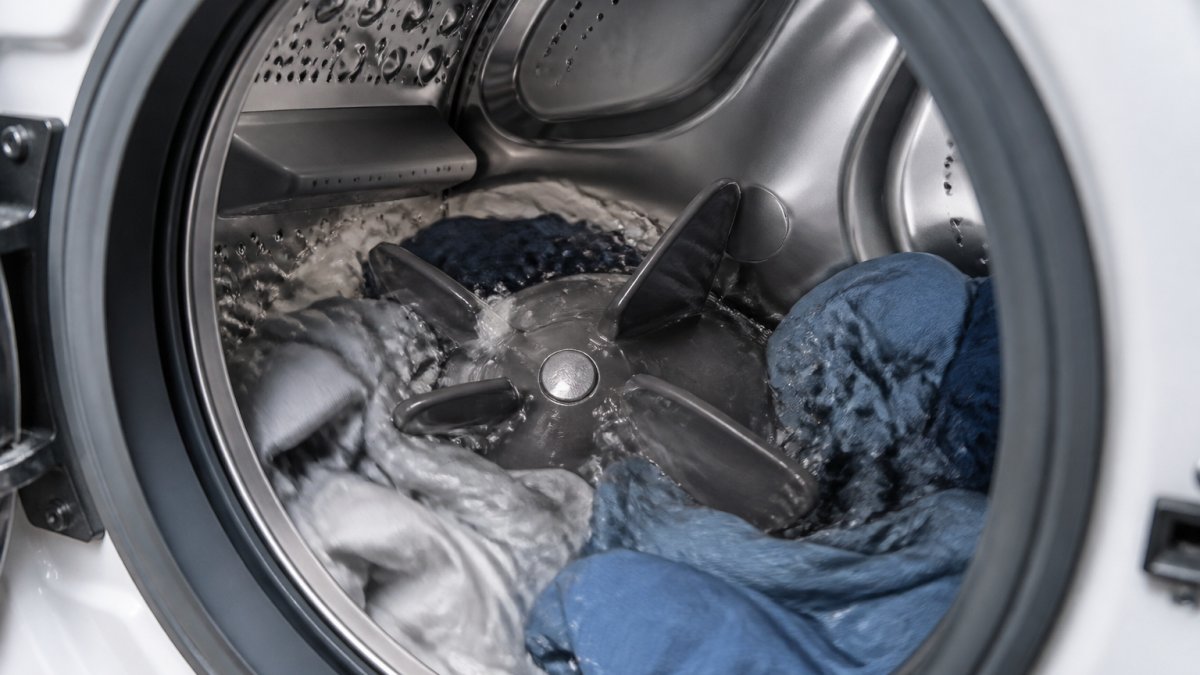
Agitator washers clean faster and handle heavily soiled items well but can wear delicate fabrics. Impeller washers are gentler on clothes and use less water but take longer to complete cycles.
Impeller models offer efficiency benefits of front-loaders while maintaining top-load convenience and affordability. Agitators remain the choice for those prioritizing cleaning power.
Cleaning Performance and Stain Removal
Front-load washers excel at stain removal; the tumbling action combined with lower water levels creates more concentrated detergent contact that penetrates fabric effectively.
Top-load washers with agitators deliver quick, powerful cleaning but require more water, which can dilute detergent effectiveness. Impellers fall between agitators and front-loaders in cleaning power.
Front-loaders handle delicate items like silk and wool without the wear that agitators cause. Both designs clean everyday clothing adequately with appropriate water temperature and detergent.
Cost Comparison: Purchase Price and Long-Term Value
Front load vs top load washer pricing differs significantly. True cost of ownership requires looking beyond purchase price.
Operating costs, water, electricity, and detergent, accumulate over the washer's lifespan of 10-14 years.
Calculating Total Cost of Ownership
To compare true long-term value, add purchase price, annual utility costs, and maintenance expenses. Your actual costs will depend on local rates and specific product requirements.
Example: 5 Loads Per Week Over 10 Years
How Local Utility Rates Change the Equation
Your actual savings depend on regional water and electricity costs. In areas with high water costs (California, parts of the Northeast), front-loaders break even faster. In regions with low water costs and cheap electricity, the advantage shrinks. Use your own utility bills to adjust the calculation above.
Repair and Replacement Costs
Front-loaders are more complex and repairs can be expensive, a new drum seal or control board may cost $300-$500. Top-loaders have simpler mechanics; agitator replacement typically costs $150-$300. If a washer requires major repairs after year 7, the total cost of ownership shifts. Factor in the likelihood of needing repairs based on brand reliability ratings and warranty coverage.
Long-term value depends on your household's usage, local utility rates, and how long you plan to keep the washer. For households staying in place 5+ years and running 4+ loads weekly, front-loaders typically deliver better overall value. For those prioritizing lowest upfront cost or planning to move within 3 years, top-loaders remain the practical choice.
Which Washer Type Is Right for You
Your choice between front load vs top load washer depends on your household's specific situation, but the decision extends beyond cleaning power and cost. Installation constraints, physical accessibility, and laundry space layout are equally important.
Choose a Front-Loader If:
- You prioritize efficiency and plan to stay in your home 5+ years (utility savings offset higher purchase price).
- You have limited floor space; front-load pairs stack vertically, saving roughly 50% of floor footprint compared to side-by-side top-loaders.
- You wash delicate fabrics regularly or have heavily soiled clothing that benefits from concentrated detergent contact.
- Your laundry room has adequate front clearance (typically 24-30 inches from the front of the door to the nearest obstacle).
- You're comfortable with regular maintenance: leaving the door open between cycles, cleaning the rubber gasket monthly, and emptying the drain filter quarterly.
- You have a utility sink or floor drain nearby; front-loaders require a drain line that can handle water discharge.
Choose a Top-Loader If:
- You need quick turnaround; most cycles complete in 30-40 minutes versus 45-60 for front-loaders.
- You have mobility limitations or physical constraints that make bending difficult; top-loaders eliminate the need to bend or kneel to load and unload clothes.
- You generate large volumes of heavily soiled laundry (families with young children, outdoor workers, athletes); top-loaders handle bulky loads and tough stains efficiently.
- You want the lowest purchase price and minimal maintenance; top-loaders have fewer complex components and rarely require preventive care.
- Your laundry space has limited front clearance but adequate overhead space; top-loaders need vertical clearance for the lid but work in tight horizontal spaces.
- You prefer simplicity; fewer electronic controls and mechanical parts mean fewer things break and repairs are typically straightforward.
Installation and Space Considerations
Before purchasing, measure your laundry space carefully:
- Door swing: Front-loaders require clearance for the door to open fully (typically 90 degrees). If your laundry room is narrow or the washer sits near a wall or corner, a front-loader may not fit. Top-loaders need only vertical clearance for the lid to open.
- Stacking: Front-load pairs can be stacked with a stacking kit, reducing floor space from roughly 27 square feet (side-by-side) to 15 square feet (stacked). Top-loaders cannot be stacked.
- Pedestal height: Front-loaders can be raised on pedestals (typically 12-15 inches) to reduce bending; this raises the door opening to waist height. Top-loaders are already elevated but cannot be raised further without custom platforms.
- Drain and vent access: Front-loaders require a drain line and vent hose routed to a standpipe or laundry sink. Top-loaders drain via gravity into a sink or standpipe. Verify your plumbing setup before purchasing.
- Vibration and noise: Front-loaders vibrate more during the spin cycle, especially if unbalanced loads occur. Top-loaders are generally quieter. If your laundry room is adjacent to living spaces, noise matters.
Accessibility Beyond Ease of Loading
If mobility is a concern, consider these factors:
- Reach and bending: Top-loaders require reaching into the drum and bending to retrieve clothes from the bottom. Front-loaders sit lower, reducing bending but requiring forward reach. Pedestals raise front-loaders to waist height, minimizing bending.
- Transfer from mobility devices: Top-loaders allow you to stand beside the machine and drop clothes in. Front-loaders require you to bend or kneel, or use a pedestal to raise the door opening. Wheelchair users may find front-loaders more accessible with a pedestal.
- Controls: Top-loaders typically use simple dials or buttons on the rim. Front-loaders often have digital touchscreens at waist height when on a pedestal. Verify button size and contrast if you have vision or dexterity limitations.
- Lid and door operation: Top-load lids require upward force to open; some models have soft-close lids that are easier to manage. Front-load doors require pulling outward; heavier doors may be difficult for people with limited grip strength.
Summary Decision Matrix
Use this framework to narrow your choice:
| Priority | Best Choice | Why |
|---|---|---|
| Lowest upfront cost | Top-load | Entry-level models start under $500 |
| Efficiency and long-term savings | Front-load | Breaks even in 4-5 years on utility bills |
| Speed and quick cycles | Top-load | 30-40 minute cycles vs. 45-60 for front-load |
| Limited floor space | Front-load | Stackable design saves 40% of footprint |
| Minimal bending required | Top-load (standard height) or Front-load (with pedestal) | Top-load requires less forward reach; pedestal front-load raises door to waist height |
| Delicate fabrics | Front-load | Gentler tumbling action reduces wear |
| Heavy, soiled loads | Top-load with agitator | Mechanical action breaks up dirt quickly |
| Minimal maintenance | Top-load | No gasket cleaning or filter care required |
| Limited front clearance | Top-load | Needs only vertical clearance for lid |
Measure your space, assess your household's laundry patterns, check local utility rates, and consider your physical ability to load and unload. The right washer is the one that fits your home, matches your usage, and aligns with your budget over its full lifespan.
Frequently Asked Questions
Do front-load washers clean better than top-load washers?
Both front-load and top-load washers can deliver excellent cleaning performance, but they work differently. Front-load washers use a tumbling action that's gentler on fabrics, while top-load washers with agitators provide more aggressive scrubbing for heavily soiled clothing. Front-loaders excel at removing stains through repeated lifting and dropping of clothes, while top-loaders work faster for quick cycles. Your choice depends on your typical laundry needs and fabric care priorities.
Are front-load washers more energy-efficient than top-load washers?
Yes, front-load washers are significantly more efficient. They use up to 45% less energy and 50% less water than top-load washers, according to efficiency comparisons. Front-loaders also spin faster, which removes more moisture from clothes and reduces drying time. If lower utility bills and reduced water consumption matter to your household, a front-load washer offers measurable long-term savings despite higher upfront costs.
Do front-load washers have more mold and odor problems?
Front-load washers can develop mold and odor if moisture isn't managed properly. The rubber gasket around the door and the drum can trap water and detergent residue. To prevent this, leave the door open after each cycle to air dry, clean the gasket regularly, and use high-efficiency detergent as recommended. Top-load washers are less prone to these issues because they drain completely and dry faster naturally.
Which type of washer is easier to load and maintain?
Top-load washers are easier to load because you don't have to bend down, and they're simpler to maintain overall. Front-load washers require bending to access the drum and need regular gasket cleaning to prevent mold. However, front-loaders are gentler on clothes and require less detergent. If accessibility or convenience is a priority, a top-load washer is the more practical choice, especially for households with mobility concerns.
Choosing between a front load vs top load washer is one of the biggest decisions in your laundry room. The right choice depends on balancing upfront cost, monthly utility bills, cleaning needs, and personal convenience. At Fast Appliances LLC, we stock both washer types with a wide variety of models to fit any household. Browse our selection of front-load and top-load washers, compare features and pricing, and find the perfect match for your home, delivered right to your door.