 how-to
What Size Refrigerator Fits a Small Kitchen?
Last Updated: October 29, 2026
Quick Summary
To choose the right refrigerator size for a small kitchen, measure the width, height, and depth of your opening at multiple points and use the smallest numbers. Then confirm the model's clearance requirements and door swing fit those measurements before you buy. Capacity should follow household size at roughly 4 to 6 cubic feet per person.
- Measure width at the counter, cabinet, and floor, then use the smallest number.
- Standard openings run about 30 to 36 inches, while compact models often start around 24 inches.
- Most freestanding models need roughly 1 to 2 inches behind and 1 to 2 inches above.
- One or two people usually need 11 to 16 cubic feet of capacity.
- In a truly small kitchen, a top-freezer or compact bottom-freezer usually wins.
Table of Contents
- How to Measure for a Refrigerator in a Small Kitchen
- Refrigerator Clearance Requirements You Cannot Skip
- Standard Refrigerator Dimensions and Size Ranges
- Refrigerator Capacity by Household Size
- Best Refrigerator Styles for Small Kitchens
- Built-In vs. Freestanding: Which Fits Your Space and Budget?
- Planning the Delivery Path and Installation Checks
- Choosing Your Refrigerator Size at Fast Appliances LLC
- Frequently Asked Questions
How to Measure for a Refrigerator in a Small Kitchen
Getting the right refrigerator size for a small kitchen starts with three measurements and one habit: measure twice, buy once. Grab a tape measure, a notepad, and 15 minutes.
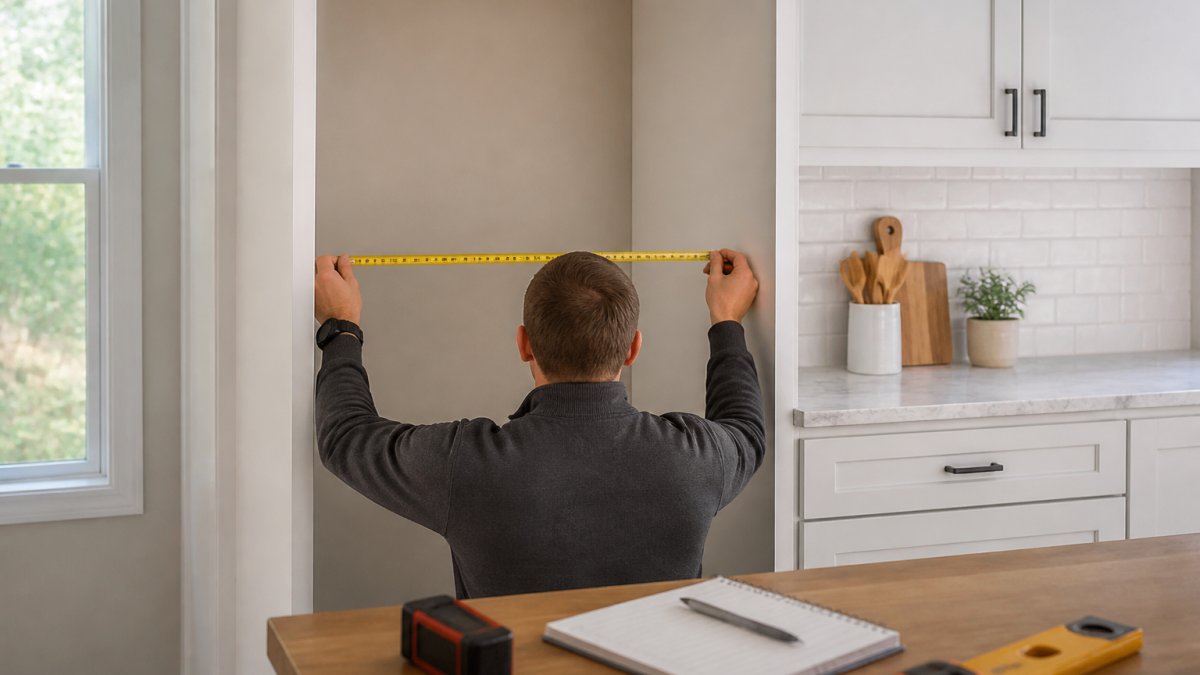
Here's the order that works:
- Measure the width at the counter, the cabinet, and the floor. Use the smallest number.
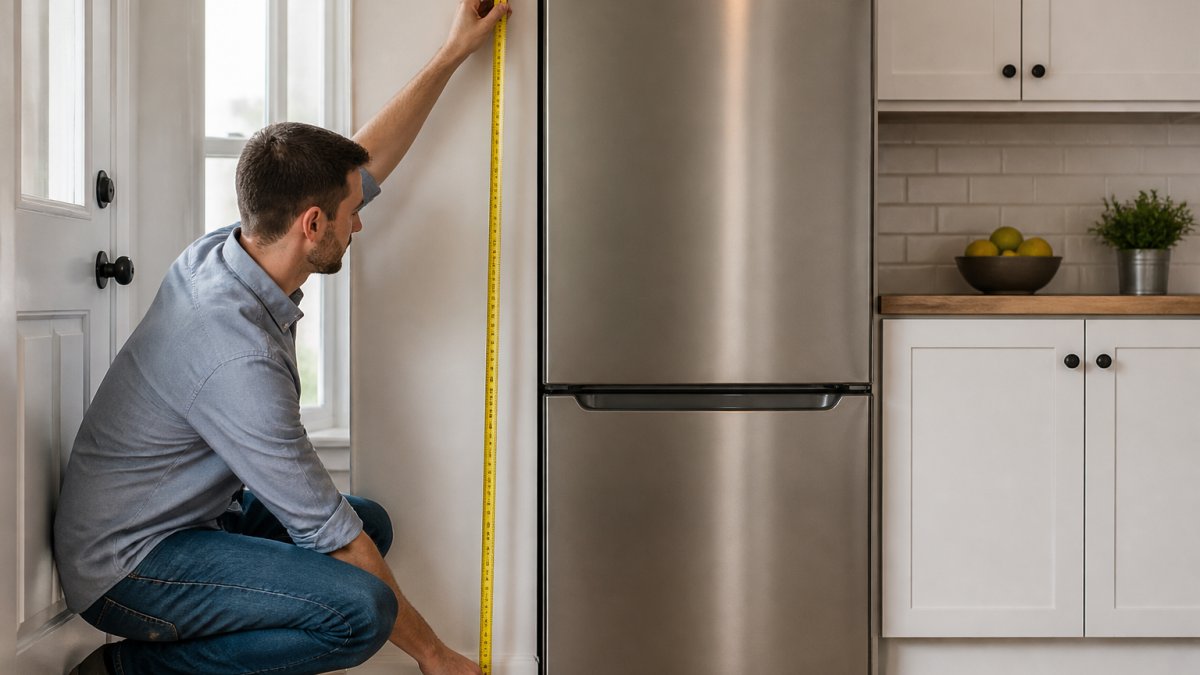
- Measure height from floor to the first obstruction above, not the ceiling.
- Measure depth from the back wall to the front edge of your counter.
- Note the door swing direction and how much room it needs.
- Check every doorway and hallway between your front door and the kitchen.
Write each number down. Guessing is how returns happen.
Width, Height, and Depth: The Three Numbers That Decide the Fit
Width eliminates the most refrigerators. Standard openings run about 30 to 36 inches, and compact models often start around 24 inches.
Height matters just as much. Standard refrigerators usually stand between 60 and 70 inches tall.
Depth decides whether the fridge sticks out past your counters. Counter-depth models sit closer to flush, but they cost more and hold less. A standard-depth unit will jut out several inches.
Door Swing, Hinge Side, and Nearby Obstacles
A refrigerator can fit the gap and still fail the room. Before you buy, ask three questions:
- Which way does the hinge sit, left or right?
- How far does the door swing past 90 degrees?
- What's in the way: a wall, an island, a drawer, a trash can?
French door models need wide clearance for both panels. Side-by-side units need room for handles to clear the counter. If your kitchen is tight, a single-door compact model with a reversible hinge is often the safer pick.
Refrigerator Clearance Requirements You Cannot Skip
Clearance is the space around the fridge, and skipping it is the most common small-kitchen mistake. Without breathing room at the back, sides, and top, the compressor works harder and the unit wears out faster.
Most manufacturers publish minimum clearances in the spec sheet: typically a couple of inches behind, a small gap on each side, and a few inches above.
Turn Clearance Into a Number, Not a Guess
Convert every clearance into a number you can tape off before you buy:
- Rear clearance: Most freestanding models specify roughly 1 to 2 inches behind the cabinet. Some need more if the condenser coils are on the back rather than the bottom.
- Side clearance: Many models call for about 1/8 to 1 inch on each side. Door hinges and handles often need more than the cabinet itself.
- Top clearance: Typically 1 to 2 inches above the unit, and more if cabinets sit directly overhead.
Write each figure on your notepad next to the matching measurement from your kitchen. If any kitchen number is smaller than the model's requirement, that model is out, no matter how well the width fits.
Ventilation and Airflow Around the Unit
Refrigerators push heat out, usually from the back or bottom. Trap that heat and you get higher energy bills and shorter lifespan. Keep these rules in mind:
- Never box the fridge into a cabinet with no gap.
- Keep the coils clean and unobstructed.
- Don't stack boxes on top of the unit.
If your space is genuinely sealed on all sides, look for a model rated for zero-clearance or built-in installation.
The Clearance Checklist Competitors Skip
Most sizing guides stop at width, height, and depth. The clearance pass is where a fridge that "fits" turns into one that actually works. Run this checklist before you order:
- Rear wall: Is there a baseboard, outlet, or water line that reduces the usable depth? A water line for an ice maker can push the fridge out an extra inch or two.
- Side walls and cabinets: Measure at the counter, the cabinet face, and the floor. Use the smallest number, then subtract the model's side clearance.
- Overhead cabinets: Measure from the floor to the bottom of the cabinet, not the ceiling. Subtract the top clearance.
- Door swing zone: Tape the door's 90-degree arc on the floor. Check it against islands, drawer pulls, trash cans, and walkways.
- Handle projection: Add the handle depth to the door-swing number. Handles are the part that hits the counter first.
- Front grille: Confirm nothing, a rug, a pet bowl, a cabinet toe-kick, blocks the bottom vent.
If a model fails any line, move to the next one, faster than discovering the problem at delivery.
Standard Refrigerator Dimensions and Size Ranges
Most refrigerators fall into a few recognizable size bands. Knowing them helps you filter listings fast.
| Type | Typical Width | Typical Capacity | Best For |
|---|---|---|---|
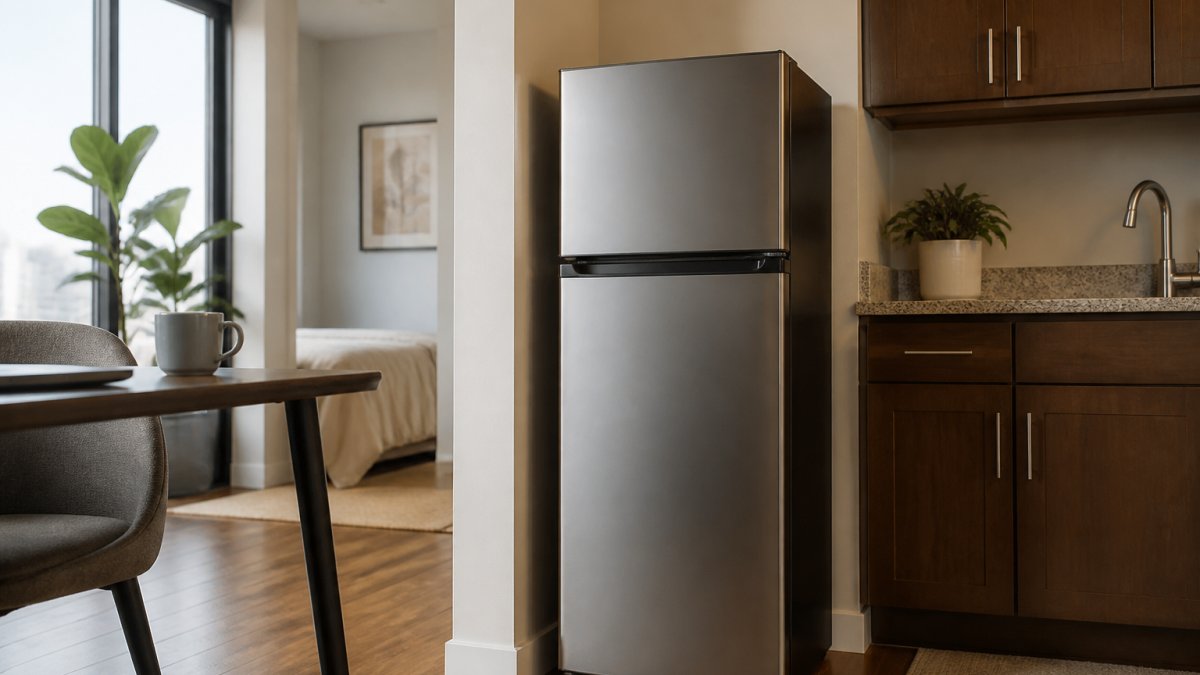
| Compact | 24 inches | 11 to 13 cubic feet | Apartments, tight galley kitchens |
| Standard top-freezer | 30 to 33 inches | 15 to 18 cubic feet | Small families, budget kitchens |
| Standard bottom-freezer | 30 to 36 inches | 18 to 22 cubic feet | Easy-reach fresh food storage |
| French door | 30 to 36 inches | 20 to 25 cubic feet | Wider kitchens, bigger households |
| Side-by-side | 33 to 36 inches | 20 to 25 cubic feet | Narrow door openings |
Exact figures vary by brand. Always confirm against the spec sheet before you order.
Refrigerator Capacity by Household Size
Capacity is measured in cubic feet, and the label number is not all usable, shelving, drawers, and the ice maker eat into real storage. A common rule of thumb is roughly 4 to 6 cubic feet per person in the household.
Here's how that shakes out in practice:
- One or two people: 11 to 16 cubic feet usually covers it.
- Three or four people: 18 to 22 cubic feet is a comfortable range.
- Five or more: 22 cubic feet and up, often a French door or side-by-side.
Cooking and shopping habits shift this. If you want to understand how cubic feet are actually calculated, our guide on how to measure refrigerator capacity in cubic feet walks through the math.
Usable Capacity and Layout Trade-Offs in Compact Models
A compact refrigerator with 12 cubic feet of rated capacity might hold less than you expect. Wide, adjustable glass shelves beat narrow fixed wire racks, and a full-width crisper drawer is worth more than two tiny ones.
Look at the freezer split too. A top-freezer compact often gives you a bigger fresh-food section. A bottom-freezer gives you easier reach but a smaller freezer. Match the split to how you actually shop.
Why the Cubic-Foot Number Lies
The advertised capacity counts the empty box. Real storage is what's left after shelves, drawers, ice maker, and door bins take their share, two models with the same 18 cubic feet can hold very different amounts of groceries.
A few layout rules matter more than the headline number:
- Shelf depth and width: Full-width, flat glass shelves hold more than split shelves with a gap in the middle. A shelf that stops short of the door wastes the space behind the door bins.
- Adjustability: Shelves that move in several positions let you fit a stockpot, a sheet pan, or a tall bottle. Fixed shelves force you to work around them.
- Drawer count and size: One wide crisper holds more than two narrow ones. A full-width deli drawer is more useful than a half-width one.
A Practical Size-Selection Decision Path
Use this sequence to turn numbers into a pick:
- Start with household size. Use the 4-to-6-cubic-feet-per-person rule as a floor, not a target.
- Adjust for habits. Add capacity if you cook most nights, buy in bulk, or freeze leftovers. Subtract if you shop small and eat out often.
- Check the layout against your groceries. If you buy tall bottles, a sheet pan, or a turkey, confirm the shelves adjust and the door bins are deep enough.
- Confirm the freezer split. Match it to whether you store more fresh food or more frozen food.
- Re-check the fit. A larger capacity only works if the model passes the width, height, depth, and clearance checks from earlier in this guide.
If the capacity you need will not fit the space, the honest answer is usually a second small unit, a compact fridge in a pantry or a chest freezer in a garage, rather than forcing an oversized model into a kitchen that cannot clear it.
Best Refrigerator Styles for Small Kitchens
For tight spaces, some configurations simply work better than others.
- Top-freezer: The classic small-kitchen workhorse. Simple, reliable, and usually the most affordable per cubic foot.
- Bottom-freezer: Puts fresh food at eye level. Good if you dig in the fridge more than the freezer.
- French door: Wide shelves and a roomy feel, but needs door clearance on both sides.
Our honest take: in a truly small kitchen, a top-freezer or compact bottom-freezer usually wins. French door looks great, but only if you have the swing room.
Built-In vs. Freestanding: Which Fits Your Space and Budget?
Built-in refrigerators sit flush with cabinetry and look custom, but they cost far more, need exact cutout dimensions, and often require professional installation. Freestanding models slide into a gap, come in far more sizes, and are easier to replace.
Choose built-in if you're mid-renovation and want a seamless look. If you're weighing a built-in, it helps to know how long a built-in refrigerator lasts before you commit to the higher cost.
Planning the Delivery Path and Installation Checks
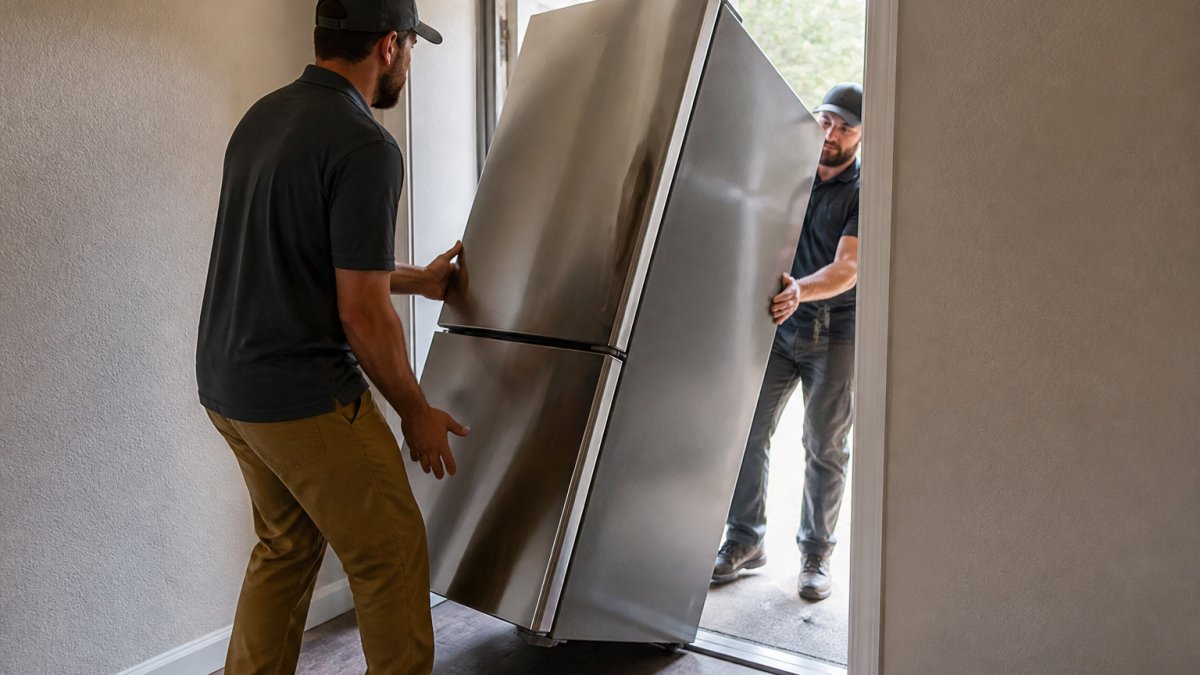
The fridge has to get into your kitchen, not just fit in it. Before you order, walk the path from the front door to the final spot.
Check these:
- Doorway widths and hallway turns
- Stair width and ceiling height on turns
- Elevator size, if you have one
Confirm the electrical requirements before delivery day, since modern refrigerators may need a grounded outlet on its own circuit. Our guide to essential electrical requirements for modern refrigerators covers what to check. If you're comparing delivery options, this appliance delivery comparison breaks down what to expect. And if you're still deciding on a model, our step-by-step guide on how to choose a refrigerator for a small apartment is a good next read.
Choosing Your Refrigerator Size at Fast Appliances LLC
Most small-kitchen fridge mistakes happen before checkout, not after: wrong width, no swing room, no clearance. Get the measurements right and the rest gets easy.
At Fast Appliances LLC, you can find a wide variety of home appliances, including refrigerators. Browse the online selection to find an option for your kitchen.
Get started with Fast Appliances LLC to explore the refrigerator selection.
Frequently Asked Questions
How do I measure a kitchen space for a refrigerator?
Measure the width, height, and depth of the opening at the narrowest points, not just at the front. Use a tape measure and write down each number. Then check door swing and hinge side so the door can open fully without hitting walls or counters. Add the clearance your model requires for ventilation. Bring these measurements when you shop so you can compare them directly to cutout dimensions and installation space.
What refrigerator size works best in a small kitchen?
A compact refrigerator around 24 inches wide with 11 to 13 cubic feet of capacity often fits small kitchens well. Slim and counter-depth models can also work when the layout is tight. The right refrigerator size depends on your measured opening, door clearance, and household needs. Measure first, then match the model's dimensions and required clearances to that space rather than guessing from the exterior look.
How much clearance does a refrigerator need?
Clearance requirements vary by model, so check the manufacturer's specifications for your exact unit. Common guidance includes a small gap on each side, space at the top, and room behind for airflow and cords. Door swing needs clear space in front too. Skipping clearance can block ventilation, strain the unit, and prevent drawers or doors from opening fully, so factor it into your measurement before you buy.
How do I choose refrigerator capacity for my household?
Match refrigerator capacity by household size and habits. One or two people often do well with 11 to 13 cubic feet in a compact model, while larger families usually need more. Consider how often you cook, shop, and freeze food. Also check usable capacity and shelf layout, since a model with awkward shelves may hold less than its listed cubic feet suggests. Bring your storage needs to the decision, not just the number on the label.
Ready to stop measuring and start cooking? Browse our refrigerator selection, confirm your dimensions, and let us deliver the right fit to your kitchen.