 ultimate-guide
How Long Do Dishwashers Last on Average in 2026
Table of Contents
- Average Dishwasher Lifespan and What Affects It
- Signs Your Dishwasher Needs Replacing
- Dishwasher Life Expectancy by Brand
- Dishwasher Maintenance Tips to Extend Lifespan
- Average Dishwasher Repair Cost vs. Replacement
- Factors That Shorten Dishwasher Life
- Frequently Asked Questions
Last Updated: September 21, 2026
Average Dishwasher Lifespan and What Affects It
The dishwasher lifespan average is between 9 and 15 years under normal household conditions. The dishwasher lifespan average depends heavily on three factors: how often you run the machine, the quality of water in your area, and how well you maintain it.
Hard water accelerates wear on the heating element and water inlet valve. Cycle frequency matters: a household running the dishwasher twice daily wears components faster than one running it three times per week. Premium models often last longer due to better seals and spray arms, but a well-maintained budget model can outlast a neglected premium one.
Maintenance is the real variable. Filter cleaning, seal inspection, and proper detergent choice directly impact longevity. A dishwasher receiving monthly attention can add 3-5 years to its operational life.
Signs Your Dishwasher Needs Replacing
Your dishwasher signals replacement when water doesn't drain completely, dishes come out with residue or spots, or the machine makes grinding noises. These often indicate the appliance has reached the end of its service life.
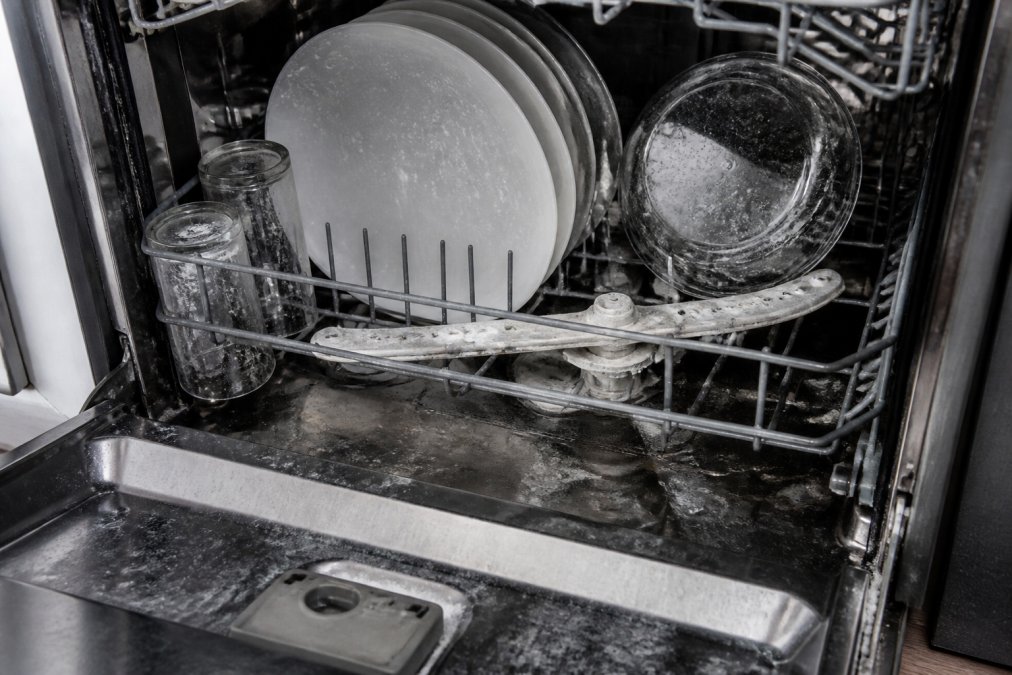
Leaks are the most common replacement trigger. Water pooling under the machine or moisture around the door seal signals the appliance is past repair. Control board failure and rust spots inside the tub are also red flags, corrosion spreads and compromises structural integrity.
If your dishwasher sounds like a gravel truck during the wash cycle, the pump or motor bearings are failing, typically signaling months, not years, remain. Poor cleaning performance often points to a failing pump or spray arm damage.
When dishes come out wet instead of dry, the heating element may be failing, affecting both drying and water temperature. Repeated repairs costing progressively more signal replacement is better than continued patching.
Dishwasher Life Expectancy by Brand
Brand reputation correlates with longevity, though quality varies within each lineup. Entry-level models from premium brands often last as long as mid-range models from budget manufacturers.
Durable brands use better seals, stronger drain pumps, and stainless steel components. Mid-range and premium lines deliver 12-15 years; budget models hit 9-12 years. Off-brand models vary widely.
When shopping for a replacement, Fast Appliances LLC offers a comprehensive online selection of essential home appliances. Key longevity features to look for include stainless steel tubs, sealed motor bearings, and non-corroding racks.
Installation quality affects lifespan. Proper leveling and secure connections give your new dishwasher a solid start.
Dishwasher Maintenance Tips to Extend Lifespan
Extending your dishwasher's life requires consistency, not complexity. The highest-impact tasks are filter cleaning, spray arm inspection, and mineral management, all of which directly reduce strain on the pump, motor, and seals.
Monthly Filter and Spray Arm Maintenance
Remove the filter basket monthly and rinse it under running water to clear food particles and mineral deposits. This prevents drain pump strain and reduces bacterial growth. A clogged filter forces the pump to work harder, reducing bearing life.
Check the spray arm monthly. Soak it in white vinegar for 30 minutes, then use a toothpick to clear mineral-clogged holes. In hard water areas, do this every two weeks.
Detergent Type and Internal Component Longevity
Detergent choice directly impacts component longevity. The three formats (powder, liquid, and pods) affect seals and pumps differently.
Powder detergents leave the most residue, accumulating on the heating element and spray arm. This buildup hardens and accelerates wear on pump bearings and seals. If you use powder, add an extra rinse cycle or switch to liquid or pods.
Liquid detergents dissolve more completely than powder but are concentrated. Overdosing leaves a film on seals and gaskets, reducing flexibility. Stick to the recommended dose.
Pods offer precise dosing and leave minimal residue, making them ideal for hard water areas or frequent use. The trade-off is cost, pods typically cost 20-40% more per load.
In hard water areas, use liquid or pod detergents designed for hard water. These include chelating agents that prevent mineral deposits on internal surfaces.
Quarterly Vinegar Cleaning Cycles
Run a vinegar cleaning cycle quarterly (monthly in hard water areas). Fill a cup with white vinegar, place it on the top rack, and run a hot cycle with no dishes. This dissolves mineral buildup without damaging seals.
Proper Loading and Water Pressure
Load correctly: overloading blocks water spray and forces the pump to work harder. Follow manufacturer guidelines to ensure water reaches all surfaces. This directly affects mechanical wear.
Place larger items on the bottom rack and ensure they don't block the spray arm's rotation. Blocked spray arms cause water pressure backup and motor strain.
Water Temperature and Cycle Selection
Use hot water cycles when possible, but balance them with regular vinegar cleaning to prevent mineral crystallization on the heating element (one of the most expensive components to replace at $180-400).
Use "light" or "eco" cycles for lightly soiled dishes to reduce pump and heating element wear. Reserve heavy-duty cycles for truly soiled loads.
Checking Seals and Connections Annually
Inspect the door seal yearly for cracks or hardening. Replacement ($120-200) is cheaper than water damage repair. Check inlet hoses for bulges or cracks; replace preemptively if original and the dishwasher is over 6 years old ($50-100).
NSF International standards for detergent performance
Water hardness testing and regional data
Average Dishwasher Repair Cost vs. Replacement
The repair-versus-replace decision hinges on three variables: the dishwasher's age, the repair cost relative to replacement price, and the appliance's remaining expected lifespan. Most repair professionals use the "50% rule" as a starting point, but the actual threshold depends on how far through its service life the unit has traveled.
The Financial Framework
If your dishwasher is under 5 years old, repair usually makes financial sense unless damage is catastrophic. Parts are readily available and you'll likely get another 5-10 years of service.
Between 5 and 8 years, apply the 50% rule: if repair costs exceed 50% of a new unit's price, replacement is better. A $400 pump repair on a $700 dishwasher is justified; a $450 repair is not.
Beyond 8 years, use the 25-33% rule. An appliance past its mean service life is likely to develop secondary failures within months. A $300 repair on a 12-year-old dishwasher (when new units cost $600-900) is a losing proposition.
Common Repair Costs (2026 Pricing)
- Pump replacement: $250-450 (labor included)
- Control board/electronic module: $350-700
- Door latch or seal: $120-280
- Heating element: $180-400
- Water inlet valve: $200-350
- Spray arm assembly: $80-200
- Motor bearing replacement: $300-600
Professional service calls add $100-150 in diagnostic fees. Multiple simultaneous failures compound costs quickly; a pump and heating element failure can exceed $800.
The Energy Efficiency Factor
Older dishwashers consume significantly more water and energy. A 2015 model uses 25-27 gallons per cycle; a 2026 ENERGY STAR model uses 3-5 gallons. Over five years, this difference can offset 30-50% of replacement cost.
When to Call a Professional vs. Replace
A professional diagnostic call ($100-150) clarifies whether repair is worthwhile. Multiple worn components signal replacement is imminent.
Common scenarios where replacement is the clear choice:
- Rust visible inside the tub (corrosion spreads; repair is temporary)
- Control board failure on a unit over 10 years old (electronics are rarely worth repairing at this stage)
- Leaks around the door seal combined with age over 12 years (structural integrity is compromised)
- Pump failure requiring replacement of the entire motor assembly (labor-intensive, often 40-60% of replacement cost)
The Replacement Decision
When replacement becomes necessary, consider your household's actual needs. A family running the dishwasher daily benefits from a mid-range or premium model with robust components and a longer warranty (typically 3-5 years on premium units versus 1 year on budget models).
Federal Trade Commission guidance on appliance repair versus replacement
Consumer Reports repair cost database
Factors That Shorten Dishwasher Life
Hard water is the silent killer of dishwasher longevity. Mineral deposits accumulate on the heating element, water inlet valve, and spray arm, forcing components to work harder and wear faster. If you live in a hard water area, you're fighting against chemistry, preventative maintenance becomes essential rather than optional.
ENERGY STAR guidelines on dishwasher efficiency
Consumer Reports appliance longevity data
NSF International standards for dishwasher components
Frequently Asked Questions
Is it worth fixing a 5-year-old dishwasher?
At 5 years old, your dishwasher is roughly halfway through its typical 9-15 year lifespan. The repair makes sense if the fix costs less than 50% of a replacement unit and the appliance has no other developing issues. Common repairs like drain pump or spray arm replacement are usually cost-effective at this age. However, if the control board fails or you're facing multiple repairs, replacement may be the better long-term investment.
Which brand of dishwasher lasts the longest?
Brand longevity depends heavily on build quality, component durability, and seal integrity. Warranty coverage length can indicate manufacturer confidence in lifespan, brands offering longer warranties typically engineer for longer operational efficiency.
What is the most common failure on a dishwasher?
The drain pump is the most frequently failing component, followed by the heating element and water inlet valve. Hard water mineral buildup accelerates these failures by creating deposits on internal parts. Spray arm clogs from detergent residue also rank high. Seal integrity issues develop over time, leading to leaks. Regular filter cleaning and using appropriate detergent types can significantly reduce wear and tear on these critical components.
Does regular maintenance extend dishwasher life?
Yes, preventative maintenance can add 2-5 years to your dishwasher's operational life. Cleaning filters monthly, running cleaning cycles quarterly, inspecting seals annually, and using the correct detergent type all reduce mechanical failure rates. Addressing hard water buildup early prevents damage to the heating element and water inlet valve. Homeowners who perform basic maintenance consistently report fewer diagnostic signs of failure and longer appliance longevity compared to those who neglect upkeep.