 ultimate-guide
Are Convection Microwaves Worth the Upgrade?
Last Updated: November 4, 2026
Quick Summary
A convection microwave combines standard microwave heating with a fan-driven convection oven, so it can bake, roast, and brown food rather than only reheating it. The main benefits are browning, crisping, and even baking in one unit that saves counter space. Convection mode takes longer than microwave mode, so you must adapt times and pans.
- A convection microwave heats a small cavity quickly and moves air aggressively, changing cook times and browning.
- Start with the oven recipe's time, subtract roughly 10 to 15 percent, and check early.
- Use low-sided metal pans so air reaches the food, and never use metal in microwave mode.
- Preheat in convection mode, leave gaps between items, and rotate food halfway through baking.
- Convection microwaves need more cleaning attention because grease from roasting can circulate with the fan.
Table of Contents
- What a Convection Microwave Actually Does
- Convection Microwave vs Traditional Oven: Key Differences
- How Convection Microwave Cooking Times Compare
- Best Practices for Convection Baking in a Microwave
- The Downsides Nobody Mentions
- Matching the Appliance to Your Cooking Habits
- Choosing the Right Convection Microwave at Fast Appliances LLC
- Frequently Asked Questions
What a Convection Microwave Actually Does
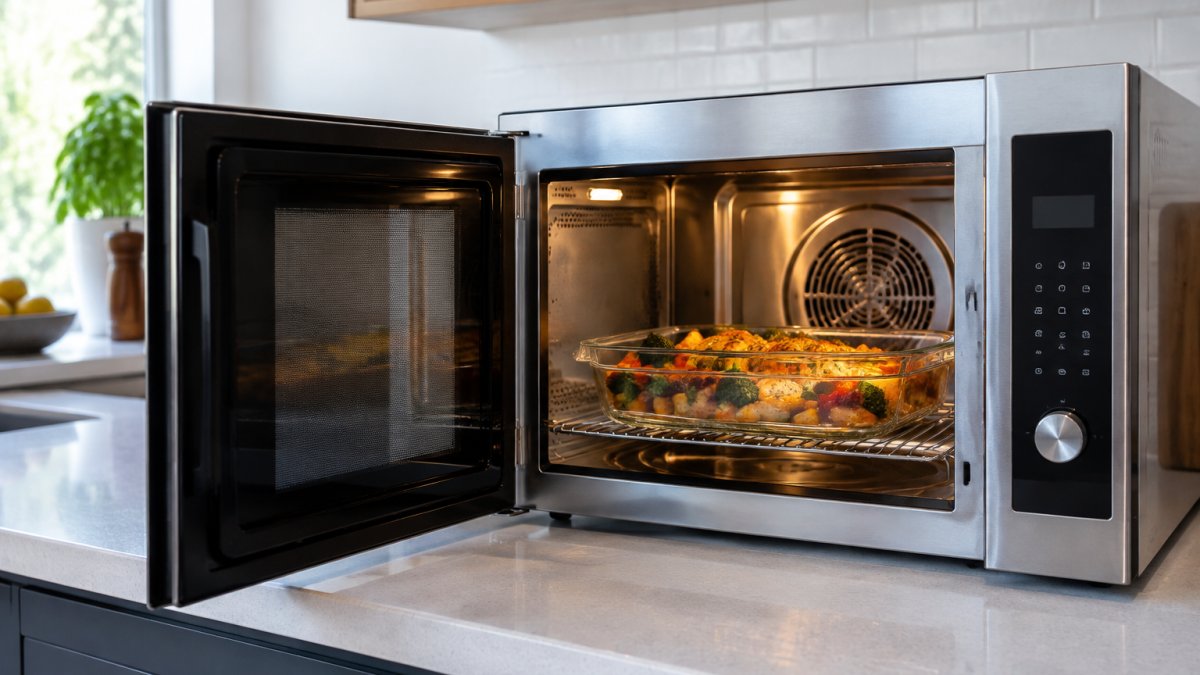
A convection microwave is a countertop appliance that combines standard microwave heating with a fan-driven convection oven, so it can bake, roast, and brown food rather than only reheating it. Shoppers often ask one question: does the fan really change what comes out of the box? It does, and that is the core benefit of using a microwave convection oven.
Here is the short version. A standard microwave heats water molecules with microwaves and stops there. A convection microwave adds a heating element and a fan that circulates hot air around the food, which produces browning, crisping, and even baking. Two appliances share one footprint.
That matters most in kitchens where counter space is tight or where a second wall oven is not an option. You get a fast reheating tool and a real baking cavity in the same unit. The trade-off is that convection mode takes longer than microwave mode, and results depend on how well you adapt times and pans.
Convection Microwave vs Traditional Oven: Key Differences
The main difference is scale and speed. A traditional oven heats a large cavity slowly and holds temperature steadily; a convection microwave heats a small cavity quickly and moves air aggressively. That changes both cook times and browning.
Where the Convection Microwave Wins
- Speed to temperature. A small cavity preheats in a fraction of the time a full oven needs.
- **
- Space. One unit replaces two on the counter.
- Small-batch baking. Cookies, sheet-pan vegetables, and single-chicken roasting all work well.
Where a Traditional Oven Still Wins
- Capacity. A full turkey, multiple trays at once, or a large batch of anything belongs in the wall oven.
- Evenness across large surfaces. Big cavities with dedicated convection fans distribute heat more evenly than a compact unit.
- Broiling and high-heat searing. Most convection microwaves cap lower than a full oven's broiler.
For a deeper look at how oven types stack up, our comparison of double oven vs single oven covers capacity, cost, and layout trade-offs.
How Convection Microwave Cooking Times Compare
Convection microwave cooking times usually run longer than microwave-only times but shorter than a full-size oven's, because the cavity is small and the fan moves heat efficiently. The exact gap depends on the food, the pan, and how full the cavity is, but you can reason about it instead of guessing.
The mechanism is straightforward. A compact convection cavity is smaller than a wall oven, so it reaches temperature faster. The fan also strips moisture from the food surface faster than a still oven, which speeds browning but can dry out lean proteins and delicate baked goods. That is why the same recipe can finish early in a convection microwave and still come out dry if you use the wall-oven time unchanged.
A practical starting point: begin with the oven recipe's time, subtract roughly 10 to 15 percent, and check early. Convection mode in a compact unit typically finishes food faster than a wall oven but slower than a microwave-only cycle. Assuming a convection microwave matches your wall oven's timing can dry out baked goods, since the smaller cavity and moving air pull moisture faster.
Three habits shorten the learning curve:
- Check doneness early, since the moving air transfers heat more aggressively than a still oven.
- Use low-sided metal pans so air reaches the food; a deep roasting pan shields the sides and slows browning.
- Never use metal in microwave mode; switch modes deliberately, and confirm the unit's combination mode allows metal before you use a metal pan in it.
If you are comparing timing across appliance types, our comparison of double oven vs single oven covers how cavity size and fan placement change evenness and speed.
Convection mode in a compact unit finishes food faster than a wall oven but slower than a microwave-only cycle, so adjust times rather than copying them.
| Mode or appliance | Speed relative to others | Note |
|---|---|---|
| Microwave-only mode | Fastest | Reheating only, no browning |
| Convection microwave | Faster than wall oven, slower than microwave-only | Small cavity and moving air speed browning |
| Traditional wall oven | Slowest to preheat | Holds temperature steadily in a large cavity |
| Starting point for adapting a recipe | Subtract roughly 10 to 15 percent | Begin with the oven recipe's time and check early |
| Risk of unchanged wall-oven timing | Dries out baked goods | Smaller cavity and moving air pull moisture faster |
Best Practices for Convection Baking in a Microwave
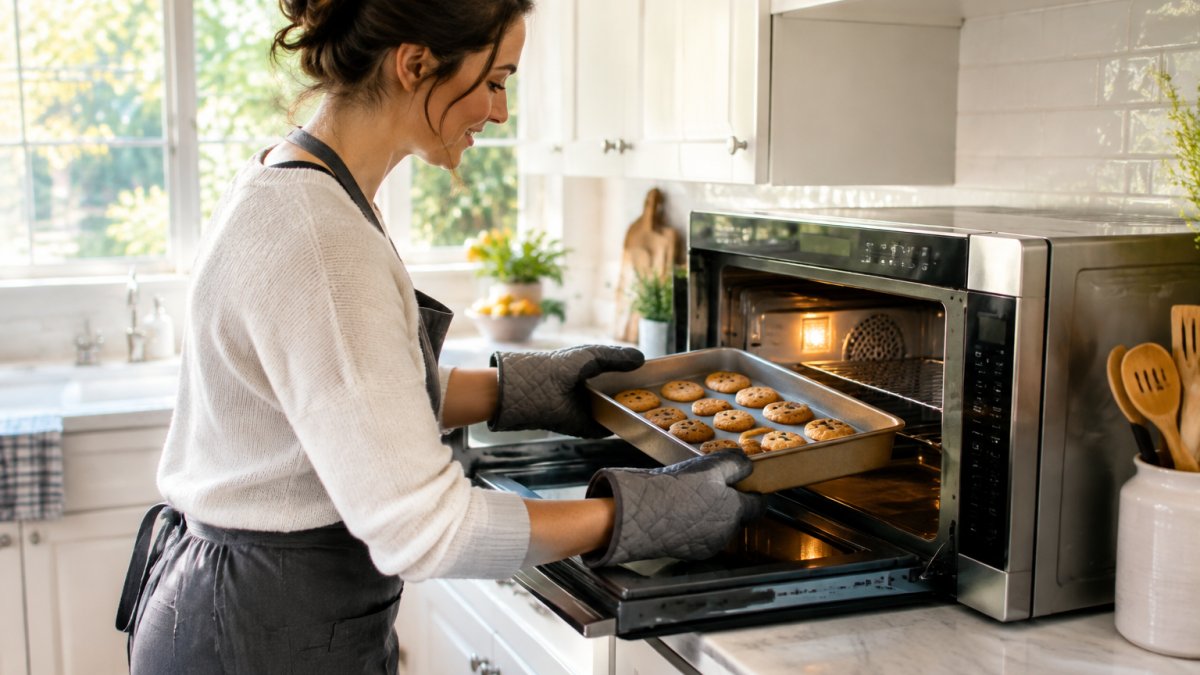
Best practices for convection baking come down to airflow, pan choice, and preheating. The fan is the whole point, so anything that blocks air movement undercuts the result.
- Preheat in convection mode. Give the cavity time to reach temperature before the food goes in.
- Choose the right pan. Low-sided metal pans let air circulate; dark finishes brown faster, so drop the temperature a little.
- Leave gaps. Do not crowd the turntable or rack; air needs room to move around each item.
- Rotate halfway. Even compact cavities have hot spots; a mid-bake turn fixes most of them.
- Match mode to task. Microwave for reheating, convection for browning, combination mode for foods that need both.
A common mistake is baking on glass in convection mode and expecting crisp edges. Glass is fine, but it insulates, so browning takes longer than with metal.
The Downsides Nobody Mentions
Convection microwaves involve a learning curve and limited capacity compared with a full oven, and the fan is audible when convection is active. Combination mode also takes some attention until you learn how your unit cooks.
Convection microwaves can need more cleaning attention than a plain microwave, since grease from roasting can circulate with the fan. Wiping the cavity after convection sessions helps keep smells from carrying into the next bake.
Performance trade-offs worth knowing before you buy:
- Cycle duration. Convection mode takes longer than microwave mode, so a quick dinner may not stay quick if you need browning.
- Drying. Moving air can pull moisture from lean meats and delicate baked goods, so recipes may need adjusting.
- Noise. The fan runs whenever convection is active.
Installation and placement can affect performance. Over-the-range units need proper ducting or a recirculating option, and countertop units need clearance around the vents so the fan can move air.
If you are weighing whether extra features justify the spend, our review of smart ovens with air fryers covers what those add-ons actually deliver, and whether they add another surface to clean.
Matching the Appliance to Your Cooking Habits
Match the appliance to how you actually cook, not to how you imagine you might. Small households that reheat more than they bake may get the most from a convection microwave. Larger families baking in volume may still need a full oven.
Ask three questions before buying:
- How often do you bake or roast for more than two people?
- Do you have counter space for a unit that is larger than a basic microwave?
- Will this be your only oven, or a second one?
If you cook for one or two and want browning without heating a full oven, a convection microwave is a strong fit. If you host and bake in batches, treat it as a supplement. For tight kitchens, our list of the best microwaves for small kitchens covers units that fit limited counter space.
Choosing the Right Convection Microwave at Fast Appliances LLC
Choosing the right unit comes down to capacity, wattage, mode options, and how it will be installed. Fast Appliances LLC offers a range of home appliances, including microwaves, ovens, and cooktops.
What to check before you buy:
- Capacity. Match liters to your household size and typical batch.
- Wattage. Higher wattage means faster, more even results.
- Modes. Confirm true convection, not just a "crisp" setting.
- Ventilation. Over-the-range units need proper ducting or a recirculating option.
- Dimensions. Measure the cutout or counter space before ordering.
If you are planning an over-the-range unit, our guide to dishwasher and over-the-range microwave installation explains what needs to be in place first and what installation includes. For a detailed walkthrough of one popular oven-microwave pairing, see our KitchenAid oven microwave combo review.
Frequently Asked Questions
What are the downsides of using a convection microwave oven?
The main drawbacks are smaller capacity than a full wall oven and a learning curve on cooking times. Some units can be louder than a standard microwave, and preheating in convection mode takes longer than plain microwaving. For large holiday meals or multiple trays at once, a traditional oven still does the job better.
Can a convection microwave replace a traditional wall oven?
For small households and everyday meals, it often can. A convection microwave browns, roasts, and bakes in a fraction of the space, which suits apartments, guest kitchens, and anyone cooking for one or two people. It falls short when you need to cook several dishes at once or fit a large roasting pan. Many homeowners keep both: the convection microwave for weeknights and the wall oven for holidays and big batches.
How do convection microwave cooking times compare to a regular oven?
Convection cooking times typically run shorter because the fan moves hot air around the food instead of relying on still heat. Convection cooking times can run shorter than a traditional oven recipe calls for, so check doneness early. Small items finish fastest, while dense dishes need closer monitoring.
Is it worth upgrading to a microwave with convection capabilities?
It is worth it if you regularly cook for one or two people, want browning and crisping from a countertop unit, or have limited kitchen space. The upgrade usually costs more than a standard microwave, so budget-conscious buyers should weigh how often they will use the convection mode. If you mostly reheat leftovers and boil water, a basic microwave does that fine. If you want roasted vegetables, baked goods, or crispy leftovers without heating a full oven, the upgrade earns its place.
The real question is not whether a convection microwave can bake, but whether it fits how your kitchen actually runs. Start by measuring your space and counting how many people you cook for, then match capacity and modes to that. Fast Appliances LLC carries microwaves, ovens, and cooktops in one place with home delivery, so you can compare sizes and finishes without a showroom trip. Get started with Fast Appliances LLC and equip your kitchen with appliances that earn their counter space.