 listicle
Best Microwave for Small Kitchens: 10 Top Picks
Table of Contents
- Quick Comparison Table
- Best Overall Compact Countertop Microwave
- Best Budget-Friendly Option
- How to Choose a Microwave for a Small Apartment
- Compact Countertop Microwave Dimensions and Space Requirements
- Microwave Wattage Guide for Small Kitchens
- Key Features to Consider When Buying
- Installation and Ventilation Requirements for Tight Spaces
- Best Budget-Friendly Option (Continued)
- Frequently Asked Questions
Last Updated: August 30, 2026
Quick Comparison Table
| Microwave | Capacity | Wattage | Best For | Starting Price |
|---|---|---|---|---|
| Whirlpool WMC20005YD | 0.5 cu. ft. | 750W | Extreme space constraints, corner placement | $339.99 |
| GE JES1072SHSS | 0.7 cu. ft. | 700W | Budget-conscious, basic reheating | $116.00 |
| Toshiba EM925A5A-BS | 0.9 cu. ft. | 900W | Small families, preset cooking | $219.99 |
| COMFEE' EM720CPL-PMB | 0.7 cu. ft. | 700W | Tight budgets, minimal features | $80.99 |
| Farberware Classic FMO07ABTBK | 0.7 cu. ft. | 700W | Multi-stage cooking, memory function | $69.98 |
| Amazon Basics Microwave | 0.7 cu. ft. | 700W | Alexa integration, smart home users | $59.99 |
| Panasonic NN-SN686S | 1.2 cu. ft. | 1200W | Even heating, sensor cooking | $294.95 |
| Samsung MS11K3000AS | 1.1 cu. ft. | 1000W | Mid-sized kitchens, sensor cooking | $189.00 |
| Breville Compact Wave | 0.9 cu. ft. | Inverter tech | Premium feel, quiet operation | $249.95 |
Finding the best microwave for small kitchens requires balancing capacity, power, and footprint. Fast Appliances LLC carries compact microwaves designed to fit tight spaces without sacrificing functionality. Whether you're furnishing a studio apartment, updating a dorm room, or maximizing a galley kitchen, the right microwave transforms meal preparation in confined quarters.
Best Overall Compact Countertop Microwave
The Whirlpool WMC20005YD solves a real problem: fitting a functional microwave into kitchens where every inch matters. Its rounded back allows corner placement that flat-backed models cannot achieve, freeing valuable counter space. At 0.5 cubic feet, it accommodates a full 11-inch dinner plate while maintaining the smallest footprint available.
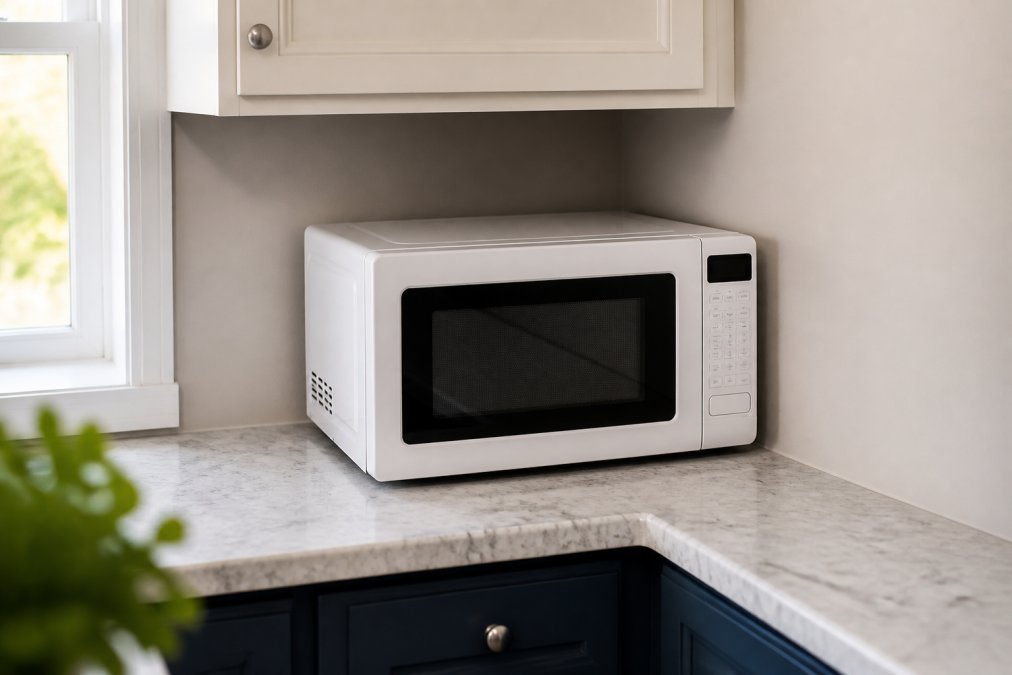
The 750-watt power output means slightly longer cooking times. For reheating coffee, defrosting vegetables, or warming leftovers, this rarely matters. Dense foods like potatoes or frozen meats add 20-30 seconds to typical cook times. The Tap Touch controls are straightforward, and the child safety lock prevents accidental operation.
The real limitation is smaller capacity. If you regularly microwave full-sized plates or large containers, this model frustrates quickly. For single people, couples, or anyone prioritizing space over volume, it's the best compact countertop microwave available.
Best Budget-Friendly Option
The COMFEE' EM720CPL-PMB delivers genuine value at under $81. The 0.7 cubic feet capacity accommodates most standard dishes, and the 700-watt output handles routine reheating and simple cooking competently.
What separates this from other budget microwaves is the thoughtful feature set. Eleven power levels provide granular control, while one-touch express cooking buttons (1-6 minutes with 30-second increments) work well for quick tasks. The ECO mode and mute function address real user frustrations: energy waste and noise pollution in tight apartments.
The trade-off is straightforward: no advanced features like sensor cooking or pre-programmed menus. You set time and power manually each use. For basic reheating of coffee, leftovers, and frozen vegetables, this limitation barely registers. For complex cooking like defrosting meat or cooking fresh vegetables evenly, the lack of sensors means more guesswork.
The compact footprint makes it ideal for dorms and studios. Its black finish hides fingerprints better than stainless steel. At this price point, build quality is respectable without being exceptional. Fast Appliances LLC offers this model for customers who need functional without fancy.
How to Choose a Microwave for a Small Apartment
Selecting the best microwave for small kitchens comes down to three decisions: capacity, wattage, and footprint.
Capacity first. A 0.5 cubic feet microwave handles single servings. A 0.7 cubic feet model fits most standard dinner plates. A 0.9 cubic feet or larger accommodates full-sized casseroles. Be honest about what you actually microwave. Undersizing creates frustration; oversizing wastes counter space.
Wattage determines speed. A 700-watt microwave reheats coffee in 45 seconds; a 900-watt model does it in 30 seconds; a 1200-watt finishes in 20 seconds. For basic reheating, the difference feels negligible. For defrosting frozen items or cooking fresh vegetables evenly, wattage matters significantly. Higher wattage also means more consistent heating throughout food.
Footprint is non-negotiable in small spaces. Measure your available counter space before shopping, accounting for depth, width, height, and ventilation clearance. The rounded-back design of certain models saves 2-3 inches of depth.
Compact Countertop Microwave Dimensions and Space Requirements
Physical dimensions determine whether a microwave actually fits your kitchen. Standard compact microwaves range from 17 to 20 inches wide, 13 to 15 inches deep, and 10 to 12 inches tall. The Whirlpool WMC20005YD is the smallest at roughly 17 inches wide and 13 inches deep. The Panasonic NN-SN686S is the largest at approximately 19 inches wide and 15 inches deep.
Measure your available space in three dimensions: width, depth, and height. Subtract 1 inch from each for safe clearance. That's your actual usable space. Compare this against the microwave's external dimensions, not interior capacity. A 1.2 cubic feet microwave in a compact exterior is possible; the Panasonic achieves this through internal efficiency.
Turntable diameter matters more than people realize. Most compact microwaves have 9-10 inch turntables. Dinner plates are typically 10-11 inches. A plate that barely fits may not rotate properly, resulting in uneven heating. Check product specifications for turntable diameter.
Ventilation clearance is often overlooked. Most microwaves require at least 1 inch of clearance on sides and back for air circulation. Placing a microwave directly against a wall or inside a cabinet can cause overheating and premature failure. Ensure at least 1 inch of open air around the unit.
Electrical placement is equally important. The microwave needs a dedicated outlet or a circuit with minimal other load. Plugging a 700-watt microwave into an outlet shared with a refrigerator or dishwasher can cause voltage fluctuations that damage the unit (nfpa.org).
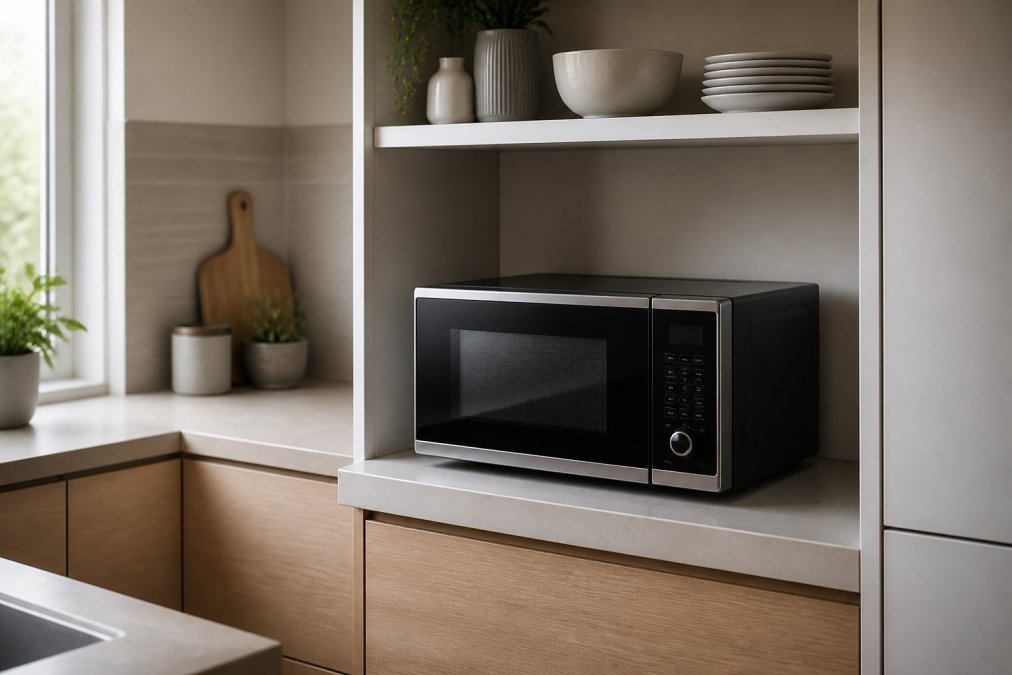
Counter height affects usability. Standard counter height is 36 inches. Mounting a microwave on a shelf or stand raises it 12-18 inches, improving ergonomics for taller users and freeing counter space.
Standard microwaves don't require external venting, they recirculate air internally. If considering an over-the-range microwave, ensure your kitchen has proper ducting before installation.
Microwave Wattage Guide for Small Kitchens
Wattage determines cooking speed and heating consistency. Understanding wattage helps you choose a microwave matching your actual cooking needs.
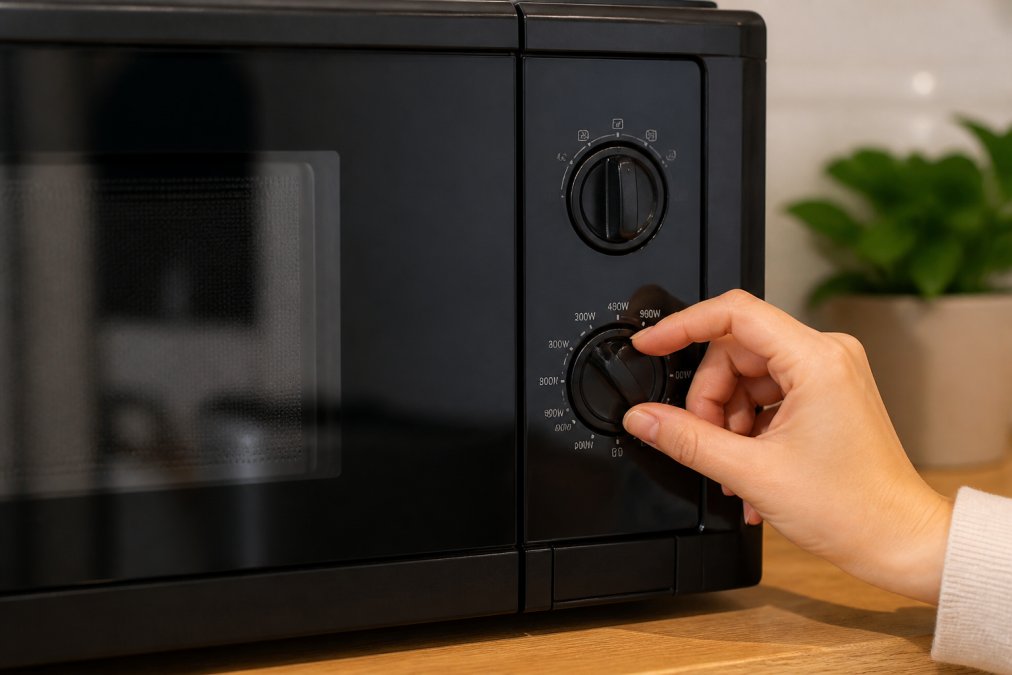
A 700-watt microwave is the minimum for functional cooking (the FDA). It reheats cold coffee in roughly 45 seconds and defrosted frozen vegetables in 3-4 minutes. Dense foods like frozen meat take noticeably longer, sometimes 50% longer than higher-wattage models.
A 900-watt microwave represents the practical middle ground. It handles routine reheating efficiently and manages defrosting tasks reasonably well. Most compact microwaves in the 0.7-0.9 cubic feet range operate at 900 watts.
A 1000-1200 watt microwave prioritizes speed and even heating. It's useful if you're cooking fresh vegetables, defrosting larger portions, or heating dense foods regularly. The Samsung MS11K3000AS (1000W) and Panasonic NN-SN686S (1200W) offer this power while maintaining compact footprints.
Inverter technology (used in Panasonic and Breville models) delivers power more efficiently than traditional models, resulting in more consistent heating at lower wattage levels. A 1000-watt inverter microwave heats more evenly than a 1200-watt traditional model. If even heating matters, inverter technology justifies the premium price.
Key Features to Consider When Buying
Beyond capacity and wattage, specific features determine whether a microwave becomes genuinely useful. Focus on what aligns with your actual cooking habits.
Sensor cooking automatically adjusts power and time based on food moisture levels. The Panasonic NN-SN686S and Samsung MS11K3000AS both feature this. It eliminates guesswork when defrosting or cooking fresh items. For basic reheating of consistent items, it's unnecessary.
Pre-programmed menus (popcorn, pizza, potato settings) are convenient but often inflexible. The Toshiba EM925A5A-BS includes six pre-programmed menus. They work well for exactly the food they're programmed for. Deviating slightly requires overriding the preset, negating the convenience.
One-touch express cooking (immediate 30-second or 1-minute buttons) saves seconds on routine tasks. The COMFEE' EM720CPL-PMB and Whirlpool WMC20005YD both include this. It's genuinely valuable for quick coffee reheats.
Soft-close doors (Breville Compact Wave) add premium feel and quieter operation. They improve user experience and durability, with hinges lasting longer without constant slamming.
Child safety locks prevent accidental operation, valuable in homes with young children. Most compact models include this feature.
Mute functions eliminate beeping sounds, valuable in apartments and dorms. The COMFEE' model specifically highlights this feature.
Installation and Ventilation Requirements for Tight Spaces
Installation mistakes reduce microwave lifespan and create safety hazards. Proper placement matters more in small kitchens where space is constrained.
Most microwaves require 1 inch of clearance on sides and back for air circulation (cpsc.gov). The top should have at least 3 inches of clearance if there's a cabinet above. Blocking vents causes internal heat buildup, which damages the magnetron and creates fire risk.
Never enclose a microwave in a cabinet without ventilation holes. Never place it directly against a wall without 1-inch spacing. Never stack items on top of it. These common mistakes in small kitchens dramatically shorten microwave lifespan.
Electrical placement is equally important. The microwave needs a dedicated outlet or a circuit with minimal other load. Plugging a 700-watt microwave into an outlet shared with a refrigerator or dishwasher can cause voltage fluctuations that damage the unit.
Counter height affects usability. Standard counter height is 36 inches. Mounting a microwave on a shelf or stand raises it 12-18 inches, improving ergonomics for taller users and freeing counter space.
Standard microwaves don't require external venting, they recirculate air internally. If considering an over-the-range microwave, ensure your kitchen has proper ducting before installation.
Best Budget-Friendly Option (Continued)
The COMFEE' EM720CPL-PMB remains the strongest budget choice, but the Farberware Classic FMO07ABTBK deserves consideration if you value multi-stage cooking. At $69.98, it undercuts COMFEE' by $11. The memory function stores your preferred power level and time for future use, eliminating repeated button pressing for items you microwave regularly.
The trade-off is identical: no advanced features, 700-watt power, basic controls. Both are functionally equivalent for most users. Choose based on whether the memory function justifies the $11 difference for your actual usage pattern. Fast Appliances LLC offers both models, recognizing that budget-conscious customers deserve functional appliances.
Choosing the best microwave for small kitchens doesn't require sacrificing functionality for space savings. The models covered here, from the space-saving Whirlpool with its innovative corner design to the budget-conscious COMFEE' and Farberware options, each solve specific constraints without compromise. Fast Appliances LLC offers all these models with convenient online ordering and direct-to-home delivery. Browse our full selection of compact microwaves to find the exact fit for your kitchen, and let our team help you navigate capacity, wattage, and feature decisions tailored to your space and cooking style.
Frequently Asked Questions
Q: What size microwave is best for 2 people?
A: For two people, a 0.7 to 0.9 cubic foot capacity works well. This size handles most reheating, defrosting, and basic cooking without taking up excessive counter space. Look for models with turntable diameters of at least 10 inches to accommodate standard plates. A 700-900 watt microwave provides adequate power for daily use without requiring a large footprint.
Q: Are compact microwaves less powerful than full-size models?
A: Compact microwaves typically range from 700-1200 watts, while full-size models often reach 1000-1200 watts. Lower-wattage compact models (700W) may cook slower and less evenly, but mid-range compact options (900-1000W) perform comparably to standard microwaves. Higher-end compact models with inverter technology deliver consistent heating despite their smaller size.
Q: How do I measure my kitchen space for a new microwave?
A: Measure the width, depth, and height of your intended placement area, then add 2-3 inches for ventilation clearance on all sides. Account for the door swing radius when opening. Most compact microwaves range from 17-21 inches wide, 15-18 inches deep, and 12-14 inches tall. Check that your counter can support the weight (typically 30-50 pounds) and that there's adequate clearance above for steam ventilation.
Q: What is the most reliable microwave brand?
A: Panasonic, Samsung, and Whirlpool are generally considered reliable brands for compact models. Panasonic's inverter technology provides even heating, while Samsung's sensor cooking adjusts automatically for better results. Whirlpool's corner-fitting designs maximize space efficiency. Check warranty coverage and customer reviews specific to the model you're considering, as reliability varies by individual product line.
This article was written using GrandRanker