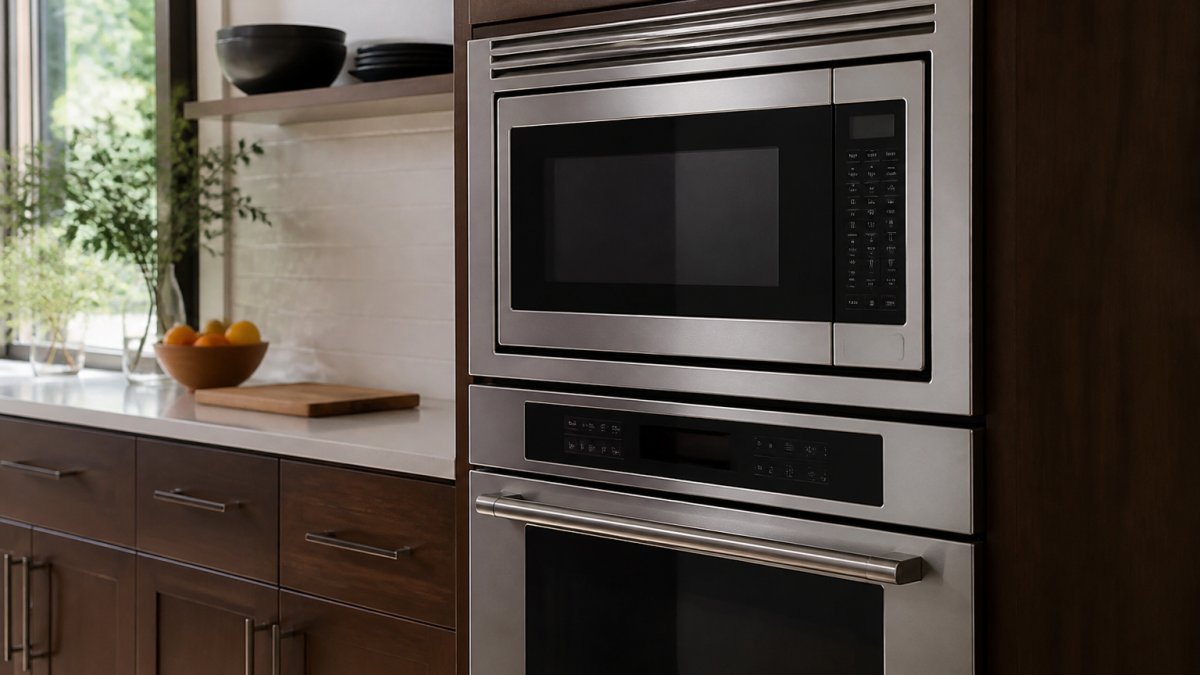
 comparison
KitchenAid Oven Microwave Combo: Review & Buyer's Guide
Table of Contents
- What Is a KitchenAid Oven Microwave Combo?
- Convection vs Standard Wall Oven Combos: Which Performs Better?
- KitchenAid Wall Oven Microwave Combo Installation: Electrical Requirements and Cutout Dimensions
- Key Features: Air Fry Mode, Convection Cooking, and Steam Assist
- Top KitchenAid Oven Microwave Combo Models
- Reliability, Longevity, and Common Repair Issues
- Combo Unit vs Stacking Separate Ovens and Microwaves
- Cleaning, Maintenance, and Self-Cleaning Cycles
- Frequently Asked Questions
Last Updated: September 28, 2026
What Is a KitchenAid Oven Microwave Combo?
A KitchenAid oven microwave combo is a built-in wall unit combining a convection microwave and electric wall oven into a single integrated appliance. This space-saving solution lets homeowners prepare multiple dishes simultaneously while delivering professional-grade cooking performance in a footprint that traditional dual installations cannot match.
The upper chamber functions as a convection microwave with sensor cooking technology, while the lower chamber operates as a full-size electric wall oven with even-heat distribution. Most models feature stainless steel construction and integrate seamlessly into cabinetry, eliminating the need to choose between cooking speed and oven capacity.
These units typically range from 29 to 30 inches wide and require dedicated electrical circuits. Installation demands precision in cutout dimensions and electrical requirements to prevent costly mistakes.
Convection vs Standard Wall Oven Combos: Which Performs Better?
Convection cooking circulates heated air throughout the oven chamber using a fan, reducing hot spots and cold zones. KitchenAid combo units with even-heat true convection cook 25 percent faster on average and produce more consistent browning across baked goods.
Standard wall oven combos rely on heating elements at the top and bottom, creating temperature gradients that require rotating pans midway through cooking. Convection eliminates this but costs more upfront and requires slightly more maintenance due to the fan mechanism.
For serious home cooks, convection is the clear winner. Pastries brown more evenly, roasted vegetables caramelize uniformly, and baking times become predictable. If your kitchen budget allows, convection combos justify the premium investment.
Standard combos work well for basic cooking tasks and are quieter and simpler to repair. Choose standard if you cook occasionally and prioritize simplicity over performance.
KitchenAid Wall Oven Microwave Combo Installation: Electrical Requirements and Cutout Dimensions
Installation success hinges on two critical factors: precise cabinet cutout dimensions and proper electrical circuit capacity. Skipping either one creates expensive problems during construction.
Standard Wall Oven Cutout Dimensions and Measurements
KitchenAid combo units require a standard wall oven opening measuring 29.875 inches wide by 51.625 inches tall by 24 inches deep. These measurements accommodate the unit's exterior dimensions plus necessary clearance for heat dissipation and door swing.
Cabinet sides must be reinforced with 3/4-inch plywood to support the unit's weight (typically 150-180 pounds). Most installers position the microwave chamber at eye level, roughly 54 to 66 inches from the floor.
Verify measurements three times before cutting. Many professional installers use cardboard templates provided by KitchenAid to ensure accuracy.
Electrical Requirements: 20-Amp vs 30-Amp Circuits
KitchenAid combo units require either a dedicated 20-amp or 30-amp circuit, depending on the model's total wattage.
The KOEC500ESS draws approximately 4,500 watts and operates safely on a 20-amp, 240-volt dedicated circuit. Higher-end models like the KOEC930SPS demand 30-amp service to handle peak power draw during simultaneous operation.
Check your electrical panel capacity before purchasing. If upgrading the service panel becomes necessary, costs can reach $1,500 to $3,000.
Combo units must have their own dedicated circuit from the breaker panel to prevent nuisance breaker trips and ensure consistent power.
Key Features: Air Fry Mode, Convection Cooking, and Steam Assist
Modern KitchenAid combo units pack multiple cooking technologies into a single footprint. Understanding what each mode does helps you choose the right model for your cooking style.
Air Fry Mode circulates heated air at high velocity to crisp food surfaces without deep frying. Results rival traditional deep fryers but use a fraction of the oil, making it ideal for frozen appetizers and quick weeknight proteins.
Even-Heat True Convection distributes warm air uniformly throughout the oven chamber, enabling professional-grade baking and roasting. Temperature consistency means you can bake multiple trays simultaneously without rotating them.
Steam Assist (found on premium models like the KOEC930SPS) injects moisture into the oven during cooking, keeping bread crusts tender, producing juicier roasted chicken, and preventing pastries from drying out.
Top KitchenAid Oven Microwave Combo Models
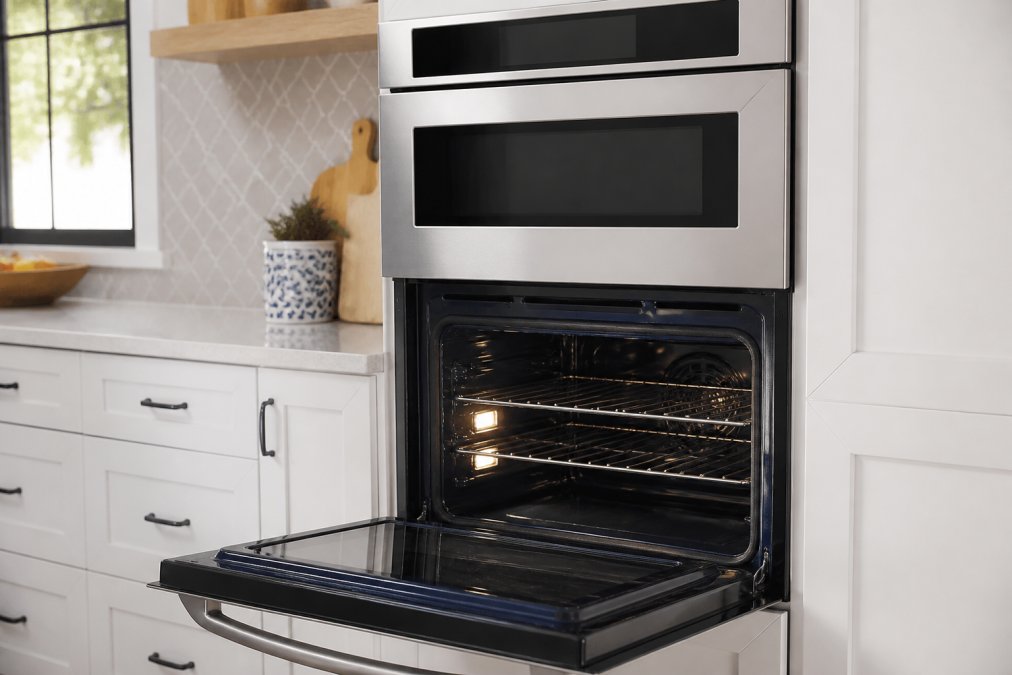
KitchenAid 30" Combination Microwave Wall Oven with Air Fry Mode (KOEC530PSS)
The KOEC530PSS delivers air fry capability, even-heat true convection, and a 1.1 cubic-foot microwave chamber in a compact 30-inch footprint.
The lower oven features dual heating elements and convection circulation for consistent results. The upper microwave includes sensor cooking technology that automatically adjusts power levels based on food moisture content.
Air fry mode produces crispy results on frozen foods without the mess of traditional frying. Most users report that air-fried frozen fries achieve restaurant-quality crispness in under 15 minutes.
What works: Impressive convection performance for the price. Consistent browning on multiple batches. Intuitive touchscreen interface with preset cooking modes.
What doesn't: Slightly smaller microwave cavity than some competitors. Self-cleaning cycle runs several hours and heats the kitchen noticeably.
KitchenAid 30" Smart Built-In Electric Double Wall Combination Oven (KOEC930SPS)
The KOEC930SPS offers smart appliance compatibility, allowing you to preheat the oven from your smartphone and receive notifications when cooking completes.
The self-cleaning cycle uses high heat to burn away food residue, while the steam-cleaning option injects moisture to soften buildup before manual wiping. The steam-assist feature keeps bread crusts tender and roasted meats juicy.
What works: Smart connectivity saves time during meal prep. Steam-assist produces noticeably better results on bread and roasted poultry. Premium touchscreen interface with detailed cooking guides.
What doesn't: Premium pricing reflects smart features and advanced cleaning. Repairs involving smart components may require specialized technicians, potentially raising service costs.
KitchenAid 30" Electric Wall Oven/Microwave Combo (KOCE500ESS)
The KOCE500ESS combines a convection microwave with a standard electric wall oven, providing the essentials for everyday cooking without unnecessary complexity.
The even-heat true convection system handles baking and roasting competently. The microwave includes sensor cooking to prevent overcooking. The stainless steel finish integrates with most kitchen designs.
This model requires only 20-amp electrical service, making it compatible with older homes. Installation is simpler, and maintenance costs stay lower due to fewer electronic components.
What works: Reliable, straightforward operation. Solid convection performance for everyday baking. Lower electrical requirements. Excellent price-to-performance ratio.
What doesn't: No smart features, steam assist, or air fry mode. Standard-sized microwave cavity. Heat-based self-cleaning only.
Reliability, Longevity, and Common Repair Issues
KitchenAid combo units typically last 10 to 15 years with proper maintenance. Understanding common failure points helps you budget for repairs.
The most common failure point is the microwave magnetron, which typically lasts 10 to 12 years before losing power output. Replacement costs typically range between $300 and $600 including labor.
Convection fan motors fail more often in models that run the fan continuously.
Combo Unit vs Stacking Separate Ovens and Microwaves
Choosing between a combo unit and separate appliances depends on kitchen space, budget, and cooking frequency. Each approach has genuine tradeoffs worth considering.
Cleaning, Maintenance, and Self-Cleaning Cycles
Regular maintenance extends appliance lifespan and prevents buildup that compromises performance. KitchenAid combo units require different cleaning approaches for the microwave and oven chambers.
| Model | Key Features | Best For | Electrical Requirement |
|---|---|---|---|
| KOEC530PSS | Air fry, convection, sensor microwave | Most homeowners | 20-amp circuit |
| KOEC930SPS | Smart connectivity, steam assist, advanced cleaning | Tech-forward cooks | 30-amp circuit |
| KOCE500ESS | Convection, reliable performance, straightforward | Budget-conscious buyers | 20-amp circuit |
Frequently Asked Questions
Are KitchenAid oven microwave combos reliable?
KitchenAid oven microwave combos are built with dual heating elements and even-heat convection systems designed for consistent performance. Most models come with manufacturer warranties covering defects. Common issues include touchscreen responsiveness over time and occasional sensor calibration drift, but these are not widespread failure patterns. Proper installation and regular maintenance extend appliance longevity significantly. For detailed warranty information and customer support, please refer to the manufacturer's documentation or contact us for assistance.
What are the standard wall oven cutout dimensions for KitchenAid combos?
Standard wall oven cutout dimensions for most 30-inch KitchenAid oven microwave combos are approximately 30 inches wide, 27-28 inches tall, and 24 inches deep. Exact measurements vary by model, so verify your specific unit's cutout requirements before cabinetry work. Improper cutout sizing can prevent proper flush installation and airflow, affecting performance. Always consult the installation manual for precise measurements for your chosen model.
Do KitchenAid microwave oven combos require special electrical wiring?
Most KitchenAid oven microwave combos require either a 20-amp or 30-amp dedicated circuit, depending on the model's total wattage. Combination units with convection and air fry capabilities typically demand 30-amp service. Installation must comply with electrical codes and may require a licensed electrician. Electrical requirement specifications for each model are available to help you plan your installation before delivery.
What is the difference between convection and standard wall oven combos?
Convection oven combos use a fan to circulate hot air, cooking food 25-30% faster and more evenly than standard models. They excel at baking, roasting, and crisping. Standard wall oven combos rely on stationary heating elements, requiring longer cooking times and more attention to rack positioning. Convection combos cost more but offer superior temperature control and faster preheat times. For frequent bakers or busy cooks, convection models deliver better results.
Can I replace a separate oven and microwave with a combo unit?
Yes, a combo unit replaces both appliances in one space, saving valuable kitchen real estate. However, you sacrifice the ability to use both simultaneously, you cannot microwave food while the oven is in use. Combo units work best for homes with limited wall space or kitchens already designed for built-in appliances. If you regularly need to cook multiple dishes at once using both appliances, stacking separate units may be more practical despite taking up more space.