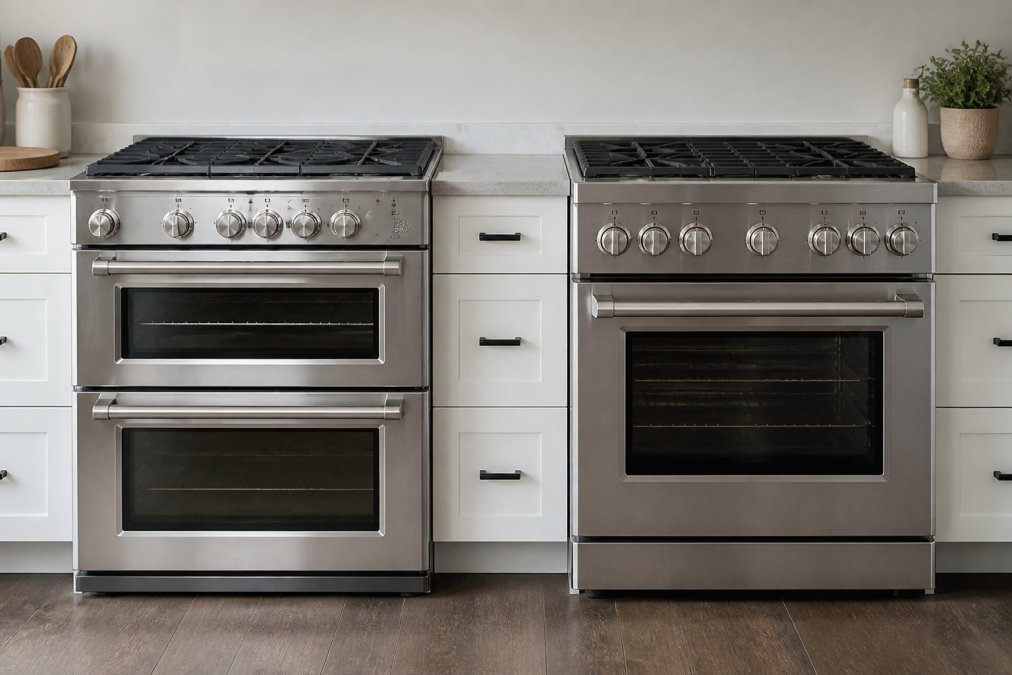
 comparison
Double Oven vs Single Oven 2026: Pros and Cons
Table of Contents
- Double Oven vs Single Oven: Quick Comparison Table
- How Double and Single Ovens Actually Differ
- Standard Wall Oven Dimensions: What Fits Your Kitchen
- Pros and Cons of Convection Ovens in Single and Double Configurations
- Installation Costs for Double Ovens vs Single Ovens
- 2026 Trends: Smart Features, Energy Efficiency, and Kitchen Layout
- Which Oven Fits Your Household? A Decision Framework
- Conclusion
- Frequently Asked Questions
Last Updated: September 16, 2026
Double Oven vs Single Oven: Quick Comparison Table
The choice between a double oven vs single oven 2026 pros and cons comes down to one question: do you regularly cook multiple dishes at different temperatures? A double oven gives you two independent cooking compartments and roughly twice the usable capacity. A single oven gives you one large cavity, a lower purchase price, and a simpler installation. The quick table below shows where each type wins.
| Factor | Double Oven | Single Oven |
|---|---|---|
| Cooking compartments | Two, independent temperatures | One |
| Total capacity | Roughly twice as large | Standard 4.5-5.5 cu ft |
| Best for | Holiday cooking, multi-dish meals | Roasting, everyday baking |
| Cabinet cutout | Taller, often 50+ inches | Standard 29-30 inches |
| Electrical needs | Frequently 240V, higher draw | Often 240V, lower draw |
| Purchase price | Higher | Lower |
| Installation | More involved, sometimes new wiring | Simpler, often drop-in |
| Maintenance | Two cavities to clean | One cavity to clean |
How Double and Single Ovens Actually Differ
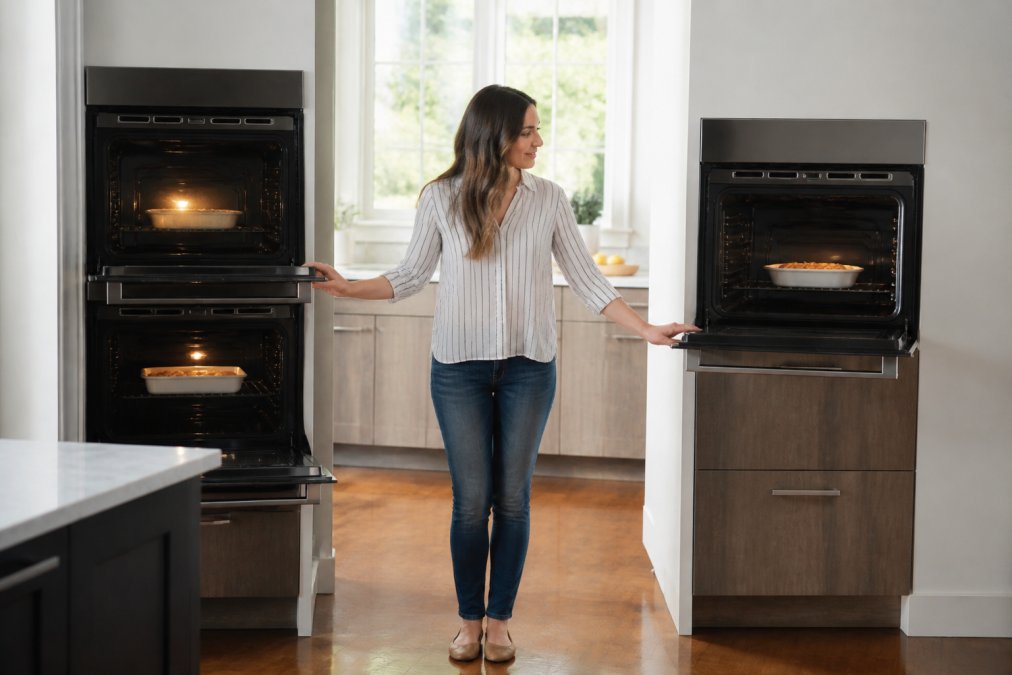
A double oven is a cooking appliance with two separate compartments, each with its own temperature control, while a single oven is one cavity that handles all baking and roasting at one temperature. That structural difference drives every other trade-off, from capacity to installation cost.
Capacity and Configuration
Capacity is the clearest dividing line. A double oven's two cavities combine to roughly twice as large a cooking area as a single cavity, and you can run them at different temperatures simultaneously. A single oven gives you one larger uninterrupted space, which matters when you're roasting a turkey or a large cut of meat that won't fit in a half-height double oven compartment.
Configuration also varies. Double ovens come as integrated wall units, freestanding ranges with a cooktop above, or a combination of microwave and oven stacked in one footprint. Single ovens come in the same three configurations, just with one cavity.
Temperature Control and Cooking Zones
Temperature control is where double ovens earn their keep. Two independent thermostats mean you can bake bread at 425°F in the top cavity and hold a casserole at 325°F below. Single ovens force you to sequence dishes or accept a compromise temperature.
Convection changes this math slightly. A convection single oven moves air with a fan for more even heat distribution, which narrows the gap for single-dish cooking.
Standard Wall Oven Dimensions: What Fits Your Kitchen
Standard wall oven dimensions are the single most common reason a renovation stalls. Most single wall ovens fit a 30-inch wide, 29-inch tall cutout. Double wall ovens typically need a 30-inch wide cutout that is 50 inches tall or more. Measure your cabinet opening before you shop, not after.
- Standard single wall oven cutout: about 28.5 inches wide, 27.5 inches tall
- Standard double wall oven cutout: about 28.5 inches wide, 49.5 to 51 inches tall
- Cabinet depth: 24 inches is standard for both
- Always leave clearance for the door swing and ventilation
Pros and Cons of Convection Ovens in Single and Double Configurations
Convection is the feature most likely to change how a double oven vs single oven decision plays out, because it affects both browning and how many dishes you can realistically cook at once. Convection uses a fan to circulate hot air around the cavity, which speeds preheat and evens out browning compared with standard radiant heat. In a single oven, convection is a straightforward upgrade.
Single oven with convection
- Pros: even baking, faster preheat, one cavity to maintain, lower purchase and installation cost
- Cons: no simultaneous multi-temperature cooking, so a holiday meal still has to be sequenced
- Best for: households that cook one main dish at a time but want consistent results
Single oven without convection
- Pros: lowest upfront cost, simplest install, fewer parts to fail
- Cons: hotter and cooler spots, longer preheat, less even browning on multiple racks
- Best for: budget-driven buyers who mostly roast or reheat
Double oven with convection in both cavities
- Pros: two independent temperatures plus even heat in each, the strongest setup for parallel cooking
- Cons: highest purchase price, taller cutout, higher electrical draw, two cavities to clean
- Best for: households that regularly cook two or more dishes at different temperatures
Double oven with convection in one cavity only
- Pros: convection where you bake most, a second cavity for holding or roasting at a different temperature
- Cons: the non-convection cavity browns less evenly, so you have to plan which dish goes where
- Best for: buyers who want flexibility but do not need convection everywhere
Installation Costs for Double Ovens vs Single Ovens
Installation costs for double ovens run higher than for single ovens because of height, weight, and electrical load. A double wall oven is heavier, needs a taller cutout, and often requires a dedicated 240V circuit with higher amperage. A single oven frequently drops into an existing cutout with existing wiring.
What drives the difference:
- Cabinet modification: double ovens usually need a taller opening, which may mean new cabinetry
- Electrical work: a higher-draw double oven may need a new circuit or breaker
- Labor: two people are often needed to lift and seat a double wall oven
- Ventilation: combination units with a microwave may need added clearance
2026 Trends: Smart Features, Energy Efficiency, and Kitchen Layout
Most guides treat the 2026 angle as a label rather than a real analysis. Here is what is actually changing in single and double ovens this year, and what it means for the double oven vs single oven decision.
Which Oven Fits Your Household? A Decision Framework
Use this framework to decide quickly. Answer the questions in order, and the first "yes" tells you which way to lean.
- Do you regularly cook two or more dishes at different temperatures at the same time? → Double oven
- Do you host holidays or large gatherings several times a year? → Double oven
- Do you need to roast a turkey or large cut that won't fit a half-height cavity? → Single oven
- Is your cabinet cutout sized for a single oven only? → Single oven, unless you're renovating cabinets
- Is your priority the lowest total cost including installation? → Single oven
- Do you want a microwave and oven in one vertical footprint? → Combination double oven
Conclusion
The right oven is the one that matches how your household actually cooks, not the one with the longest feature list. We stock single and double ovens across the major configurations, so you can compare capacity, convection, and smart features side by side before you commit. Shop the full oven selection with convenient online ordering and home delivery, and get the appliance that fits your kitchen the first time.
Frequently Asked Questions
Do double ovens use more electricity than single ovens?
A double oven draws more power when both compartments run at once, but the difference is smaller than most people expect because each cavity is typically smaller than a single oven's full interior. Running only one compartment on a double oven uses less energy than heating a large single cavity. Look at the yellow EnergyGuide label on any model you compare, and remember that preheat time and insulation quality affect real consumption more than the number of doors.
What are the standard wall oven dimensions I should measure for?
Most single wall ovens are 30 inches wide and need a cutout roughly 28 1/2 to 29 inches wide, 27 to 28 inches high, and 24 inches deep. Double wall ovens share the 30-inch width but need about 49 to 51 inches of cutout height. Always pull the exact cutout specs from the model's installation guide before ordering, because trim kits and cabinet depth vary by brand.
Can you replace a single oven with a double oven without cabinet modifications?
Usually no. A single oven cutout is roughly 27 to 28 inches tall, while a double needs about 50 inches, so the cabinet almost always requires rebuilding, and you may lose a drawer bank below. The electrical circuit is the other hurdle: many double ovens need a 40-amp dedicated circuit, while some single ovens run on 20 or 30 amps. A licensed electrician can confirm what your home supports before you buy.
Is a double oven better for large families or holiday cooking?
For households cooking multiple dishes at different temperatures, yes. Two independent compartments let you roast at 350°F in one cavity and bake pies at 425°F in the other, which removes the juggling act of staggered start times. Smaller households that mostly reheat or bake one tray at a time rarely use the second cavity, so a single oven with convection usually delivers better value for the space.
Are there energy efficiency differences between single and double ovens?
Energy use tracks total heated volume and how often you run both cavities. A double oven used one compartment at a time can be comparable to a single oven, while running both simultaneously roughly doubles consumption during that window. Convection mode shortens cook times and can lower energy use on either configuration. Check the EnergyGuide label for estimated annual kilowatt-hours before deciding.