 How-to
How to Read Energy Efficiency Ratings for Appliances
Last Updated: November 9, 2026
Quick Summary
Energy efficiency ratings are read from the yellow EnergyGuide label, which shows estimated yearly cost, yearly electricity use in kWh, and a range bar comparing the model to similar units. The blue ENERGY STAR label is voluntary and only confirms a model cleared a category-specific threshold, so check the EnergyGuide kWh figure to compare two certified models.
- The EnergyGuide label is required on most new appliances by the FTC.
- ENERGY STAR sets a floor, not a ceiling, so two certified fridges can differ in running costs.
- There is no mandatory A-G letter scale for U.S. appliances; letter grades are vendor labels.
- To compare models, subtract the smaller yearly kWh from the larger and multiply by your electric rate.
- Lifecycle cost equals purchase price plus yearly kWh times your rate times years owned, minus rebates.
Table of Contents
- Why Energy Efficiency Ratings Decide Your Real Appliance Cost
- EnergyGuide Label Explained: What Each Number Tells You
- The ENERGY STAR Rating System for Appliances
- Your Appliance Energy Efficiency Ratings Chart, Decoded
- How to Compare Appliance Energy Use Before You Buy
- Lifecycle Costs, Regional Labels, and Maintenance: What Most Guides Skip
- Choosing an Efficient Appliance Set for Your Home
- Frequently Asked Questions
Why Energy Efficiency Ratings Decide Your Real Appliance Cost
Energy efficiency ratings explained for home appliances come down to one idea: the sticker price is only the start. The number on the yellow label tells you what a machine will cost you month after month. At Fast Appliances LLC, we help shoppers read those numbers before they buy, not after the first utility bill arrives.
A fridge that costs less upfront can drain more power over ten years than a pricier model. That gap is the whole game.
Here is what we cover:
- How to read the EnergyGuide label line by line
- What the ENERGY STAR rating system actually measures
- How to compare two models fairly
- The costs most guides skip
Get this right and you protect your budget for years.
EnergyGuide Label Explained: What Each Number Tells You
The EnergyGuide label is a yellow tag required on most new appliances (the FTC). It shows an estimated yearly cost and yearly electricity use, based on standard government tests.
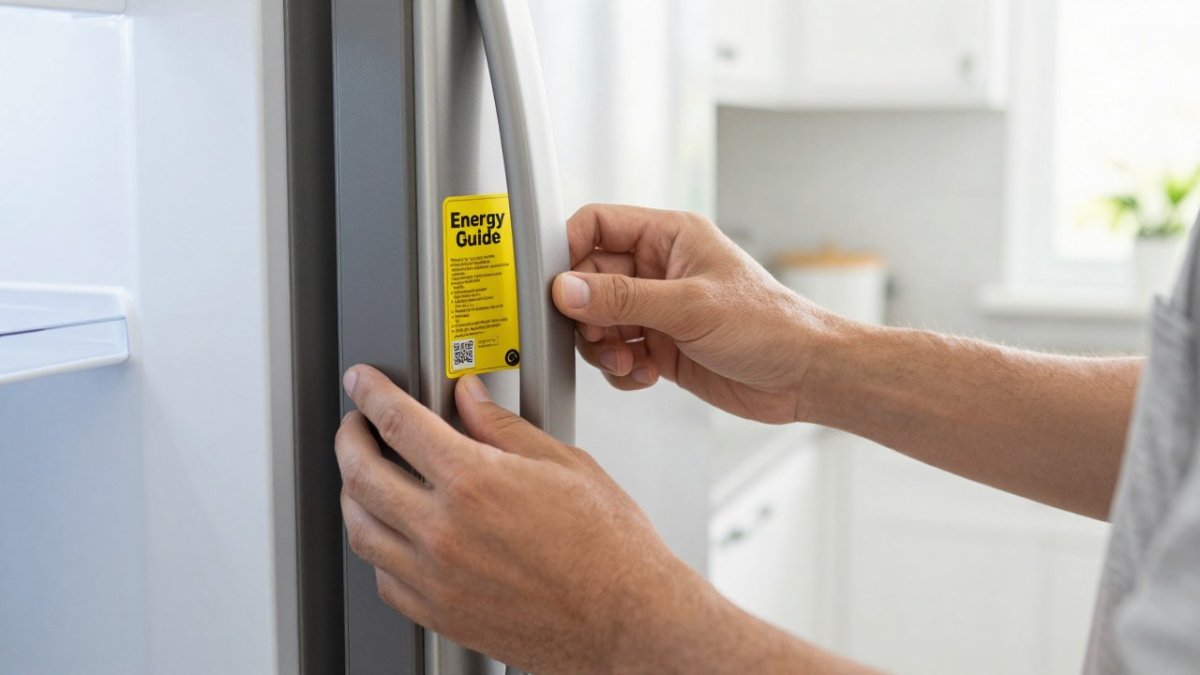
Here is what each part means:
- Estimated yearly cost: what the machine uses in a typical year, in dollars
- Yearly electricity use: measured in kilowatt-hours, or kWh
- Range bar: shows where this model sits among similar units
- Model details: brand, model number, and size
The range bar is the fastest tool. A model near the low end uses less power than most of its peers. The FTC guide to the EnergyGuide label explains each field in full.
The ENERGY STAR Rating System for Appliances
ENERGY STAR is a voluntary program run by the U.S. Environmental Protection Agency and the U.S. Department of Energy. Products that earn the label meet an efficiency bar set for their specific category, and that bar is not a single number applied to everything.
Here is the mechanism most guides skip. For each product category, the agencies set a specification based on the market. A model qualifies only if its energy use beats a defined threshold relative to comparable models, typically a percentage improvement over the standard or median unit in that class.
But here is what most guides miss. ENERGY STAR sets a floor, not a ceiling. Two certified fridges can still differ in running costs. Always check the EnergyGuide number too.
How ENERGY STAR relates to the A-G scale
Shoppers who have seen European or Australian labels often ask where the letter grades went. In the United States, there is no mandatory A-G letter scale for appliances. The two systems you will actually encounter are:
- The yellow EnergyGuide label, mandatory, shows estimated yearly kWh and cost, plus a range bar comparing the model to peers.
- The blue ENERGY STAR label, voluntary and based on a category-specific threshold.
Some retailers and third-party sites layer their own letter or star grades on top, but those are marketing constructs, not government ratings. If a listing shows an "A++" badge on a U.S. appliance, treat it as a vendor label and fall back to the EnergyGuide kWh figure for a real comparison.
What ENERGY STAR does and does not tell you
-
It tells you the model cleared a tested efficiency threshold for its category.
-
It does not tell you which of two certified models is cheaper to run, that requires the kWh figure.
-
It does not tell you whether the unit will stay efficient without maintenance.
A common pattern is to use ENERGY STAR as a first filter, then use the EnergyGuide kWh and your electric rate to rank the survivors. The ENERGY STAR product specifications and partner list shows the current threshold for each category.
Your Appliance Energy Efficiency Ratings Chart, Decoded
An appliance energy efficiency ratings chart puts models side by side so you can spot the real differences fast. Use one column per model and compare like with like.
| What to Compare | Why It Matters | Where to Find It |
|---|---|---|
| Yearly kWh | Shows power usage directly | EnergyGuide label |
| Estimated yearly cost | Turns kWh into dollars | EnergyGuide label |
| ENERGY STAR status | Confirms it passed the bar | Blue label or listing |
| Capacity | Bigger units use more power | Spec sheet |
| Wattage | Higher draw means more load | Spec sheet |
The chart only works if you compare the same category. A dishwasher and a fridge do not belong in the same row. For dishwashers, our guide to the 5 best energy efficient dishwashers under $1000 gives you ready-made picks to drop into a chart.
How to Compare Appliance Energy Use Before You Buy
Comparing appliance energy use takes three steps, and none of them require a calculator.
- Find the yearly kWh on each EnergyGuide label.
- Subtract the smaller number from the larger to see the gap.
- Multiply the gap by your electric rate to get the yearly difference.
Say one fridge uses 400 kWh a year and another uses 550. The gap is 150 kWh. At your local rate, that gap becomes real money every year you own the unit.
Watch out: comparing a large-capacity model against a small one skews the whole chart. Match size and type first, then compare power usage.
When you are ready to act on the numbers, you can buy an energy efficient refrigerator online with the specs right on the listing.
Lifecycle Costs, Regional Labels, and Maintenance: What Most Guides Skip
Three things separate a smart buyer from a lucky one: lifecycle cost, label variations, and upkeep. Most guides mention all three and explain none. Here is the math and the schedule.
Lifecycle cost: the formula that decides the purchase
Lifecycle cost is purchase price plus running cost over the years you own the unit, minus any rebate. The formula:
Lifecycle cost = Purchase price + (Yearly kWh × Electric rate × Years owned) − Rebates
Worked example with round numbers you can swap for your own:
- Model A: $900, 400 kWh/year
- Model B: $1,200, 300 kWh/year
- Electric rate: $0.16 per kWh (check your utility bill for the real figure)
- Years owned: 10
The formula turns a gut call into arithmetic: compare each model's purchase price plus its running cost over the years you plan to own it, then subtract any rebate.
Payback period is the companion number: divide the price premium by the annual savings. Run this division with your own rate and kWh gap before you pay for efficiency you may not recover.
Watch out: using a national average electric rate instead of your own utility's rate can flip the answer. Pull the per-kWh figure from your most recent bill.
Regional labels: which sticker actually applies
U.S. appliances commonly carry the yellow EnergyGuide label and, if qualified, the blue ENERGY STAR mark. Some utilities and programs add their own badges on top of these labels. When a listing shows a letter grade, look for the kWh figure behind it.
Maintenance: keeping the rated efficiency
An appliance performs at its tested efficiency only while it is clean and unobstructed. A practical schedule:
None of these restore a bad rating, but they prevent a good one from decaying. A fridge with dusty coils or a dryer with a blocked vent can quietly erase the savings you paid for at purchase. Our breakdown of energy-efficient laundry appliances and real savings digs into the running costs behind the label.
Choosing an Efficient Appliance Set for Your Home
Building a full set means balancing efficiency against budget and fit. You rarely get the best rating in every category at once.
Start with the machines you run daily. The fridge runs around the clock, so its yearly kWh matters most. Washers and dryers come next. Small appliances matter less.
Then weigh the trade-offs:
- Top efficiency: lowest running costs, higher upfront price
- Budget sets: lower entry cost, watch the yearly kWh closely
- Mixed sets: efficient fridge, standard small units
For laundry rooms, energy efficient front load laundry pairs that cut utility bills show how a matched pair can lower running costs. If price leads your decision, compare budget friendly appliance sets against the efficiency trade-offs before you commit.
Reading these labels is the difference between a low sticker price and a low total cost. Fast Appliances LLC carries a wide variety of home appliances, from washers and dryers to refrigerators, stoves, microwaves, dishwashers, cooktops, and ovens, all in one place. You can compare models, check specs, and order online with delivery to your door. Get started with Fast Appliances LLC and shop appliances that fit your budget and your energy goals.
Frequently Asked Questions
What is the best energy efficiency rating for an appliance?
There is no single best number, because ratings are relative to each appliance category. A refrigerator with a lower estimated yearly energy cost than similar models in its class is the better pick. ENERGY STAR certified products sit in the top tier of efficiency for their category, so start there, then compare the EnergyGuide estimated yearly cost figures side by side. The lowest operating cost among comparable models is your best rating.
What is the difference between ENERGY STAR and EnergyGuide?
The EnergyGuide label is a disclosure tool. It shows an appliance's estimated yearly energy use and cost so you can compare models. ENERGY STAR is a certification: a product has met a set efficiency level for its category. Every covered appliance gets an EnergyGuide label, but only some are ENERGY STAR certified. Use the EnergyGuide numbers to compare, and ENERGY STAR as a shortcut to efficient models.
How can you compare the energy use of two appliances?
Match the appliance category and size first, then compare the estimated yearly energy cost on each EnergyGuide label. The label scale shows where a model sits relative to the most and least efficient units in its class. Factor in wattage, capacity, and features that affect power usage. Two refrigerators of the same capacity with a large gap in annual operating cost tell you which one will save more over its appliance lifespan.
Do higher-efficiency appliances always cost less to run?
Usually, but not automatically. A high-efficiency model can still cost more to run if it is oversized for your household or if you use it heavily. Standby power, installation quality, and maintenance also affect real consumption. Check the estimated yearly cost against your usage patterns, and weigh any higher purchase price against household savings over the appliance's lifespan before deciding.