 how-to
What Happens If Your Appliance Arrives Damaged
Table of Contents
- Inspect Your Appliance Immediately Upon Delivery
- Create an Appliance Delivery Inspection Checklist
- Document Damage with Photos and Video
- Report Damage to the Delivery Team and Retailer
- Refusing Appliance Delivery Due to Damage
- File an Appliance Damage Claim Template
- Know Your Consumer Rights and Options
- Frequently Asked Questions
Last Updated: September 2, 2026
Inspect Your Appliance Immediately Upon Delivery
What happens if your appliance arrives damaged starts the moment the delivery team places it at your door. The first 24 hours are critical. Open the box, inspect every surface, and document what you see before signing anything. Don't wait until later, damage that seems minor in the moment can worsen, and your window to report it narrows quickly.
Check the exterior of the box first. Look for dents, tears, water damage, or signs the package was mishandled. If the box itself is severely compromised, you have grounds to refuse delivery right there. Open the box carefully and examine the appliance itself. Run your hands along all edges and surfaces. Check for dents, cracks, scratches, or any visible defects. Test the doors and handles, they should open and close smoothly. Look inside for any debris, loose parts, or manufacturing defects.
At Fast Appliances LLC, we recommend taking your time during this inspection. Don't feel rushed by the delivery team. You have the right to examine your purchase thoroughly before accepting it. If you notice anything wrong, tell the delivery agent immediately. Document their response in writing or take notes on your phone with timestamps. This creates a record if you need to file a claim later.
Pay special attention to concealed damage, dents or cracks hidden on the back or sides. Appliances often arrive with the back against the wall during delivery, so damage there may not be immediately visible. Ask the delivery team to move the unit so you can inspect all sides before final placement.
Create an Appliance Delivery Inspection Checklist
An appliance delivery inspection checklist ensures you don't miss anything during those crucial first minutes. Having a structured approach prevents you from overlooking damage that could affect your ability to claim a refund or replacement later.
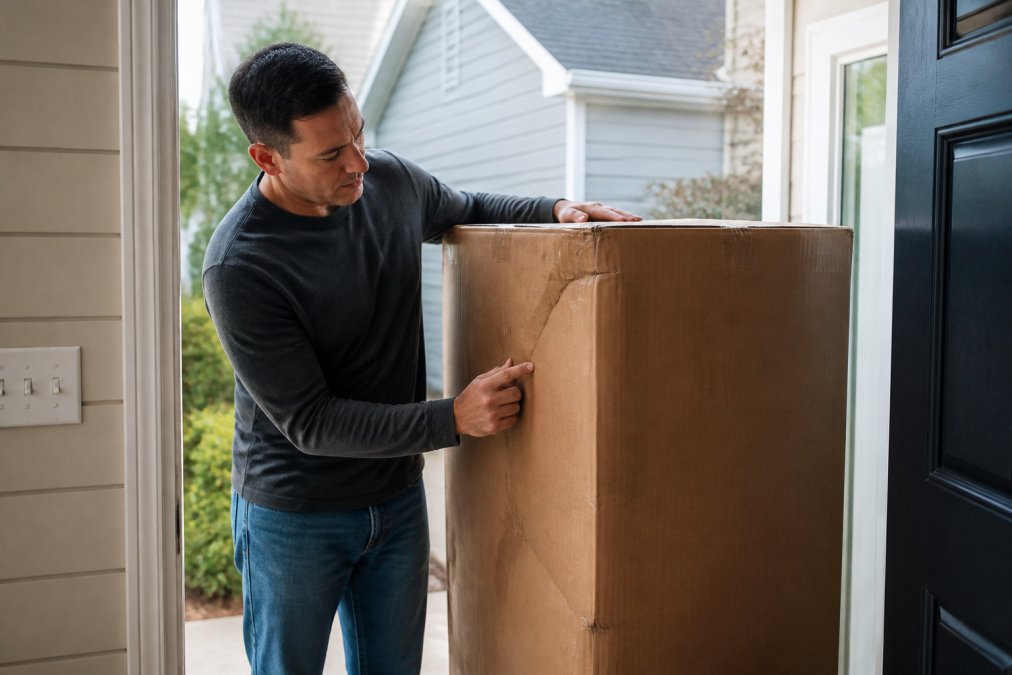
Use this checklist when your appliance arrives:
Exterior Box Condition:
- Box is intact with no major tears or punctures
- No water stains or moisture damage visible
- Corners are not crushed or severely dented
- Shipping labels are readable and match your order
Appliance Exterior:
- No visible dents, cracks, or scratches
- Paint or finish is uniform with no discoloration
- All corners and edges are intact
- Handles and knobs are present and functional
- Doors open and close smoothly without sticking
Appliance Interior:
- Interior is clean with no debris or manufacturing residue
- Shelves, racks, or trays are present and undamaged
- No loose parts rattling inside
- Seals and gaskets are properly seated
Functional Elements:
- All buttons and controls respond when pressed
- Display screen (if applicable) lights up and shows text
- No unusual sounds or vibrations when powered on
- Water connections (if applicable) are intact
Documentation:
- Take photos of the delivery receipt
- Photograph the bill of lading from the delivery agent
- Note the delivery date and time
- Record the delivery contractor's name and company
If any item fails this checklist, you've identified damage that needs reporting. The sooner you document it, the stronger your position for a return authorization or replacement claim.
Document Damage with Photos and Video
Photographic evidence is your strongest tool when filing a damage claim. Photos create an undeniable record of the condition when the appliance arrived. Without them, it becomes your word against the retailer's or delivery contractor's.
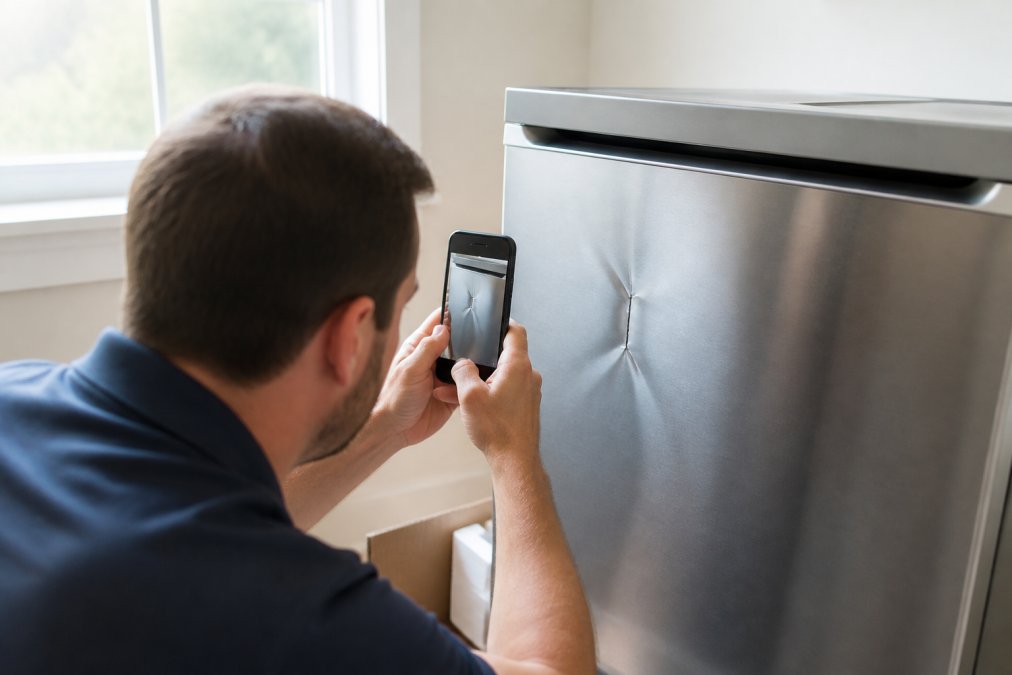
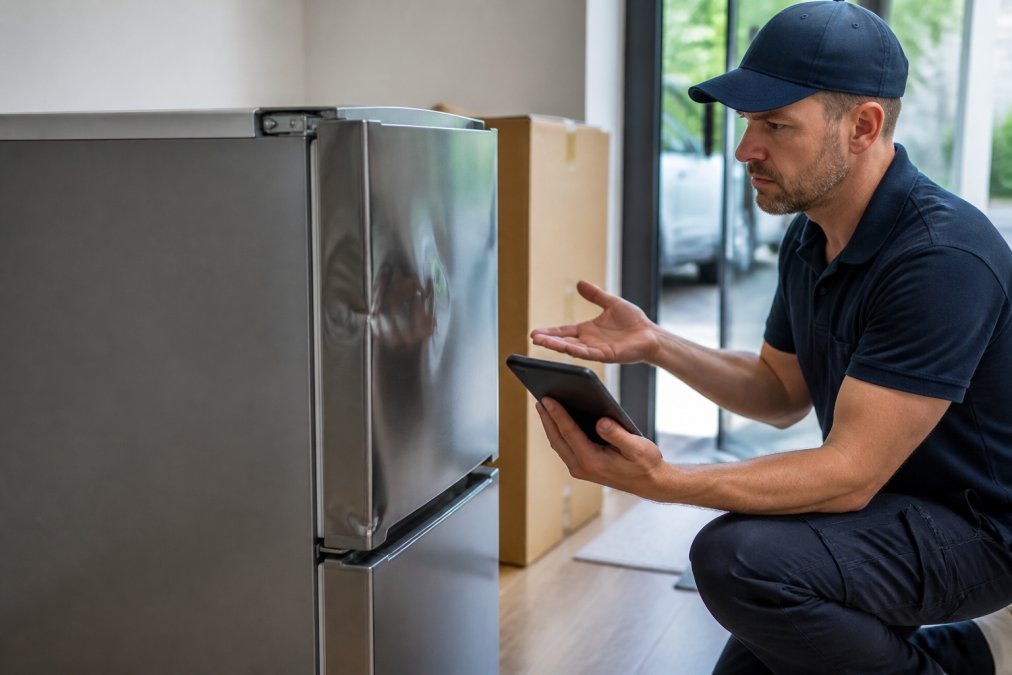
Take photos immediately, while the appliance is still in its original position. Photograph the damaged area from multiple angles, straight on, from the side, and close-up. Capture enough context so the damage is clearly visible but also so the location on the appliance is obvious. For a dent on a refrigerator door, photograph the dent itself, then step back to show which door and which section of the appliance.
Lighting matters. Natural daylight shows damage most clearly. If you must photograph indoors, position yourself so light falls across the damaged area, highlighting the defect. Avoid harsh shadows that obscure the damage.
Video documentation adds another layer of proof. Record a 30-60 second video walking around the appliance, narrating what you see. Say things like "This is a dent on the front left corner of the refrigerator door" or "This crack runs along the back panel." Speak clearly so your words are audible. The timestamp on the video file proves when you recorded it.
Save all photos and videos in multiple places. Upload them to cloud storage (Google Photos, iCloud, OneDrive) so they're backed up. Email them to yourself. Keep originals on your phone. Don't delete them. These files become evidence if a dispute arises later.
Include the serial number in your documentation. Photograph the serial number plate clearly so it's legible. This proves the photos are of your specific unit, not a generic image of a damaged appliance.
Report Damage to the Delivery Team and Retailer
Timing is everything when reporting damage. Tell the delivery agent before they leave. This creates an immediate record and gives them the chance to document the damage themselves. Many delivery contractors carry damage report forms. Ask for one and fill it out on the spot.
Be specific about what's damaged. Don't say "the appliance is damaged." Say "There is a 2-inch dent on the front left corner of the refrigerator door" or "The oven door has a crack in the glass." The more specific you are, the harder it is for anyone to claim the damage wasn't there.
Get the delivery agent's name, the delivery contractor's company name, and the date and time. Ask them to sign and date the damage report if they fill one out. If they refuse or say they can't document damage, note that in writing. Take a photo of the delivery receipt showing the date and time. This proves you reported the issue on the day of delivery.
Contact the retailer the same day, or within 24 hours at the latest. Call customer service and explain what arrived. Provide your order number. Describe the damage clearly. Ask what the next step is. Many retailers have specific damage claim procedures. They may ask you to email photos or fill out a damage report form online. Do this immediately.
Document your communication. Save emails, note the names of customer service representatives you speak with, and record the date and time of calls. Write down what they told you about the process. If they give you a claim number or reference code, save it. This creates a paper trail proving you reported the damage promptly.
Refusing Appliance Delivery Due to Damage
You have the right to refuse delivery if the appliance arrives damaged. You don't have to accept a broken or defective unit. Refusing delivery is often faster than accepting it and fighting for a replacement or refund later.
Before the delivery team leaves, tell them clearly: "I'm refusing this delivery due to damage." Point to the specific damage. Ask them to note the refusal on their delivery receipt or damage report. Get a copy of whatever they write. Take a photo of the refusal documentation.
Refusing delivery sends the appliance back to the retailer immediately. The burden shifts to them to investigate the damage and arrange a replacement. You don't have to keep a damaged appliance in your home while waiting for a claim to be processed.
However, refusing delivery works best if damage is obvious and severe. A small scratch or minor cosmetic defect may not justify refusal, especially if the appliance functions normally. Refusing a delivery for minor damage can sometimes complicate things, the retailer may claim the damage is cosmetic and not grounds for refusal, and you'll end up in a dispute anyway.
Use refusal when:
- The appliance has structural damage (cracks, major dents)
- The appliance doesn't power on or function
- The packaging is so damaged it's unclear if the appliance is safe
- The damage is in a critical location (oven door, refrigerator seal, washing machine drum)
If you refuse delivery, ask the retailer what happens next. Do they send a replacement immediately? How long does that take? Get answers in writing. You want to know when you'll have a working appliance, not just that the damaged one is being returned.
File an Appliance Damage Claim Template
A damage claim puts your complaint on record and starts the formal process toward a resolution. Use this template to organize your claim and ensure you include everything the retailer needs to process it.
Appliance Damage Claim Template:
Your Information:
- Name: [Your full name]
- Order Number: [From your receipt or confirmation email]
- Date of Delivery: [MM/DD/YYYY]
- Appliance Model: [Brand and model number]
- Serial Number: [From the appliance]
Damage Description:
- Location of damage: [Specific part of appliance, e.g., "front left corner of refrigerator door"]
- Type of damage: [Dent, crack, scratch, non-functional component, etc.]
- Severity: [Cosmetic only, affects function, appliance non-operational]
- Description: [Detailed explanation of what's wrong]
Supporting Documentation:
- Photos attached: [List filenames or number of photos]
- Video attached: [Yes/No, filename if yes]
- Delivery receipt attached: [Yes/No]
- Damage report from delivery agent: [Yes/No]
Timeline:
- Damage reported to delivery agent: [Date and time]
- Damage reported to retailer: [Date and time]
- Method of reporting: [Phone, email, in-person, etc.]
- Name of customer service representative: [If known]
Requested Resolution:
- Full refund
- Replacement unit
- Partial refund/store credit
- Other: [Specify]
Additional Information:
- Delivery contractor name: [Company that delivered the appliance]
- Delivery agent name: [Person who delivered it, if known]
- Any communication with retailer about this claim: [Summarize phone calls, emails, etc.]
Fill this out completely and email it to the retailer's customer service department. Keep a copy for your records. This formal approach signals that you're serious about resolving the issue and have documented everything properly.
Know Your Consumer Rights and Options
Consumer protection laws give you rights when an appliance arrives damaged. Understanding these protections helps you navigate the process and know when a retailer or delivery contractor is acting unfairly.
Under the Magnuson-Moss Warranty Act and state consumer protection laws, retailers must deliver products in the condition promised (the FTC). If an appliance arrives damaged, the retailer is responsible for making it right. They can't force you to accept a defective product or charge you for a replacement.
Many states have specific consumer protection statutes that apply to appliance purchases (consumer.ftc.gov). These laws typically require retailers to provide refunds or replacements for damaged goods within a reasonable timeframe. Some states define "reasonable" as 30 days (nclc.org). Others give you up to a year to report damage. Check your state's consumer protection agency website for specific timelines and requirements.
Your credit card company can also help. If you paid by credit card, you have the right to dispute the charge if the appliance arrived damaged and the retailer won't resolve it. This is called a chargeback. Most credit card companies will side with you if you provide evidence, photos, delivery documentation, and proof that you reported the damage promptly.
Manufacturer warranties typically don't cover shipping damage. The retailer or delivery contractor is responsible, not the manufacturer. However, if the damage reveals a manufacturing defect (a structural weakness that caused the damage to occur), the manufacturer's warranty may apply. This is rare, but worth knowing.
Insurance may also apply. Some homeowner's insurance policies cover damage to items during delivery. Check your policy or call your insurance agent. If the delivery contractor caused the damage through negligence, their liability insurance may cover it. Ask the delivery company about their damage coverage.
Document everything throughout this process. Emails, photos, delivery receipts, damage reports, and notes from phone calls all matter. If you end up in a dispute, this documentation proves you acted responsibly and reported the damage in a timely manner.
When an appliance arrives damaged, your first instinct might be frustration, but you have clear steps to take and protections backing you up. The key is acting quickly, inspect immediately, document thoroughly, and report the damage the same day. At Fast Appliances LLC, we understand how disruptive a damaged appliance delivery can be, which is why we emphasize the importance of these first steps. Know your consumer rights, keep records of everything, and don't hesitate to escalate the claim if the retailer doesn't respond within a reasonable timeframe. Most damage claims are resolved quickly when you follow this process and provide clear evidence of the problem.
Frequently Asked Questions
What should I do if my appliance arrives damaged?
Inspect the appliance immediately upon delivery before signing the proof of delivery. Document all damage with photos and video showing the serial number and damage from multiple angles. Contact the retailer's customer service within 24 hours with your photographic evidence. Report the damage to the delivery contractor as well. Do not attempt repairs. Most retailers offer replacement, return, or partial refund options depending on damage severity and your purchase agreement.
Should I refuse delivery if my appliance is damaged?
Yes, you can refuse delivery of a damaged appliance. Before refusing, document the damage with photos and video while the delivery agent is present. Get a written note from the delivery contractor stating the reason for refusal on the proof of delivery. This protects your consumer rights and initiates the damage claim process immediately. Refusing delivery is often faster than accepting a damaged unit and fighting for a replacement later.
How long do I have to report concealed damage on an appliance?
Report concealed damage as soon as you discover it, ideally within 24-48 hours of delivery. Most retailers require damage claims within 7-14 days, though some allow up to 30 days. Check your purchase agreement or contact customer service for the specific time limit. Prompt reporting strengthens your claim and speeds up the replacement or refund process. Keep all delivery documentation and photographic evidence until the claim is resolved.
Who is responsible for damage during appliance delivery?
Responsibility depends on the delivery method and your purchase agreement. The retailer is typically liable for damage during transit and delivery, even if a third-party delivery contractor handled the shipment. The delivery company may share liability if negligence caused the damage. Your consumer rights are protected under state consumer protection laws. Contact the retailer first, as they usually handle claims directly. If needed, you can file a claim with the delivery company or pursue a chargeback through your credit card issuer.
This article was written using GrandRanker