 how-to
Tips for Buying Appliances Online Safely
Table of Contents
- Verify the Retailer's Legitimacy and Security
- How to Spot Fake Appliance Websites
- Confirm Product Details Before Purchase
- Checking Appliance Retailer Return Policies
- Use Secure Payment Methods and Fraud Protection
- Appliance Delivery and Installation Safety
- Compare Prices and Read Customer Feedback
- Conclusion
Last Updated: August 23, 2026
Verify the Retailer's Legitimacy and Security
Before adding anything to your cart, confirm you're shopping on a legitimate retailer's website. Scammers create convincing fake storefronts designed to steal payment information and personal data.
Start by examining the URL in your browser's address bar. Legitimate retailers use HTTPS (not just HTTP), which encrypts your data during transmission. Look for the padlock icon next to the web address. The domain name should match the retailer's official name exactly, scammers often use slightly altered URLs, counting on shoppers to miss the subtle difference.
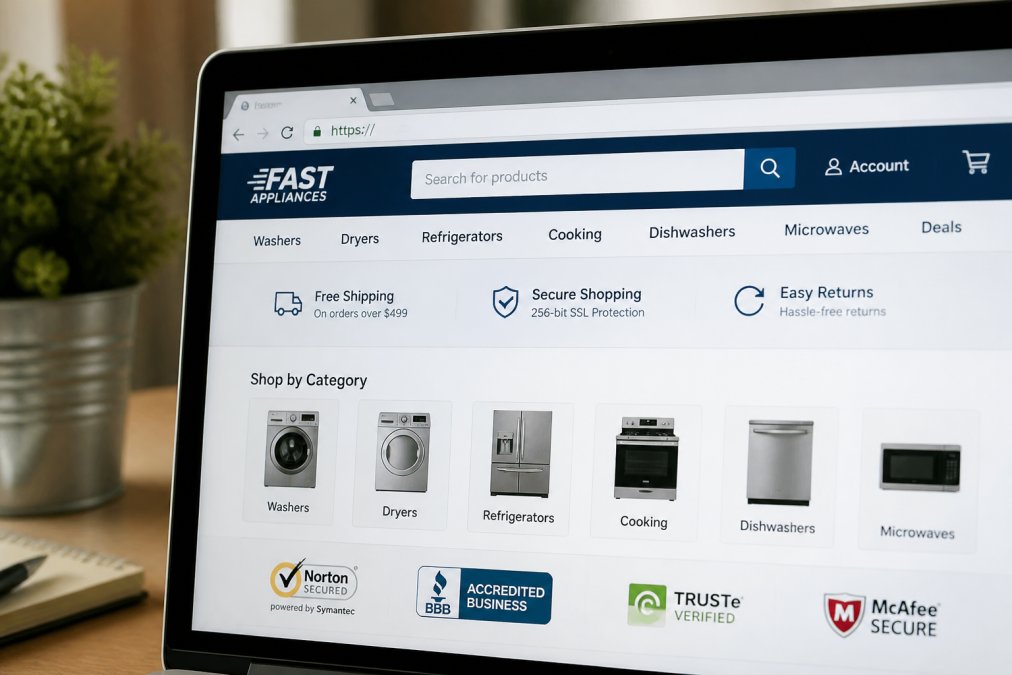
Trust badges and security seals from organizations like Norton, McAfee, or the Better Business Bureau indicate legitimacy. These badges should be clickable and link to verification pages. Fake websites often display convincing-looking badges that are actually just images with no real backing.
Next, verify the retailer's physical address and contact information. Legitimate retailers prominently display a street address, phone number, and email support on their website, typically in the footer or "Contact Us" section. Call that phone number or visit the address on Google Maps to confirm it's a real business location.
Check for professional website design and clear product information. Fake sites often have poor grammar, low-quality photos, or vague descriptions missing model numbers or specifications. Legitimate appliance retailers provide detailed specifications, dimensions, energy efficiency ratings, and warranty information for each product.
How to Spot Fake Appliance Websites
Counterfeit appliance websites have become increasingly sophisticated, but they still leave telltale signs if you know what to look for.
Red flags in site design and product listings
Generic or stolen product images are a major warning sign. Try a reverse image search (using Google Images) on product photos, if the image appears on dozens of other websites, the retailer is likely not legitimate.
Unrealistic pricing is another immediate red flag. If a high-end refrigerator is priced significantly below market rates, scammers are likely using artificially low prices to attract customers before either never delivering or sending counterfeit goods. Compare prices across multiple established retailers to understand the typical range.
Vague or missing product details suggest a fake operation. Real appliance retailers provide comprehensive specifications: exact dimensions, capacity, energy efficiency ratings, noise levels, warranty coverage, and available colors. If a listing omits these details or uses generic descriptions without model numbers, the seller may not actually have the product in stock.
Identifying counterfeit and grey market goods
Grey market appliances are legitimate products manufactured for other countries, then imported and resold in the United States without authorization (the FTC). While not counterfeit, they often lack manufacturer support, valid warranties, or access to service technicians in your area.
Verify the model number against the manufacturer's official website. Most major brands list their authorized distributors and retailers. If the retailer isn't listed as authorized, you may be purchasing grey market or counterfeit goods. Counterfeit appliances are built to lower standards, use inferior components, and fail prematurely.
Check the packaging and serial number authenticity. Real appliances come in manufacturer packaging with security features and serial numbers that match the product documentation. Counterfeit products often have misspelled text on the box, inconsistent logos, or serial numbers that don't align with the manufacturer's numbering system.
Confirm Product Details Before Purchase
Ordering an appliance online without seeing it in person creates real risks. Taking time to confirm specifications before checkout prevents costly mistakes and returns.
Verify model numbers and manufacturer specifications
Never rely on a retailer's product name alone. Find the model number on the product listing, then visit the manufacturer's official website to pull up the complete specifications sheet. Manufacturer spec sheets include exact dimensions, electrical requirements, capacity, energy efficiency ratings, and warranty details. Compare this official information against what the retailer is claiming.
Energy efficiency ratings matter too, an ENERGY STAR certified appliance uses less electricity, which translates to lower utility bills over time. These ratings are standardized and verifiable through the Department of Energy's official database.
Measure space and assess installation requirements
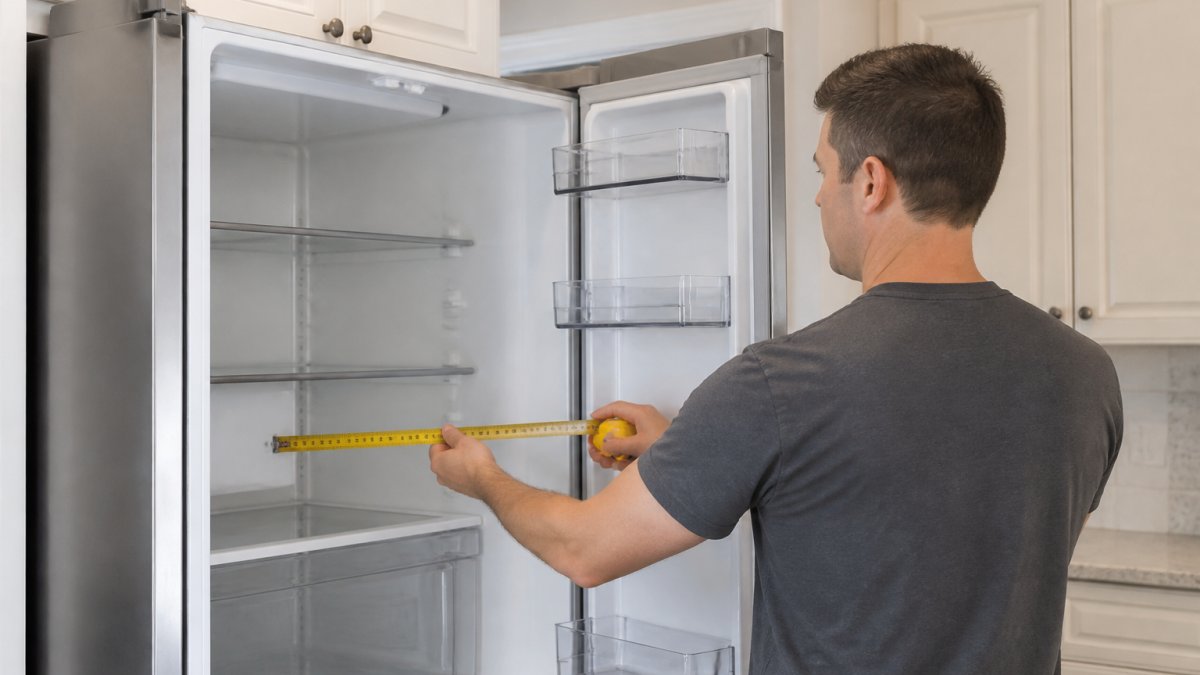
Before you buy, measure your space precisely. For refrigerators, include the depth of door handles when they're open. For washers and dryers, verify that the units fit through doorways and down hallways to reach the laundry room.
Check installation requirements and any additional costs. Some appliances require professional installation, which may not be included in the advertised price. Dishwashers often need custom cabinetry modifications. Ask the retailer explicitly whether installation is included or what the additional cost will be.
Checking Appliance Retailer Return Policies
Return policies vary dramatically between retailers. Some offer 30-day returns with no questions asked. Others impose restocking fees of 10-20% or only accept returns within 14 days. Understanding the return policy before you buy protects you if the appliance doesn't fit, arrives damaged, or doesn't meet your expectations.
Understanding restocking fees and warranty coverage
Restocking fees are charges applied when you return an appliance you've decided you don't want. A 15% restocking fee on a $1,500 refrigerator means you lose $225 even if the appliance is in perfect condition. Some retailers waive restocking fees if you return the item within a specific window.
Warranty coverage is separate from the return policy. The manufacturer's warranty typically covers defects in materials and workmanship for one year from purchase (the FTC). Extended warranties, offered by retailers, provide additional protection beyond the manufacturer's coverage. Before buying an extended warranty, read the fine print, some exclude certain failures or require you to use only authorized service technicians.
Ask the retailer directly: What's your return window? Do you charge restocking fees? What does the warranty cover? What's not covered? How do I file a warranty claim? A retailer that hesitates to answer these questions is a warning sign.
Use Secure Payment Methods and Fraud Protection
How you pay matters as much as where you shop. Certain payment methods offer stronger fraud protection than others.
Encrypted checkout and two-factor authentication
Before entering payment information, confirm you're on a secure checkout page. The URL should start with HTTPS, and you should see the padlock icon. Some retailers use two-factor authentication, which requires you to verify your identity through a second method before your payment is processed.
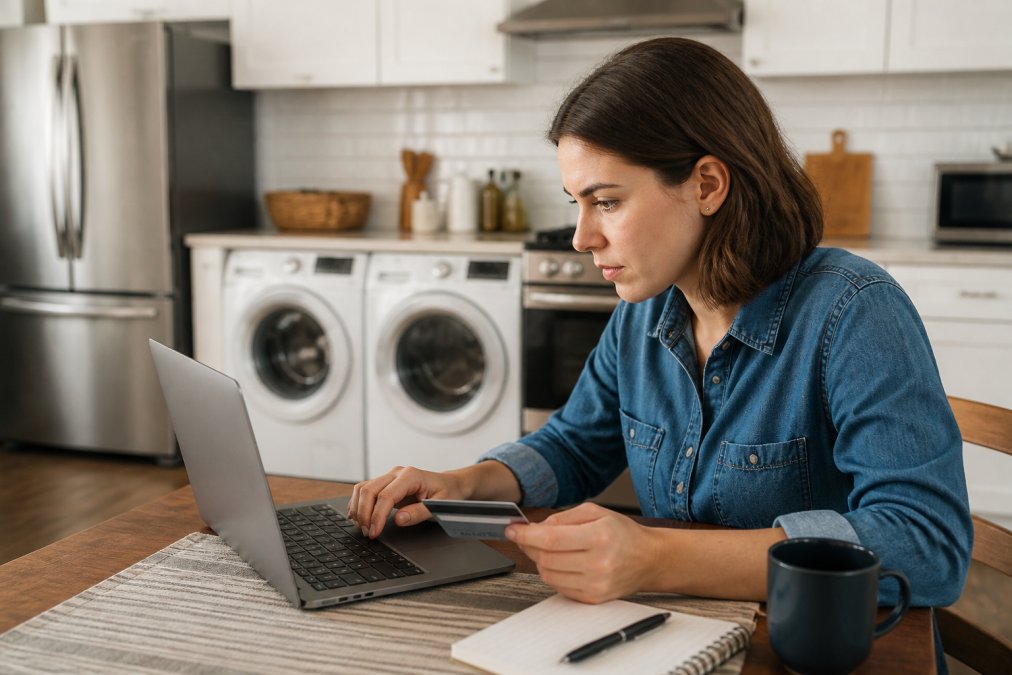
Credit cards offer the strongest fraud protection for online purchases. Under federal law, you're liable for only $50 of unauthorized charges on a credit card, and most issuers waive this entirely (the FTC). Debit cards offer less protection. Wire transfers and cryptocurrency offer no buyer protection whatsoever.
Never pay using methods that can't be reversed, like wire transfers, gift cards, or cryptocurrency. If a retailer insists on payment through these channels, it's almost certainly a scam. Legitimate appliance retailers accept standard credit cards, debit cards, and often financing options like Affirm or Klarna.
Appliance Delivery and Installation Safety
What happens after you click "buy" matters enormously. A damaged appliance arriving at your door, poor installation, or a missing unit creates frustration and expense.
Post-purchase delivery inspection and order tracking
Once your order is placed, tracking becomes your responsibility. Legitimate retailers provide a tracking number that updates as your appliance moves through the supply chain. If tracking information disappears or stops updating, contact the retailer immediately.
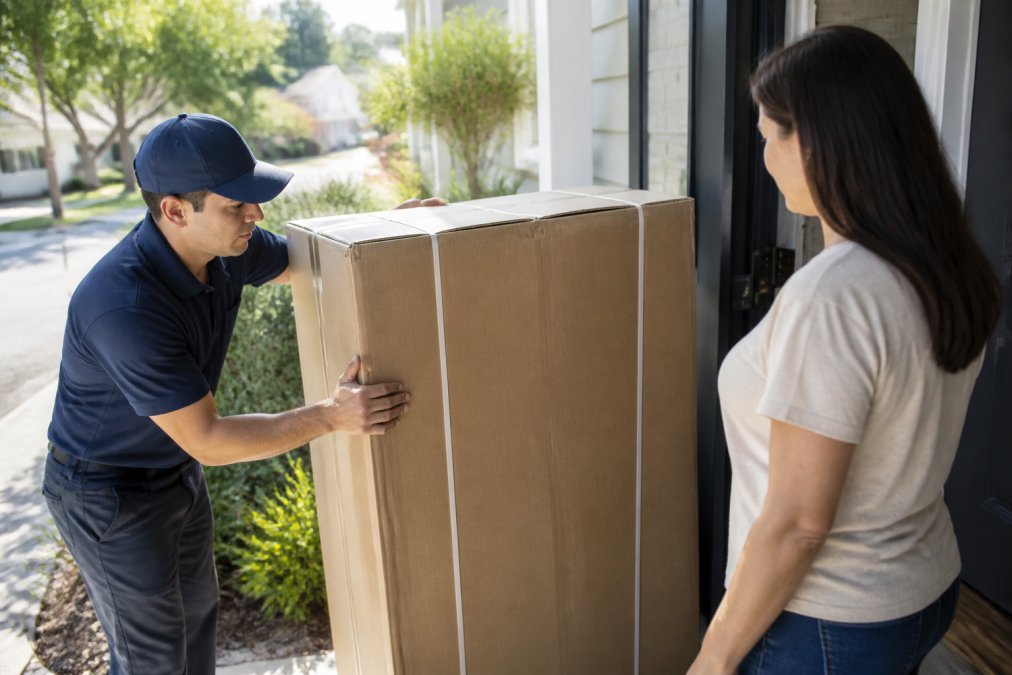
When the appliance arrives, inspect it before signing for delivery. Check the exterior of the box for damage, dents, tears, or water stains indicate the appliance may have been damaged in transit. If the box is damaged, refuse delivery or note the damage on the delivery receipt. Open the box in front of the delivery driver if possible and visually inspect the appliance.
Document everything with photos and video. Take clear photos of the appliance as it comes out of the box and from multiple angles. Keep all packaging materials and documentation until you've confirmed the appliance works correctly.
Handling shipping damage and filing claims
If your appliance arrives damaged or doesn't work, act quickly. Contact the retailer within the timeframe specified in their return policy, usually within 14-30 days of delivery. Provide the photos and video you took, your order number, and a clear description of the damage or malfunction. Most legitimate retailers will arrange a replacement or refund.
If the retailer refuses to help or becomes unresponsive, escalate the claim through your credit card company. Your credit card issuer can initiate a chargeback, which reverses the charge while the dispute is investigated. Keep all correspondence with the retailer to support your case.
For damage that occurs after delivery, the manufacturer's warranty typically covers repairs or replacement. Contact the manufacturer directly with your proof of purchase and a description of the problem.
Compare Prices and Read Customer Feedback
Price comparison and customer reviews reveal patterns that individual listings can't. Legitimate retailers receive consistent positive feedback over time. Scammers either have no reviews or a sudden spike of fake positive reviews.
Compare the same model number across multiple retailers to understand the typical price range. If one retailer is significantly cheaper, investigate why. Are they selling grey market goods? Is installation not included? Is the warranty limited?
Read customer reviews on independent platforms like Google Reviews, Trustpilot, or the Better Business Bureau. Look for patterns in the feedback. Legitimate retailers have a mix of reviews, mostly positive, with some neutral or negative feedback about specific issues. Pay attention to reviews that mention delivery, installation, and customer service, these real-world experiences matter most.
Buying appliances online safely comes down to verification at every stage: verifying the retailer's legitimacy before you shop, confirming product specifications before you buy, understanding the return policy and warranty coverage, using secure payment methods, and inspecting your delivery carefully. The extra time you invest upfront prevents costly mistakes, damaged appliances, and fraud. When you shop at Fast Appliances LLC, our commitment to comprehensive product information means you can buy with confidence. We stand behind our appliances because we know you're counting on them to keep your home running smoothly.
Frequently Asked Questions
Q: Is it safe to buy appliances online?
A: Yes, buying appliances online is safe when you take proper precautions. Verify the retailer uses a secure encrypted checkout, check their physical address and contact details, read customer reviews, and confirm they offer warranty coverage and a clear return policy. Use a secure payment gateway and enable two-factor authentication on your account. Most reputable online appliance retailers offer consumer protection, order tracking, and fraud protection to safeguard your purchase.
Q: How can I verify if an online appliance retailer is legitimate?
A: Check for HTTPS and trust badges on the website's checkout page. Verify the retailer has a physical address and working customer support channels listed. Search for their name plus 'reviews' to read customer feedback and ratings. Confirm they're an authorized dealer by checking the manufacturer's website. Look for clear return policies, warranty information, and digital receipts. Be cautious of retailers with vague contact information, poor website design, or unusually low prices that seem too good to be true.
Q: What should I check before finalizing an online appliance purchase?
A: Verify the exact model number matches your needs and check manufacturer specifications for dimensions, energy efficiency rating, and features. Confirm your space measurements align with appliance dimensions and installation requirements. Review the return policy, warranty coverage, and any restocking fees. Check the estimated delivery date and shipping damage policies. Ensure the price matches what you saw initially, and confirm the retailer offers secure payment methods with fraud protection. Take a screenshot of your order details and digital receipt for your records.
Q: What should I do if my appliance arrives damaged?
A: Inspect the appliance immediately upon delivery before signing off. Document any visible shipping damage with photos and note it on the delivery receipt. Contact the retailer's customer support within the timeframe specified in their return policy, typically within 48 hours. Provide photos and the order tracking number. Most retailers will arrange a replacement or file a shipping damage claim with the carrier. Keep the damaged appliance and packaging until the claim is resolved. Verify the retailer covers shipping damage under their warranty or consumer protection policy before finalizing your purchase.
This article was written using GrandRanker