 comparison
Lowe's vs Home Depot for Kitchen Appliances
Table of Contents
- Lowe's vs Home Depot: Kitchen Appliances Comparison Table
- Price Matching and Minimum Advertised Pricing Policies
- Product Selection, Availability, and Exclusive Models
- Appliance Delivery and Installation Policies
- Warranty Coverage and Protection Plans
- Best Time of Year to Buy Kitchen Appliances
- Big-Box Retailers vs Independent Appliance Stores
- Customer Service and Post-Purchase Support
Last Updated: August 17, 2026
Lowe's vs Home Depot: Kitchen Appliances Comparison Table
When shopping for kitchen appliances, the choice between Lowe's and Home Depot depends on more than price alone. Both retailers dominate the market but differ significantly in product selection, delivery policies, warranty options, and customer service. Understanding these differences helps you choose based on your actual needs.
| Feature | Lowe's | Home Depot |
|---|---|---|
| Price Matching | Yes, matches competitor prices | Yes, matches competitor prices |
| Delivery Window | Typically 3-7 business days | Typically 2-5 business days |
| Installation Services | Available through third-party contractors | Available through third-party contractors |
| Extended Warranty | Yes, multiple protection plans available | Yes, multiple protection plans available |
| Haul-Away Service | Available for additional fee | Available for additional fee |
| Exclusive Models | Kenmore, LG, GE Appliances | GE Appliances, Whirlpool exclusive models |
| Return Policy | 30 days for most appliances | 90 days for most appliances |
| In-Store Pickup | Available for select models | Available for select models |
Home Depot's extended return window gives customers more time to evaluate purchases, while Lowe's competitive price matching ensures you're not overpaying compared to other retailers.
Price Matching and Minimum Advertised Pricing Policies
Both retailers maintain price matching policies, but specifics matter when comparing kitchen appliances. Lowe's matches prices from Home Depot, Amazon, and other major retailers within seven days of purchase. Home Depot similarly matches competitor pricing with proof of the lower price. Neither typically matches online-only sellers or auction sites.
Manufacturer minimum advertised pricing (MAP) prevents retailers from discounting popular brands below certain thresholds. Premium brands like Bosch, Miele, and KitchenAid see limited discounts, while budget-friendly brands like Whirlpool or LG offer more flexibility.
Both retailers adjust prices seasonally, with the best deals during holiday weekends and end-of-season clearances. Timing your purchase strategically yields significant savings.
Product Selection, Availability, and Exclusive Models
Home Depot carries exclusive Whirlpool models and broader GE Appliances selection. Lowe's features Kenmore appliances exclusively, along with strong LG selection. Product availability varies by location, with urban stores stocking more models than rural locations.
Lowe's frequently offers package deals when purchasing multiple appliances together. Home Depot emphasizes individual product selection with promotional pricing on specific models during seasonal events. Comparing bundle pricing at both retailers often reveals better overall value for outfitting entire kitchens.
Exclusive models matter significantly. Kenmore at Lowe's offers competitive features at lower price points than comparable GE or Whirlpool models. If a specific exclusive model meets your needs, you're limited to that retailer.
Checking online inventory before committing prevents disappointment with out-of-stock models.
Appliance Delivery and Installation Policies
Home Depot typically offers faster delivery windows than Lowe's. Home Depot's standard delivery ranges from 2-5 business days, while Lowe's typically requires 3-7 business days. For urgent appliance replacement, this difference matters significantly.
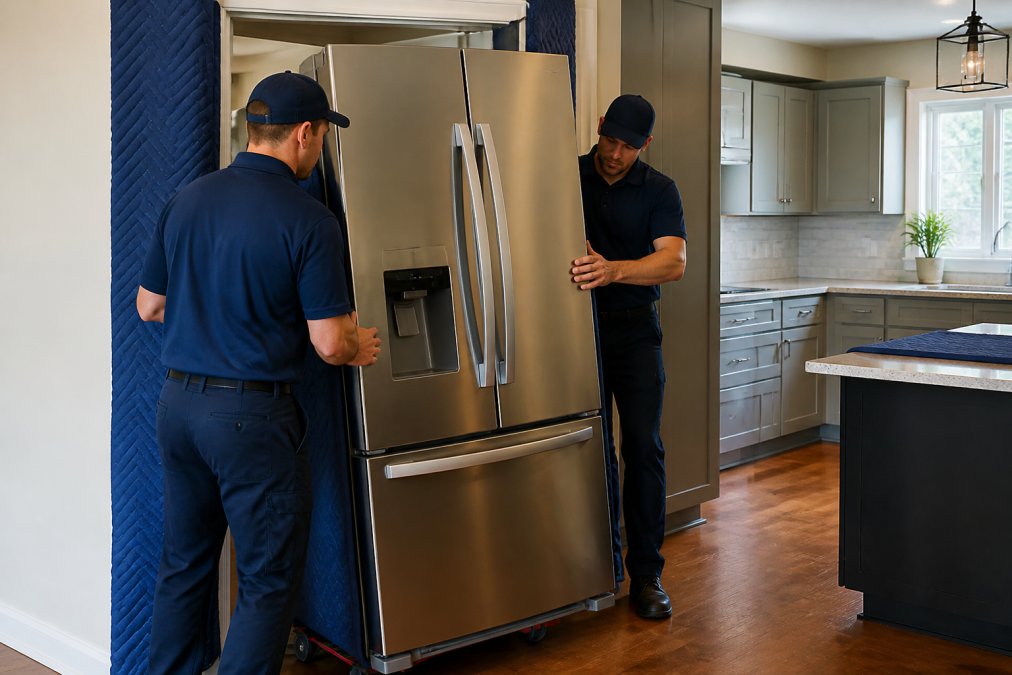
Both retailers contract with third-party delivery services, creating quality variance depending on your contractor. Reading customer reviews about specific delivery experiences in your area provides valuable insight.
Installation services are available through both retailers for $150-$300 per appliance, with complex installations costing more. Neither retailer includes installation fees in advertised prices. Haul-away service removes old appliances for $50-$100 per unit. Home Depot includes basic damage coverage in delivery, while Lowe's offers optional delivery protection plans.
Warranty Coverage and Protection Plans
Manufacturer warranties typically cover 1-2 years, but extended warranty options add 2-5 additional years. Both retailers offer protection plans ranging from $100-$400 for a full kitchen set, covering mechanical failure, parts replacement, and sometimes accidental damage.
Lowe's protection plans often include in-home service for major appliances. Home Depot's plans similarly provide in-home service for covered appliances. Read the fine print carefully, some plans exclude certain failures, require deductibles, or limit service calls.
Premium brands like Bosch and Miele offer longer standard warranties than budget brands, sometimes making them more cost-effective over the product lifetime.
Best Time of Year to Buy Kitchen Appliances
The best time to buy kitchen appliances is during major holiday weekends, Memorial Day, July 4th, Labor Day, and Black Friday, when both retailers discount inventory heavily with 10-20% reductions on select models.
End-of-season sales in late August and September clear summer inventory to make room for fall stock. New model year introductions in fall create pressure to discount previous-year models. January also offers strong buying periods with clearance sales on remaining holiday inventory.
Avoid shopping in March, April, and May unless you have immediate needs. Spring represents slower sales periods with less promotional activity. June and July see less aggressive discounting before summer holiday promotions begin.
Big-Box Retailers vs Independent Appliance Stores
Independent appliance stores offer personalized service and specialized expertise that big-box retailers cannot match. Local store owners often know which brands perform best in your climate and which models have reliability issues.
Big-box retailers prioritize selection and price over personalized guidance. Their sales staff often lack deep product knowledge. However, they offer advantages in product availability and return policies, stocking dozens of models compared to independent stores' limited selection.
Independent stores often negotiate better pricing on installation and repair services through regular contractor relationships. They typically handle returns and warranty issues directly, resulting in faster resolution than corporate systems.
Price is rarely the deciding factor. Independent stores typically charge slightly more on appliances but offset this through superior service, better installation coordination, and more responsive warranty support.
Customer Service and Post-Purchase Support

Home Depot's customer service handles in-store questions effectively but struggles with phone support during peak periods. Lowe's has invested more heavily in customer service training, resulting in generally more responsive phone and chat support.
Installation quality varies by contractor, not retailer. Both companies contract with local services, so your experience depends on your area's contractor. Reading reviews of specific contractors before scheduling installation helps set realistic expectations.
Home Depot routes warranty claims through their warranty provider, taking 2-3 weeks for approval. Lowe's handles many claims in-store, speeding resolution for straightforward issues. Both retailers require documentation and may deny claims if maintenance requirements weren't followed.
Both retailers offer phone, email, and chat support. Home Depot's chat responds faster than phone support during business hours. Lowe's provides more consistent response times across all channels.
Choosing between Lowe's and Home Depot depends on your priorities. If you value speed, Home Depot's faster delivery and extended return policy make it stronger. If you prefer exclusive brands like Kenmore or prioritize consistent customer service, Lowe's offers advantages. For most homeowners, deciding factors are local inventory availability, delivery contractor quality in your area, and which retailer carries your desired models. Before finalizing your purchase, compare total costs including delivery, installation, and extended warranties, the lowest appliance price doesn't guarantee the lowest total cost.
Frequently Asked Questions
Is it better to buy appliances at Lowe's or Home Depot?
Neither retailer consistently outperforms the other across all categories. Lowe's often excels in customer service and installation quality in many regions, while Home Depot typically offers broader product selection and competitive pricing. Your choice depends on which factors matter most: price matching policies, delivery window flexibility, warranty options, and local service reliability. Compare specific models and delivery terms before deciding.
What is the best time of year to buy kitchen appliances?
Major appliance sales peak during Black Friday, Cyber Monday, and end-of-year clearance events (November-December). Spring (March-May) and Labor Day weekend also offer promotional pricing. Appliance manufacturers typically release new models in fall, pushing older inventory to clearance. However, emergency replacements rarely allow timing flexibility. Check both retailers' promotional calendars and financing terms to maximize savings regardless of season.
How does appliance delivery compare between big-box retailers and independent stores?
Big-box retailers like Lowe's and Home Depot offer standardized delivery windows (typically 2-7 days) and haul-away services at predictable costs. Independent appliance stores often provide faster delivery, more flexible scheduling, and personalized installation oversight, though pricing varies widely by location and inventory. Big-box retailers have established logistics networks but may use third-party contractors, which can affect installation quality. Independent stores typically employ direct service technicians, potentially offering more consistent workmanship.
Are there hidden costs when buying kitchen appliances from major retailers?
Yes. Beyond the purchase price, expect delivery fees ($50-$300+), haul-away charges ($25-$150), installation fees ($100-$500+), and optional extended warranty or protection plans ($100-$400+). Some retailers bundle these; others charge separately. Financing terms may include interest if paid outside promotional windows. Always request a complete quote including all fees before checkout. Compare total cost of ownership, not just the advertised price, to avoid surprises at delivery.
This article was written using GrandRanker