 how-to
How to Get Expert Appliance Advice in 2026
Table of Contents
- Why Expert Appliance Advice Matters Before You Buy
- Start with the Model Number and User Manual
- Where to Find Trustworthy Expert Appliance Advice
- How to Vet a Technician's Credentials
- Most Reliable Appliance Brands to Consider
- Appliance Repair vs Replace: A Simple Decision Matrix
- Your Appliance Buying Guide: Questions to Ask
- Conclusion: Get the Right Advice, Then Buy with Confidence
- Frequently Asked Questions
Last Updated: September 6, 2026
The average homeowner will face a major appliance failure at some point, and the quality of the advice you get beforehand often determines whether you waste hundreds of dollars or make a purchase that lasts a decade. This guide from Fast Appliances LLC breaks down how to gather that expertise.
Most people start by typing a model number into Google, which is a good first step but rarely enough.
Why Expert Appliance Advice Matters Before You Buy
Expert appliance advice is the process of gathering verified information about a product's performance, longevity, and repair history before buying. The cost difference between a well-researched buy and a rushed one is often several hundred dollars over the appliance's life.
Many families discover this the hard way after purchasing a refrigerator or washer based solely on a flashy sale price. A common mistake is ignoring the long-term cost of ownership, which includes energy consumption and the likelihood of component failure. Consumer Reports appliance reliability surveys consistently show that reliability varies significantly between brands, even at similar price points.
The real value of expert advice surfaces during a breakdown. If you know your model's common failure points and have a relationship with a trusted service provider, you can often resolve issues in a single visit.
Start with the Model Number and User Manual
Before you consult anyone, identify your appliance precisely. The model number and serial number unlock every piece of specific information you need, from error codes to warranty coverage.
You can usually find the model and serial number on a sticker or metal plate inside the door frame, on the back panel, or along the side of the unit. For refrigerators, check the upper or lower interior wall. For washers and dryers, the plate is often just inside the door or on the top edge of the control panel.
Once you have those numbers, the user manual is your next stop. Most manufacturers host PDF versions online, and these documents contain troubleshooting sections that resolve many common issues without a service call. Error codes, which appear as blinking lights or digital readouts, are almost always explained in the manual or on the manufacturer's support site.
Where to Find Trustworthy Expert Appliance Advice
You have several reliable channels for expert appliance advice, and the best approach uses a combination of them. Manufacturer support lines, independent repair technicians, and reputable online communities each offer a different layer of expertise.

The manufacturer's technical support team is the definitive source for warranty coverage and official troubleshooting. Independent repair technicians offer practical knowledge about which components actually fail and what repairs cost. Online communities provide real-world experiences, but weigh that information carefully against official guidance.
Using Digital Diagnostic Tools and Apps
Modern appliances increasingly support digital diagnostics. Many newer refrigerators, washers, and dishwashers can communicate error codes directly to a smartphone app, which then provides a preliminary diagnosis.
These apps, often provided by the manufacturer, can tell you whether the issue is a simple sensor error you can reset or a genuine component failure requiring a professional. Using the app before you call a technician gives you a head start on describing the problem accurately.
How to Vet a Technician's Credentials
Finding a qualified repair technician requires more diligence than reading a five-star review. You want someone licensed, insured, and experienced with your specific brand.
Start by asking for proof of licensing and insurance before you schedule a service call. A licensed technician has passed a background check and met basic competency standards in most states. Insurance protects you if the technician damages your appliance or home.
Next, ask about their experience with your brand. A technician who primarily services one or two major brands will likely diagnose issues faster than a generalist. You should also confirm whether they offer a warranty on their labor, which signals confidence in their work. Better Business Bureau tips for hiring appliance repair services recommends checking the business's complaint history and resolution record before committing.
Most Reliable Appliance Brands to Consider
When shopping for a new appliance, reliability data should carry more weight than aesthetic appeal. The most reliable brands tend to have simpler designs and a strong network of authorized service centers.
Brands with a reputation for longevity usually offer longer warranties on key components like compressors and motors. A longer warranty signals that the manufacturer expects the part to last. Check the availability of spare parts; a brand with readily available parts will be easier and cheaper to service.
The most reliable brands for your situation depend on your budget and the specific type of appliance. Washer reliability is driven by different factors than refrigerator reliability. Choose a brand that scores well across multiple categories rather than one that excels in a single product type.
Appliance Repair vs Replace: A Simple Decision Matrix
Deciding whether to repair or replace a broken appliance is a financial calculation, but not just about the immediate repair quote. The key factors are the age of the unit, the repair cost, and the expected remaining lifespan. A truly expert decision also weighs energy efficiency losses, warranty implications, and the environmental cost of manufacturing a new unit.
The 50% Rule and Its Refinements
A practical rule of thumb is the 50% rule: if the repair cost exceeds half the price of a comparable new unit and the appliance is more than half-way through its expected lifespan, replacement is usually the wiser investment. But this rule is a starting point, not a final answer. Use the matrix below to guide your decision, then refine it with the additional factors below.
| Situation | Recommended Action | Reasoning |
|---|---|---|
| Repair cost under 25% of new price | Repair | Clear financial win if the unit is under 8 years old |
| Repair cost 25-50% of new price | Evaluate age and efficiency | Repair only if the unit is relatively new and energy-efficient |
| Repair cost over 50% of new price | Replace | Newer units are more energy-efficient and come with a fresh warranty |
| Major compressor or motor failure | Replace | These failures often signal the end of the appliance lifecycle |
The Hidden Cost of Inefficiency
A refrigerator from 2010, for example, may use 40% more energy than a current ENERGY STAR certified model. If your repair quote is $350 on a 12-year-old refrigerator, the 50% rule might suggest repair if the new unit costs $1,200. But the math changes when you factor in the $150 per year you could save in energy costs by upgrading. Over three years, that savings nearly offsets the repair cost, making replacement the smarter long-term financial move. EPA ENERGY STAR savings calculator provides a tool to estimate your specific annual savings.
The Environmental Math: Repair vs. Replace
This framework also supports sustainability goals. If you are replacing a unit less than five years old, repairing it is almost always the more environmentally sound choice. However, for units over 10 years old, the ongoing energy consumption of an inefficient model can outweigh the environmental cost of manufacturing a new, efficient one. A new ENERGY STAR refrigerator typically offsets its manufacturing carbon footprint within 2 to 4 years of operation compared to an older, inefficient model.
The Warranty Trap
Before you decide to repair, check your warranty status. If your appliance is still under the manufacturer's parts warranty, a repair might cost you only the labor fee, which dramatically changes the calculation. Conversely, if you have an out-of-warranty unit and the replacement part is on backorder with no ETA, the cost of waiting (spoiled food, no laundry) should factor into your decision.
A Decision Checklist for Your Specific Situation
Run through this checklist when you get a repair quote:
- What is the exact age of the appliance? (Check the serial number date code if you are unsure.)
- What is the repair quote, including parts and labor?
- What is the price of a comparable new, energy-efficient model?
- Is the repair covered under any remaining warranty?
- What is the estimated annual energy cost of your current unit versus a new one? (Your utility bill or an energy monitor can help.)
- Has this appliance already had major repairs? If you have spent more than 50% of its value on repairs in the last two years, replacement is likely the better path.
Your Appliance Buying Guide: Questions to Ask
Before you finalize any purchase, you should have a short list of questions ready. This appliance buying guide will help you compare options on an apples-to-apples basis rather than getting distracted by marketing claims. Expert advice is also about how you prepare your home for the new unit and how you safely handle DIY troubleshooting before the expert arrives.
The Pre-Purchase Measurement Checklist
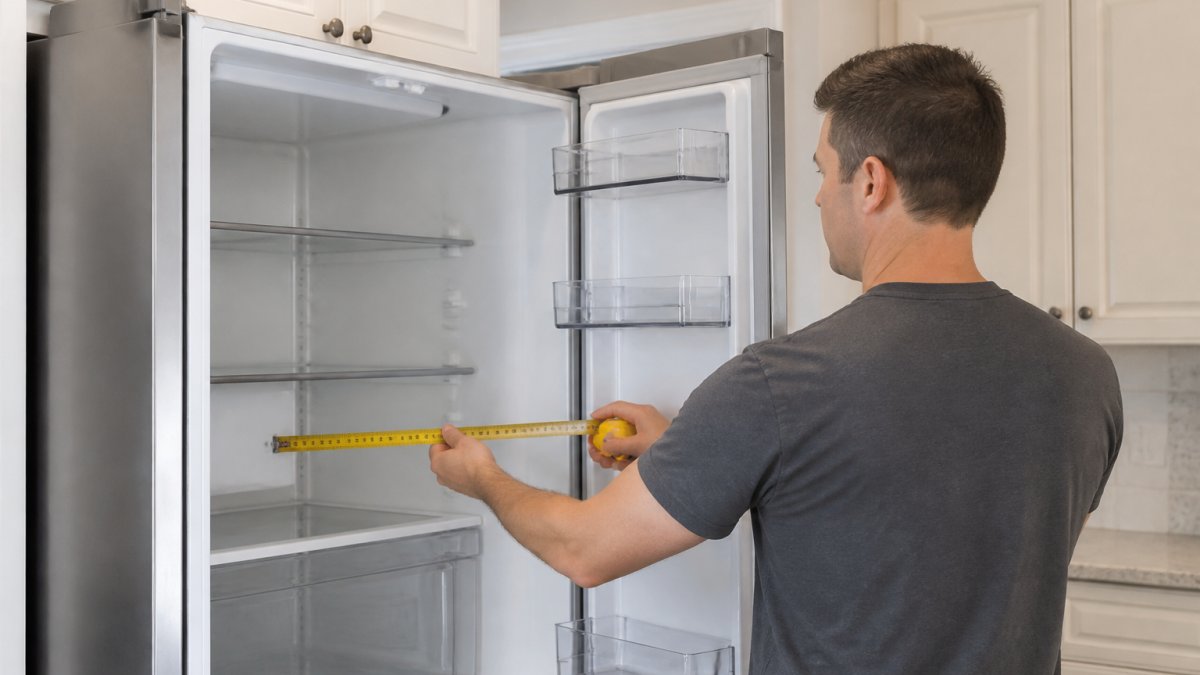
Start with the physical fit. Measure your space carefully, including depth, width, and height, and account for clearance needs for ventilation and door swing. For a refrigerator, you need at least 1 inch of clearance on the sides and top for proper airflow. For a washer or dryer, measure the door opening to ensure the unit can be moved into the space. Measure the path from the delivery truck to the installation site, including stairwells and hallway turns.
The Expert Questions to Ask the Seller or Manufacturer
Your list of questions should go beyond the basics. Here is the level of specificity that separates a well-informed buyer from a casual one:
- What is the warranty coverage, and does it include labor? Many manufacturers offer a 10-year parts warranty on the compressor but only a 1-year warranty on labor. Ask for the exact terms in writing.
- Are there authorized service centers near my zip code? A brand with a service center 50 miles away will mean higher travel fees and longer wait times. Ask for the zip codes of their nearest authorized providers.
- What is the estimated annual energy cost for this model? The ENERGY STAR label provides a number, but ask the seller for the specific kWh/year figure and multiply it by your local electricity rate (the average U.S. rate is around 16 cents per kWh, but it varies by state).
- Does this model have a history of specific error codes or recalls? Ask the manufacturer's support line directly about known issues. You can also check the CPSC recall database for any open recalls on the model.
- What is the return policy if the unit arrives damaged? Get the policy in writing before you order. Some retailers require you to report damage within 48 hours of delivery.
Remote DIY Troubleshooting: Safety Protocols Before You Call an Expert
When troubleshooting an issue yourself before calling a technician, safety must be your first priority. Many homeowners cause additional damage, or risk injury, by skipping basic safety steps. Follow these protocols before you attempt any DIY diagnostic or repair:
Electrical Safety
- Unplug the appliance before any inspection. Never reach into a unit that is still plugged in.
- Check the circuit breaker. If the appliance is not powering on, verify the breaker has not tripped. Reset it once; if it trips again immediately, do not reset it again, call a professional, as this indicates a short circuit.
- Use a multimeter correctly. If you are testing a component, set the multimeter to the correct setting (voltage, resistance, continuity) and never touch the probes to live wires with wet hands.
Gas Appliance Safety
- If you smell gas, evacuate immediately. Do not turn on lights, use your phone, or operate any switch. Call your gas utility from outside the home.
- For a gas oven or dryer that is not igniting, do not repeatedly press the igniter. This can cause gas to accumulate. Turn off the gas supply valve (usually located behind the unit) and call a professional.
Water and Drainage Safety
- Turn off the water supply to a washing machine or dishwasher before inspecting hoses or connections. The shut-off valve is typically behind the unit or under the sink.
- Have a bucket and towels ready before you disconnect any water line. Even with the supply off, residual water in the hose will drain out.
The "When to Stop" Rule
A common pattern among safety experts is the "two-attempt rule": if you have attempted a DIY fix twice and the problem persists, stop and call a professional. Continuing to tinker risks additional damage that will increase your repair bill and could void your warranty.
By combining a rigorous pre-purchase question list with a clear-eyed understanding of your own safety limits, you position yourself as an informed consumer who can get the most value from every expert interaction.
Conclusion: Get the Right Advice, Then Buy with Confidence
The path to a reliable appliance purchase is paved with good questions and verified information, not guesswork. Whether you are troubleshooting a current failure or planning a kitchen renovation, the expert appliance advice you gather will save you time, money, and frustration. Start with the model number, use digital tools to narrow the problem, and never skip the credential check on your technician.
When your research points toward a replacement, Fast Appliances LLC provides convenient access to a comprehensive selection of essential home appliances, from refrigerators and dishwashers to cooktops and ovens. We offer a direct approach that makes it easy to find exactly what you need, with high-quality equipment delivered right to your door.
Frequently Asked Questions
How can I tell if an appliance expert is trustworthy?
Ask for their license and insurance, and confirm they have experience with your specific brand and model. Check for certifications from manufacturers. A trustworthy expert will give you a written estimate before starting work and will explain your options without pressuring you. For advice before a purchase, rely on sources that do not earn commissions from specific brands.
What is the best way to get advice on appliance repair vs replace?
Use the 50% rule as a starting point: if the repair costs more than half the price of a new appliance and the unit is over eight years old, replacement is often smarter. Also factor in energy efficiency, warranty status, and the availability of spare parts. For a final call, get a second opinion from an independent technician.
What questions should I ask before buying a new appliance?
Ask about the specific model's reliability record, not just the brand. Inquire about the warranty length and what it covers, the cost of spare parts, and the availability of local authorized service technicians. Also ask about energy usage and whether the retailer offers delivery and installation.
Where can I find unbiased reviews for my appliance buying guide?
Look for reviews from sources that do not sell appliances, such as consumer advocacy groups and independent testing labs. For long-term reliability data, search for owner forums and surveys that track repair rates over several years. Be cautious of reviews on retailer sites, as they often skew positive.