 comparison
Gas vs Electric Stoves: Pros and Cons in 2026
Table of Contents
- Gas vs Electric Stoves: The Core Difference
- Gas Stove Pros and Cons: Performance and Control
- Electric Stove Pros and Cons: Consistency and Cleanup
- Feature Comparison: Gas vs Electric vs Induction
- Costs to Consider: Purchase, Installation, and Retrofitting
- Gas Stove Health Concerns and Indoor Air Quality
- Induction Cooktop Benefits and Cookware Compatibility
- How to Clean Glass Top Electric Stove Safely
- Which Stove Is Right for Your Kitchen?
- Frequently Asked Questions
Last Updated: September 5, 2026
Gas vs Electric Stoves: The Core Difference
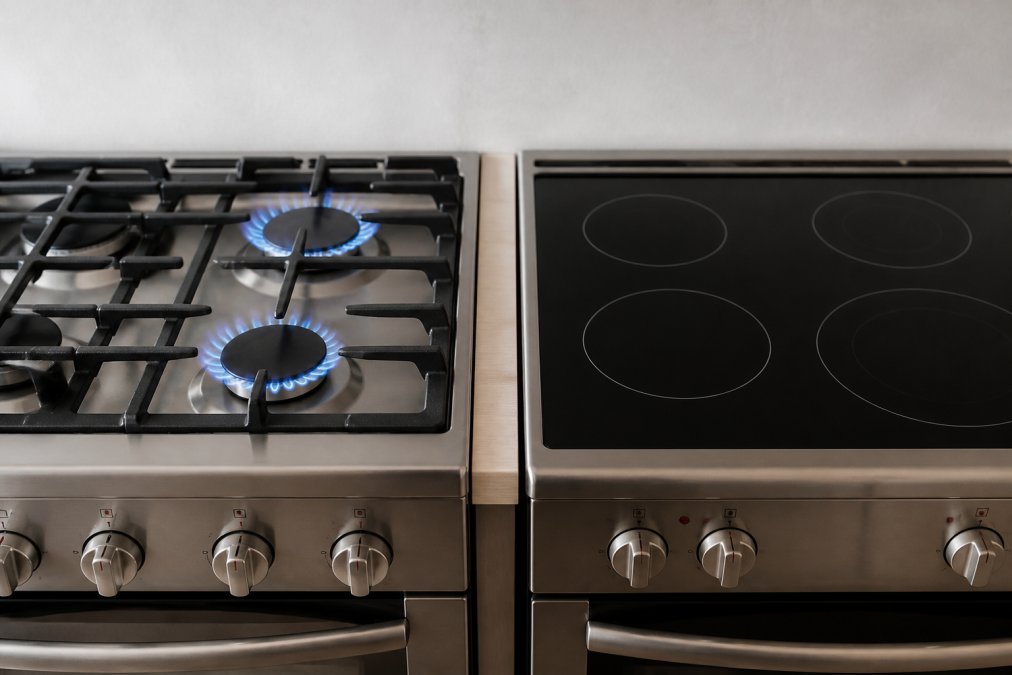
Choosing between a gas and an electric stove is one of the most consequential decisions in a kitchen remodel. The debate comes down to a single trade-off: gas offers instant, visual heat control, while electric delivers consistent, even temperatures with a surface that wipes clean in seconds. The right answer depends on your existing hookups, cooking habits, and budget.
Gas stoves burn natural gas or propane to produce an open flame. Electric stoves use coil elements or ceramic glass surfaces that heat cookware through radiant heat. A third option, induction, uses electromagnetic energy to heat the pan directly.
The choice also affects your home's infrastructure. Gas requires a gas line and proper ventilation, while most electric models need a dedicated high-voltage outlet. Before you fall in love with a specific model, verify what your kitchen can support.
Gas Stove Pros and Cons: Performance and Control
The Upside: Responsive Heat and Versatility
Gas stoves excel at immediate temperature changes. When you drop the flame from high to low, the burner responds in seconds, which matters for delicate tasks like simmering sauces or melting chocolate. This responsive heat is the primary reason professional chefs prefer gas for stovetop work.
Gas ranges also offer unmatched cookware compatibility. Cast iron, copper, stainless steel, and nonstick pans all work perfectly over an open flame. High-BTU burners deliver rapid boiling and aggressive searing.
The Downside: Installation and Maintenance
Gas ranges require a natural gas line connection, which many modern kitchens lack. If you're converting from electric, you'll need a licensed professional to run a gas line, which involves opening walls and potentially upgrading your home's ventilation. The U.S. Department of Energy guidance on residential gas appliances notes that proper installation and venting are critical for safe operation.
Cleaning a gas stove is also more labor-intensive. Burner grates, caps, and drip pans collect grease and food residue that requires disassembly to clean thoroughly. The area around the burners is full of crevices where spills hide.
Electric Stove Pros and Cons: Consistency and Cleanup
The Upside: Even Baking and Easy Surfaces
Electric stoves, particularly models with smooth ceramic glass tops, deliver superior oven performance for baking. The oven's temperature regulation is more consistent than gas because electric elements cycle evenly, reducing hot spots that can cause uneven browning. If you bake bread, pastries, or cakes regularly, this consistency matters.
The flat-top surface is the other major advantage. Cleaning a glass-ceramic cooktop takes one pass with a damp cloth and the right cleaner. When not in use, the surface doubles as extra counter space.
The Downside: Slow Temperature Changes
Electric cooktops heat up and cool down slowly. When you need to stop a boil quickly, you'll wait for the element to cool, which can lead to overcooked pasta or scorched sauces. This lag is the most common frustration for cooks transitioning from gas.
Electric ranges also require a dedicated high-voltage electrical outlet, typically 240 volts. Older homes may need an electrician to run new wiring before installation.

Feature Comparison: Gas vs Electric vs Induction
Induction deserves its own consideration because it solves many of electric's weaknesses. Induction cooktops use electromagnetic energy to heat cookware directly, making them faster than both gas and traditional electric. The surface stays cool to the touch, reducing burn risk.
| Feature | Gas | Electric (Radiant) | Induction |
|---|---|---|---|
| Heat response | Instant | Slow | Fastest |
| Surface cools | Flame heat | Retains heat | Cool to touch |
| Cookware needs | Any material | Any material | Magnetic only |
| Oven performance | Variable | Consistent | Consistent |
| Cleaning effort | High | Low | Lowest |
| Energy efficiency | Lower | Moderate | Highest |
The table shows the real trade-offs. Gas wins on control and cookware freedom. Induction wins on speed, safety, and efficiency. Traditional electric sits in the middle, offering consistency at a lower upfront cost.
Costs to Consider: Purchase, Installation, and Retrofitting
Sticker prices are the least important number in this decision. The real cost driver is what your kitchen's infrastructure already supports. Here is the practical breakdown of what switching fuel types really involves.
The Cost of Adding a 240-Volt Circuit for Electric or Induction
If you are switching from gas to a standard electric or induction range, you need a dedicated 240-volt circuit. This is not a simple outlet swap. The circuit requires a double-pole breaker in your main panel, a properly sized cable (typically 8-gauge for a 40-amp range circuit), and a new outlet rated for the appliance's plug type.
A common pattern in older homes is a main electrical panel already at capacity. If your panel has no open breaker slots, you are looking at a sub-panel installation or a full service upgrade to 200 amps. A basic circuit run might cost a few hundred dollars; a panel upgrade can run several thousand.
Before you commit to an electric model, have an electrician confirm your panel has spare capacity and there is a viable path to run new cable to your kitchen. If your kitchen is on a concrete slab foundation, running new cable can involve cutting concrete.
The Cost of Running a New Gas Line
Switching from electric to gas is often the more invasive project. A licensed plumber must run a new gas line from your home's main supply or an exterior propane tank to the kitchen. This involves opening walls, drilling through floor joists, and potentially patching drywall, paint, and flooring afterward.
The complexity depends on the distance from your gas meter to the stove location and what lies in between. A straight run through an unfinished basement is straightforward; a run through a finished two-story home is a different project entirely. Local codes typically require a shut-off valve within reach and may mandate a pressure test.
The Ventilation Requirement That Gets Overlooked
Building codes in many jurisdictions now require mechanical ventilation that exhausts outdoors for gas ranges above a certain BTU output. A recirculating range hood that just filters air through charcoal does not meet this requirement. If your kitchen lacks a ducted hood, adding one means running ductwork to the exterior, which can be a major renovation involving your roofline or an exterior wall.
This is a hidden cost that tips the financial scales. A dual-fuel range (gas cooktop with electric oven) requires both a gas line and a 240-volt circuit, plus the ducted ventilation. You are paying for two infrastructure upgrades simultaneously.
A Practical Cost-Saving Approach
If you are renovating and have the walls open, this is the moment to run both a gas line and a 240-volt circuit to the stove location. The incremental cost of adding the second utility while walls are exposed is far lower than doing it later. This future-proofs your kitchen and preserves resale flexibility, regardless of which fuel type you choose today.
Gas Stove Health Concerns and Indoor Air Quality
Gas stoves produce combustion products, including nitrogen dioxide and carbon monoxide, during operation. The Environmental Protection Agency information on indoor air quality and gas stoves confirms that combustion appliances can affect indoor air quality, particularly without adequate ventilation. A range hood that vents outdoors is the most effective mitigation.
If you're concerned about unvented gas cooking, use a high-quality range hood every time you cook, not just for heavy frying. Opening a window also helps dilute combustion products.
Induction Cooktop Benefits and Cookware Compatibility
Induction cooktop benefits go beyond speed. Because heat is generated directly in the pan, less energy escapes into the kitchen, keeping your kitchen cooler in summer and reducing your carbon footprint. The flat glass surface never gets hot enough to burn skin, which matters in households with children.
The catch is cookware compatibility. Induction requires magnetic cookware, meaning cast iron and most stainless steel work, but aluminum and copper pans without a magnetic base will not. A quick test: if a magnet sticks to the bottom of your pan, it works on induction. If you own expensive cookware that isn't magnetic, factor replacement costs into your decision.
The Full Cookware Compatibility Breakdown
The magnet test is a useful first check, but it does not tell the whole story. Pan construction matters just as much as the base material. Here is what actually works and what does not.
Cast iron and enameled cast iron: These work exceptionally well on induction. The material is highly magnetic and retains heat evenly. However, rough-bottomed cast iron can scratch the glass, so lift pans rather than sliding them.
Stainless steel: This is where it gets nuanced. Most modern stainless cookware has a multi-ply construction with an aluminum or copper core sandwiched between stainless layers. The manufacturer adds a magnetic grade of stainless steel to the bottom layer to make the pan induction-compatible. Look for an induction symbol on the packaging. A 100% single-layer stainless pan without this magnetic base will not work.
Aluminum and copper: Pure aluminum and copper pans are not magnetic and will not work on induction. Some manufacturers now produce induction-ready versions of these pans with a magnetic stainless steel plate bonded to the bottom. If you have a high-end copper pan collection without this bonded base, it is useless on induction.
Nonstick pans: The nonstick coating is irrelevant; what matters is the base material underneath. Many budget nonstick pans are made of pure aluminum and will not work. Higher-quality pans with a magnetic stainless steel base will work fine.
The Base Thickness and Flatness Factor
Induction heating is fast and intense. Thin-gauge pans that work fine on gas can warp or develop hot spots on induction. A pan with a thick, flat base distributes heat more evenly, and the bottom must be perfectly flat. Warped pans will not make proper contact with the glass surface.
The Cookware Replacement Cost Reality
If you are transitioning from gas and own a full set of aluminum-core cookware, the replacement cost is a real line item. A complete set of induction-compatible stainless steel cookware can be a significant investment. Test your existing pans before committing.
How to Clean Glass Top Electric Stove Safely
Cleaning a glass-ceramic cooktop requires the right technique to avoid scratching the surface. Always let the cooktop cool completely before cleaning. Apply a dedicated ceramic cooktop cleaner, let it sit briefly, then wipe with a soft cloth or sponge designed for glass surfaces. Never use abrasive pads or harsh scouring powders, which leave permanent micro-scratches.
For burnt-on residue, use a razor scraper held at a 45-degree angle to lift the debris, then follow with the cleaner. Burnt sugar is the most damaging substance, so address spills immediately once the surface cools. With proper care, a glass top maintains its appearance for years.
Which Stove Is Right for Your Kitchen?
Gas stoves suit cooks who prioritize instant heat control, work with varied cookware, and already have a gas line. Electric stoves suit bakers and households that value easy cleaning and consistent oven temperatures. Induction is the best choice for those who want maximum efficiency, safety, and speed.
There is no universally correct answer. The best stove is the one that fits your cooking style, your home's infrastructure, and your budget. For families replacing a failed appliance quickly, electric models offer a straightforward drop-in solution. For serious home chefs renovating from scratch, dual fuel or high-BTU gas delivers the most professional experience. The ENERGY STAR guidance on efficient cooking appliances can help you compare energy use across options.
Choosing between gas and electric stoves means weighing heat control against cleanup ease, and installation costs against long-term energy use. No single option wins every category, which is why the decision requires honest assessment of how you cook and what your kitchen supports. Fast Appliances LLC carries many stoves, cooktops, and ovens, from gas ranges with precision burners to electric models with smooth glass tops, so you can compare real options side by side. Browse our selection online and find the model that matches your kitchen and your cooking style. Get started with Fast Appliances LLC today.
Frequently Asked Questions
Why are people getting rid of gas stoves?
Many homeowners are moving away from gas stoves due to gas stove health concerns. Research links gas cooking to indoor air pollution, including nitrogen dioxide and methane leakage, which can be harmful, especially in poorly ventilated kitchens. Retrofitting costs and a desire for more energy-efficient appliances also drive the switch. Electric and induction models eliminate combustion products entirely, which appeals to families with children or anyone focused on indoor air quality.
Do chefs prefer gas or electric stoves?
Many professional chefs prefer gas for its responsive heat and instant temperature control, which is crucial for techniques like searing and stir-frying. However, this preference is shifting. Pastry chefs and bakers often favor electric ovens for their consistent, even heat. Induction cooktops are gaining popularity among chefs for their rapid boiling and precise simmering, offering gas-like control without the combustion byproducts. The best choice often depends on what you cook most.
What are the downsides of using an electric stove?
The main downsides of an electric stove are slower heating and cooling times compared to gas, which makes quick temperature adjustments difficult. The glass-ceramic surface can also scratch, so you need to know how to clean glass top electric stove properly. Additionally, they require a dedicated high-voltage outlet, which may mean an extra installation cost if your kitchen isn't already set up for it.
Is induction cooking better than gas or electric?
Induction cooking is often considered the best of both worlds. It offers the speed and responsiveness of gas, but with the safety and easy-to-clean flat surface of an electric stove. Induction cooktop benefits include high energy efficiency because heat is transferred directly to the pan, and a cooler surface that reduces burn risks. The primary downside is that you need magnetic cookware, like cast iron or most stainless steel, for it to work.
How much does it cost to switch from gas to electric?
The cost to switch from a gas to an electric stove varies significantly based on your home's existing setup. If you have a 240-volt outlet near your stove, the cost is the appliance itself. If not, you'll need an electrician to run a new circuit, which can be a substantial retrofitting cost. Conversely, switching from electric to gas requires installing a gas line, which can also be expensive if one isn't already present.
This article was written using GrandRanker
Frequently Asked Questions
Q: Why are people getting rid of gas stoves?
Many homeowners are moving away from gas stoves due to gas stove health concerns. Research links gas cooking to indoor air pollution, including nitrogen dioxide and methane leakage, which can be harmful, especially in poorly ventilated kitchens. Retrofitting costs and a desire for more energy-efficient appliances also drive the switch. Electric and induction models eliminate combustion products entirely, which appeals to families with children or anyone focused on indoor air quality.
Q: Do chefs prefer gas or electric stoves?
Many professional chefs prefer gas for its responsive heat and instant temperature control, which is crucial for techniques like searing and stir-frying. However, this preference is shifting. Pastry chefs and bakers often favor electric ovens for their consistent, even heat. Induction cooktops are gaining popularity among chefs for their rapid boiling and precise simmering, offering gas-like control without the combustion byproducts. The best choice often depends on what you cook most.
Q: What are the downsides of using an electric stove?
The main downsides of an electric stove are slower heating and cooling times compared to gas, which makes quick temperature adjustments difficult. The glass-ceramic surface can also scratch, so you need to know how to clean glass top electric stove properly. Additionally, they require a dedicated high-voltage outlet, which may mean an extra installation cost if your kitchen isn't already set up for it.
Q: Is induction cooking better than gas or electric?
Induction cooking is often considered the best of both worlds. It offers the speed and responsiveness of gas, but with the safety and easy-to-clean flat surface of an electric stove. Induction cooktop benefits include high energy efficiency because heat is transferred directly to the pan, and a cooler surface that reduces burn risks. The primary downside is that you need magnetic cookware, like cast iron or most stainless steel, for it to work.
Q: How much does it cost to switch from gas to electric?
The cost to switch from a gas to an electric stove varies significantly based on your home's existing setup. If you have a 240-volt outlet near your stove, the cost is the appliance itself. If not, you'll need an electrician to run a new circuit, which can be a substantial retrofitting cost. Conversely, switching from electric to gas requires installing a gas line, which can also be expensive if one isn't already present.