 how-to
Avoiding Hidden Costs in Appliance Delivery
Table of Contents
- Why Appliance Delivery Costs More Than the Price Tag
- Measuring Doorways, Pathways, and Cabinetry Before Delivery Day
- Appliance Delivery Haul Away Fees: What They Cover and What They Cost
- The Full Fee Breakdown: Stairs, Distance, Re-Delivery, and Installation
- What to Check Before Signing the Appliance Delivery Receipt
- Tipping Appliance Delivery Drivers: Etiquette and Amounts
- Hidden Site Prep Costs: A Checklist Before Your Appliance Arrives
- Conclusion
Last Updated: August 15, 2026
Why Appliance Delivery Costs More Than the Price Tag
The sticker price looks reasonable until checkout reveals the real number, or worse, delivery day arrives. Appliance delivery involves far more than a truck drop-off. Depending on what you ordered and where it's going, you may face installation fees, haul-away charges, staircase surcharges, re-delivery fees, and site preparation costs that retailers rarely advertise upfront.
This guide breaks down every hidden cost category, explains what drives each one, and provides a practical checklist to use before, during, and after delivery day.
Measuring Doorways, Pathways, and Cabinetry Before Delivery Day
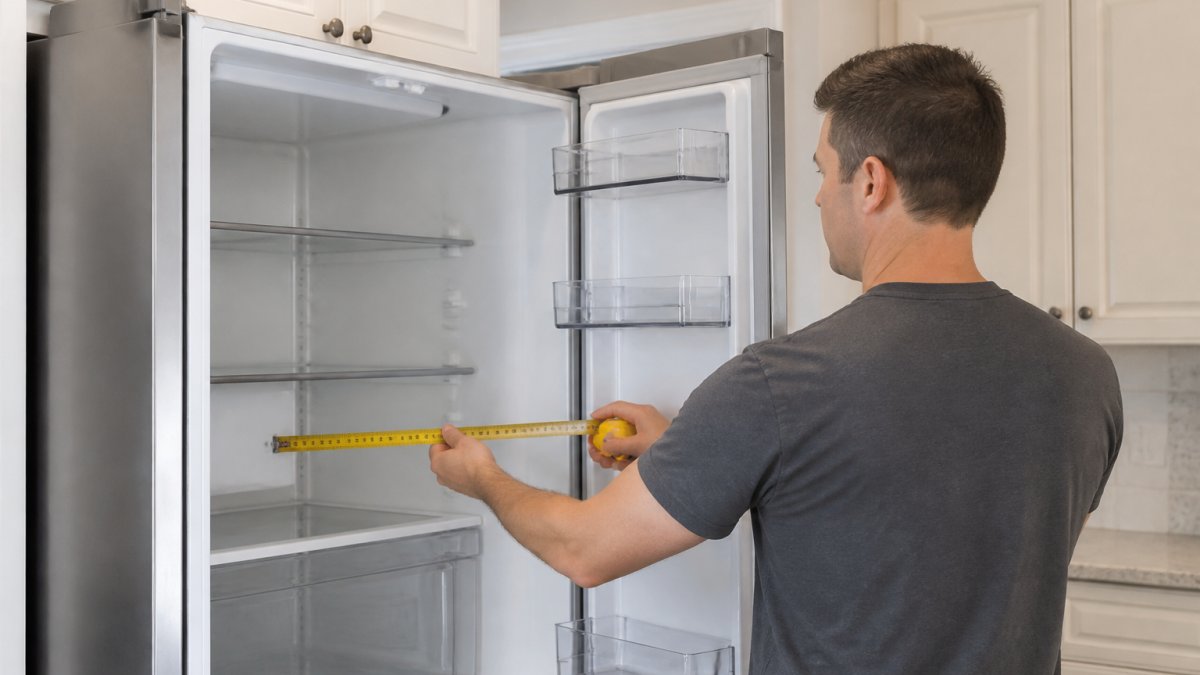
Doorway clearance is where the most preventable delivery failures happen. A refrigerator that fits your kitchen on paper can still be impossible to deliver if the hallway is too narrow or the front door frame is tighter than the appliance dimensions. Measure every doorway, hallway, and stairwell the delivery crew will pass through, not just the final installation spot.
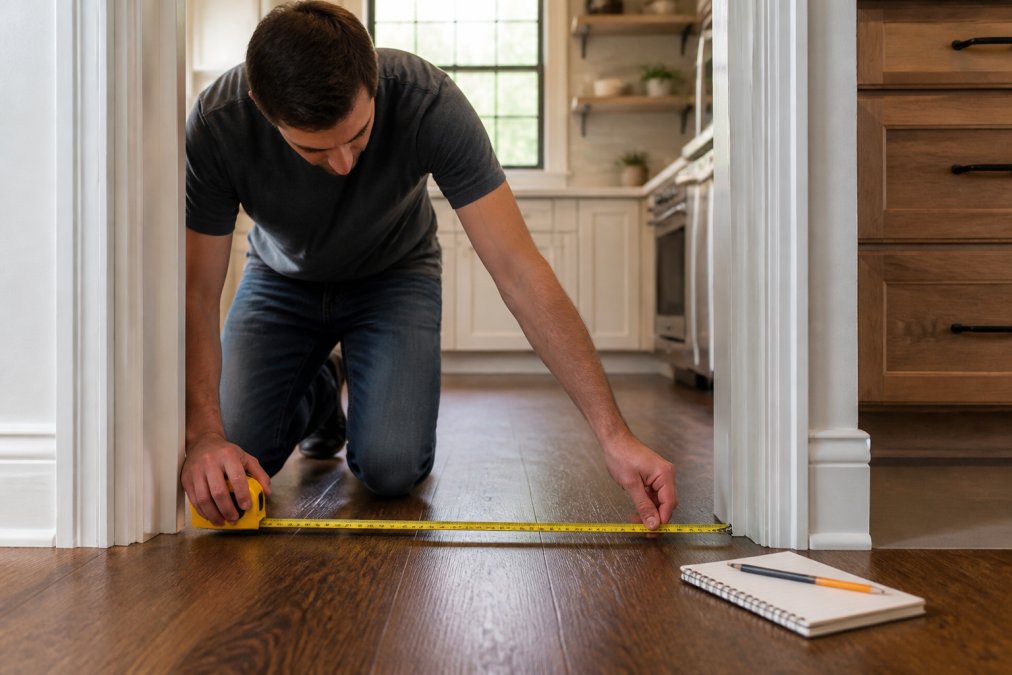
Before scheduling delivery, measure:
- Door frame width and height, including any trim or molding
- Hallway width, checking at every turn
- Stairwell width and ceiling height, critical for basement or second-floor installations
- Final installation space, including cabinetry depth for built-in units
- Appliance dimensions with doors open, ensuring the door swings fully
A common mistake is measuring only the appliance and final spot, skipping the route in between. Delivery crews won't disassemble door frames or remove cabinetry. If the appliance doesn't fit, you pay a re-delivery fee.
Ventilation and Make-Up Air Requirements for Range Hoods and Dryers
Gas dryers and certain electric dryers need dedicated exhaust ducts to the home's exterior. If that duct doesn't exist or isn't compatible, installation stops on delivery day and you pay for a return visit.
Range hoods and over-the-range microwaves have their own ventilation requirements. Some units require make-up air systems, which replace exhausted air to maintain proper home pressure. As noted in ASHRAE ventilation standards for residential buildings, inadequate make-up air can create negative pressure affecting combustion appliances and indoor air quality. Confirm whether your home needs a make-up air solution before delivery day.
For built-in appliances, cabinetry dimensions matter. Dishwashers, wall ovens, and under-counter refrigerators require precise cutout dimensions. Compare the opening to the appliance spec sheet's cutout requirements, not just exterior dimensions.
Plumbing, Gas Line, and Electrical Checks
Refrigerators with ice makers need a water line connection. Dishwashers need water supply and drain connections. Gas ranges require a properly sized gas line with a shutoff valve within reach. Many delivery crews handle basic connections, but won't run new lines or modify existing ones, that requires a licensed plumber or electrician.
Check these before scheduling delivery:
- Water line: Is there an existing shutoff valve within reach?
- Gas line: Does the existing line use the correct fitting type?
- Electrical: Does your outlet match the appliance requirements? A 240V outlet for an electric dryer is not the same as a standard 120V outlet.
If any connections are missing or incompatible, hire a licensed contractor first. Otherwise, you're paying for a delivery that can't be completed.
Appliance Delivery Haul Away Fees: What They Cover and What They Cost
Haul-away service removes and disposes of your old appliance. Most retailers offer it as an add-on, and understanding exactly what you're getting matters before checkout.
Haul-away fees typically cover disconnection, removal from the home, and transport to a recycling facility. They usually do not cover: disconnecting hardwired appliances, removing units from difficult locations like basements, or disposing of units with certain refrigerants requiring special handling.
The EPA's Responsible Appliance Disposal program guidelines outlines how older refrigerators containing legacy refrigerants must be handled. Not every haul-away service is certified for compliance, so ask whether the retailer's disposal partner meets EPA standards.
Some retailers charge extra if the old appliance is on a different floor, requires disconnecting gas or water lines, or is in an inaccessible location. Ask these questions before delivery day.
| Haul-Away Scenario | Typically Included? | Common Extra Charge? |
|---|---|---|
| Standard plug-in removal, ground floor | Yes | No |
| Basement or upper-floor removal | Sometimes | Yes |
| Gas line disconnection | Rarely | Yes |
| Water line disconnection | Sometimes | Yes |
| Refrigerant-containing units | Depends on provider | Possible |
| Units not in original location | No | Yes |
The Full Fee Breakdown: Stairs, Distance, Re-Delivery, and Installation
Most delivery fees assume a straightforward scenario: ground floor, accessible entrance, standard connection. Anything outside that baseline triggers additional charges.
Staircase surcharges apply when the crew carries an appliance up or down stairs, typically increasing per flight. Heavy appliances like French door refrigerators can add meaningfully to your total.
Distance fees apply for addresses outside the retailer's standard delivery zone. Threshold delivery, where the crew brings the appliance to your door but doesn't bring it inside, may be the only free option for distant addresses.
Re-delivery fees apply when a delivery attempt fails due to obstructed pathways, unready homes, customer absence, or appliance fit issues. Being ready on delivery day avoids this cost.
Installation fees are separate from delivery fees. Delivery gets the appliance into the room; installation connects it, levels it, and confirms operation.
Contractor vs. In-House Delivery Teams: Why It Matters for Liability
Many large retailers use third-party logistics contractors rather than in-house teams. If something goes wrong, a scratch on hardwood floors, a dent, a leaking water connection, liability becomes complicated. In-house teams work directly for the retailer; damage claims go directly to them. Contractor teams work for a separate company, and claims may go through that contractor's insurance instead.
Ask before buying: who is delivering and installing, and whose liability policy covers damage?
Negotiating Delivery Costs Before You Check Out
Delivery fees are more negotiable than most buyers assume. A few tactics that work:
- Bundle multiple appliances: Buying a washer, dryer, and refrigerator together justifies requesting a single delivery fee.
- Ask about promotional delivery: Many retailers run free or discounted delivery promotions not advertised on product pages.
- Request a price match on delivery: If another retailer offers free delivery on the same model, that's a negotiating point.
- Ask what's included in installation: Sometimes installation is included but not advertised.
Most fees are disclosed somewhere; they're just not always surfaced prominently.
What to Check Before Signing the Appliance Delivery Receipt
Signing the delivery receipt is a legal acknowledgment that the appliance arrived in acceptable condition. Once signed without noting damage, your ability to file a claim weakens significantly.
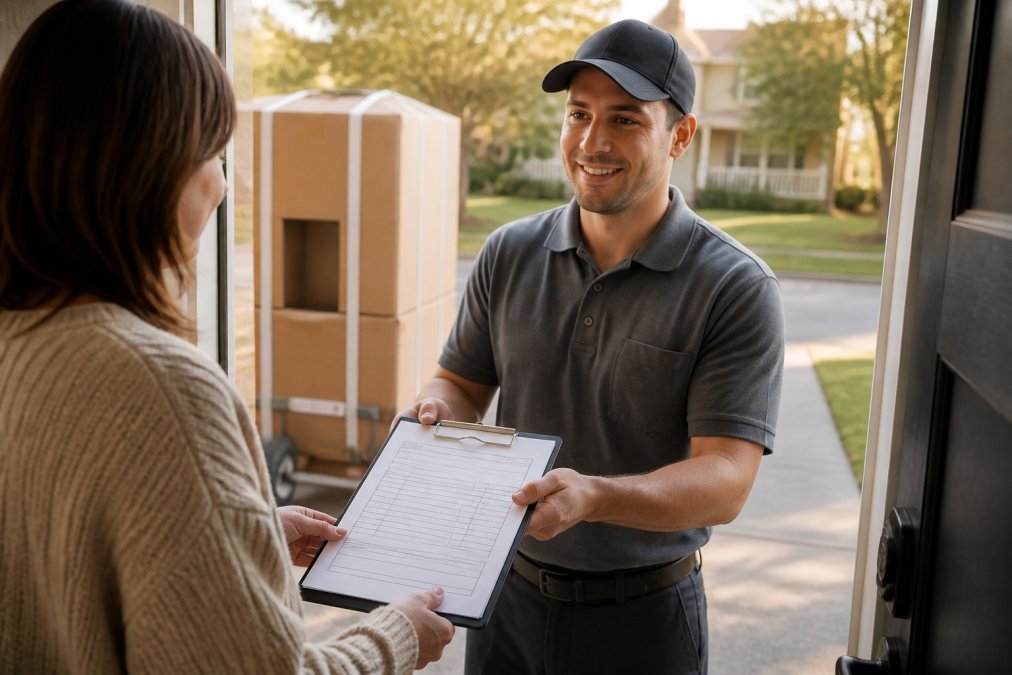
Before signing:
- Inspect the packaging for dents, punctures, or evidence of dropping
- Unbox before the crew leaves, insist on unboxing if there's packaging damage
- Check all exterior panels, corners, sides, doors, and handles
- Test basic functions, power on the unit and confirm door seals
- Check connections, ensuring water lines, gas connections, and electrical are secure with no leaks
- Confirm appliance leveling, an unlevel washer or refrigerator causes operational problems
- Note any damage in writing on the receipt before signing
The delivery window is your best opportunity to catch problems while the crew is present.
How to File a Post-Delivery Damage Claim
Most retailers and delivery contractors have a window, often 24 to 72 hours after delivery, during which damage claims are accepted without dispute. After that, proving the damage occurred during delivery becomes much harder.
The process generally works like this:
- Document everything immediately with photos, video, and written description
- Contact the retailer directly, unless redirected to the delivery contractor
- Reference the delivery date and order number
- Request written confirmation of your claim submission
- Escalate if needed, your credit card company may offer purchase protection as a secondary option
As outlined in FTC consumer guidance on damaged goods and delivery claims, consumers have rights when goods arrive damaged, and documenting condition at delivery is the most critical step.
Tipping Appliance Delivery Drivers: Etiquette and Amounts
Tipping appliance delivery drivers is not required but widely practiced and genuinely appreciated for difficult deliveries. The effort involved is the right metric.
General guidance:
- Standard delivery, no installation: Tipping is optional; small amounts per crew member are appreciated
- Full installation with haul-away: A more meaningful amount per crew member reflects additional labor
- Difficult access (stairs, tight spaces): Tip accordingly; the physical demand is real
- Crews that go above and beyond: Acknowledge extra care with your floors or efficient work
Tip in cash when possible; it goes directly to the crew. Tip each crew member individually rather than handing one person a lump sum.
Hidden Site Prep Costs: A Checklist Before Your Appliance Arrives
The most overlooked costs aren't the delivery fee itself but site preparation work needed before the crew arrives.
Use this checklist before confirming your delivery window:
- Doorway clearance confirmed: All doorways, hallways, and stairwells measured
- Old appliance disconnected: Water, gas, and electrical disconnected if haul-away doesn't include it
- New utility connections ready: Water shutoff valve, gas line, and electrical outlet confirmed and compatible
- Pathway cleared: Furniture, rugs, and obstacles removed
- Flooring protected: Runner mats or cardboard laid down
- Cabinetry adjusted: Any modifications needed for fit completed
- Ventilation confirmed: Dryer duct or range hood ventilation path verified
- Make-up air assessed: For high-CFM range hoods, confirm if needed
- Contractor work completed: Any plumbing, gas, or electrical work done in advance
- Someone present for the full delivery window: Missed deliveries trigger re-delivery fees
Regional fee variations are real. Delivery surcharges, staircase fees, and installation costs vary by market. Ask your retailer for a complete fee breakdown specific to your zip code before finalizing the order.
According to Consumer Reports guidance on appliance delivery and installation, confirming all site requirements before delivery day is the single most effective way to avoid unexpected costs and failed attempts.
Getting a new appliance delivered shouldn't feel like navigating a fee minefield. Delivery costs are fragmented across multiple line items retailers don't always present clearly. Fast Appliances LLC offers a wide selection of washers, dryers, refrigerators, stoves, dishwashers, cooktops, and ovens with straightforward online ordering. Before finalizing any appliance purchase, review the full fee breakdown, confirm your site is ready, and document everything on delivery day. Get started with Fast Appliances LLC and take the guesswork out of finding the right appliance for your home.
Frequently Asked Questions
How much should you tip appliance delivery drivers?
A tip of $10 to $20 per crew member is a widely accepted range for standard deliveries. For white-glove delivery involving stairs, tight spaces, or complex installation like a gas line hookup or water line installation, $20 per person is more appropriate. Tipping is not mandatory, but it is a recognized way to acknowledge heavy physical work. Always tip in cash so each crew member receives their share directly.
Are haul-away fees for old appliances mandatory?
No. Haul-away service is almost always optional, though some retailers bundle it into a delivery package by default. Always ask whether haul-away is included or add-on, and whether it covers packaging disposal as well as the old appliance. If you decline, you are responsible for removing the old unit yourself. Some municipalities offer bulk pickup at no charge, which can eliminate the fee entirely.
What hidden fees should I watch for in appliance delivery contracts?
The most common hidden appliance delivery costs include staircase surcharges, re-delivery fees when no one is home during the delivery window, long-carry fees for distances beyond a standard threshold, haul-away charges, and separate installation fees for plumbing connections or gas line hookup. Some retailers also charge for appliance leveling or packaging disposal. Read the full fee schedule before checkout and ask the retailer to confirm every charge in writing.
Is appliance installation included in the delivery price?
Rarely. Most standard deliveries cover threshold delivery or curbside delivery only. White-glove delivery typically includes placement and basic connection, but complex work like gas line hookup, make-up air ducting, or new water line installation is usually quoted separately or requires a licensed contractor. Confirm exactly what 'installation' means with your retailer before you pay, since the definition varies widely between providers.
This article was written using GrandRanker