 listicle
5 Best Appliance Installation Companies in My Area
Table of Contents
- How to Compare Appliance Installation Companies
- 1. Fast Appliances LLC: Best for Online Ordering With Delivery
- 2. Noble BHS: Best for Dedicated Appliance Specialists
- 3. OrlaTech Appliance: Best for Licensed and Insured Work
- 4. HomeTech Appliance Repair: Best for Fast Turnaround
- 5. Thumbtack: Best for Comparing Local Installers
- Average Cost of Appliance Installation in 2026
- Your Appliance Installation Checklist
- Frequently Asked Questions
Last Updated: September 15, 2026
How to Compare Appliance Installation Companies
Finding reliable appliance installation starts with verification, not price. The best appliance installation companies in my area share three traits: licensed technicians, clear flat-rate or hourly labor terms, and written warranty coverage on the work itself. This guide from Fast Appliances LLC breaks down five providers worth considering, plus what installation should actually cost and the checklist that protects your home.
Most homeowners learn this the hard way. A cut-rate installer connects a gas line without a leak test, and the problem surfaces weeks later (CPSC Warns About Dangerous Flexible Gas Connectors Used on Home Appliances). A "free installation" promotion turns out to exclude the water line hookup your new refrigerator needs. The vetting process below exists to prevent those outcomes.
When comparing providers, verify credentials through your state's licensing board and check complaint history through the Better Business Bureau directory. A clean record matters more than a low quote.
| What to Check | Why It Matters | Red Flag |
|---|---|---|
| License and insurance | Covers damage and injury liability | "We don't need a license for this" |
| Quote structure | Prevents surprise hourly overruns | Verbal estimates only |
| Warranty terms | Protects the installation work itself | No written warranty offered |
| Haul-away policy | Removes your old appliance legally | Extra fee disclosed at the door |
| Customer ratings | Reveals patterns, not one-offs | No reviews anywhere online |
1. Fast Appliances LLC: Best for Online Ordering With Delivery
Fast Appliances LLC is the strongest option for homeowners who want the appliance and the installation handled in one transaction. Order your washer, dryer, refrigerator, stove, microwave, dishwasher, cooktop, or oven online, and the delivery and setup process comes with it. No coordinating a separate installer, no waiting on a third-party scheduling window.
The advantage here is simplicity. First-time homebuyers who aren't sure what size refrigerator fits their kitchen can browse the full range in one place rather than driving between showrooms. Busy professionals get delivery to the door instead of a Saturday spent in a warehouse store.
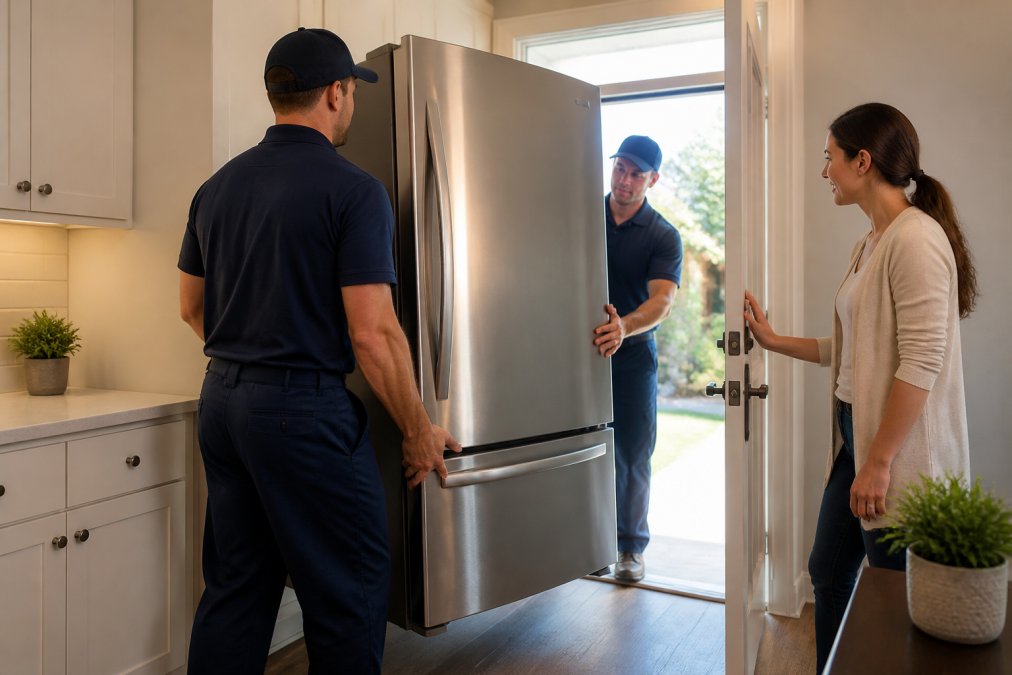
One honest limitation: because ordering happens online, you won't inspect the unit in person before it ships. That makes accurate measurements before ordering essential. Measure your cabinet opening, doorway width, and the path from your front door to the kitchen.
2. Noble BHS: Best for Dedicated Appliance Specialists
Noble BHS focuses specifically on appliance installation and repair rather than general handyman work. That specialization matters when your job involves a gas line connection or a dishwasher's water line hookup, where generalists often lack the right fittings and testing equipment. Online booking and direct phone support make scheduling straightforward.
The tradeoff is coverage. Noble BHS serves a limited metro area, so homeowners outside that footprint need another option. If you're in range, the appliance-only focus is a genuine advantage.
3. OrlaTech Appliance: Best for Licensed and Insured Work
OrlaTech Appliance leads with licensing and insurance, which is exactly what you want when a technician is working with gas connections and water lines inside your home. The company handles both new installation and replacement projects, so upgrading an aging appliance set falls inside their wheelhouse.
Coverage is regional, though. If you're outside their service area, use their licensing standard as your benchmark when vetting local alternatives. Ask for the license number and verify it yourself.
4. HomeTech Appliance Repair: Best for Fast Turnaround
HomeTech Appliance Repair emphasizes speed and transparent pricing. For families whose washer died mid-week with a full hamper waiting, turnaround time outweighs almost everything else. The company also communicates pricing clearly before the job starts, which reduces the odds of a surprise line item.
The constraint is geographic. HomeTech operates in a single metro area, so this pick only applies if you're local. Elsewhere, prioritize installers who quote in writing before arrival.
5. Thumbtack: Best for Comparing Local Installers
Thumbtack is a marketplace, not an installation company. It connects you with local, rated professionals and lets you request free estimates from several at once. For homeowners who want to compare quotes side by side, that's the fastest path. Community ratings and reviews surface patterns across many contractors.
The catch: pricing varies widely between individual pros, and quality depends on who you pick. Treat Thumbtack as a shortlisting tool, then vet each candidate with the same questions you'd ask anyone else.
Average Cost of Appliance Installation in 2026
Installation pricing breaks into two parts: a base labor charge per appliance and add-ons for parts, haul-away, and any new line work. Most installers quote a flat rate per appliance, but some bill hourly, and the two structures produce very different final invoices. A flat rate protects you from overruns; an hourly rate can balloon if the job uncovers a shutoff valve that won't close or a floor that needs leveling first.
Typical labor ranges homeowners report for standard installation, assuming existing hookups are in good shape:
| Appliance | Typical Labor Range | Common Add-Ons |
|---|---|---|
| Dishwasher | $100-$200 | New water line, drain hose, disposal connection |
| Electric range or oven | $75-$150 | New cord and plug, anti-tip bracket |
| Gas range or oven | $100-$200 | Gas connector, leak test, shutoff valve |
| Refrigerator (no water line) | $50-$125 | Door reversal, leveling |
| Refrigerator (with ice maker/water line) | $100-$200 | New supply line, saddle valve or shutoff |
| Washing machine | $50-$125 | New hoses, drain pan |
| Electric dryer | $75-$150 | New vent kit, semi-rigid duct |
| Gas dryer | $100-$200 | Gas connector, leak test |
| Over-the-range microwave | $100-$250 | Mounting bracket, new vent, cabinet modification |
| Wall oven or cooktop | $150-$350 | Cabinet cutout, dedicated circuit, hardwiring |
These are labor-only figures. If you buy the appliance from the installer, many retailers fold basic hookup into the purchase price and charge separately only for parts or line work. That is why a "free installation" promotion can still produce a bill: the labor is covered, but the new water line, gas connector, or vent kit is not.
The three line items that account for most of the gap between a cheap quote and an expensive final invoice are haul-away, new supply lines, and a leak test. Ask specifically whether each is included before you book.
Regional labor markets move these numbers. A dense metro area with high demand and limited licensed technicians will sit at the top of each range; a rural market with lower overhead will sit at the bottom. Seasonal demand matters too, appliance installation bookings spike around holiday sales and moving season, and some installers charge a premium during those windows.
One more cost factor most listicles skip: permits. Some jurisdictions require a permit for new gas line work or for adding a dedicated electrical circuit for a wall oven or cooktop. Permit fees and inspection costs are usually passed to the homeowner and can add a meaningful amount to the job.
Your Appliance Installation Checklist
Frequently Asked Questions
How much should appliance installation cost?
The cost of appliance installation depends on the appliance type and your home's setup. Simple hookups are typically less expensive, while gas ranges and built-in ovens may cost more because they often need a licensed technician for gas line connection or electrical work. Additional parts, old appliance haul-away, and stair carries can add to the total. Request a written service quote before booking so there are no surprises.
What should I look for when hiring an appliance installer?
Check for a state license or certification, active insurance, and manufacturer authorization for your brand. Ask whether the installer handles gas line connection, water line hookup, and venting, or only basic delivery. Read recent customer ratings, confirm flat-rate pricing versus hourly labor, and get the scope in writing. A certified installer should also test the appliance after setup and walk you through basic operation before leaving.
Do I need a licensed professional to install a gas appliance?
Yes. Gas line connection for ranges, dryers, and cooktops should be handled by a licensed technician. Most manufacturers require it to keep the warranty valid, and many states restrict gas work to licensed plumbers or gas fitters. A qualified installer will also perform leak detection after connecting the line. DIY gas hookups risk carbon monoxide exposure and voided warranty coverage, so this is one job worth outsourcing.
What is the difference between appliance delivery and installation services?
Delivery means the appliance is brought to your home and left in place, often in the garage or at the curb. Installation includes unpacking, moving the unit into position, connecting water, gas, or electrical lines, leveling, and post-installation testing. Some retailers bundle both, while others charge separately. Always confirm which service you are paying for, because a delivery-only crew will not hook anything up.
How do I prepare my home for a new appliance installation?
Clear a path from the door to the installation spot, remove the old appliance if possible, and measure doorways and hallways against the new unit's dimensions. Shut off water valves for washers and dishwashers, and know where your gas shutoff is. Confirm electrical requirements match the new appliance, and keep pets and children away during the visit. An appliance installation checklist helps you cover each step before the crew arrives.