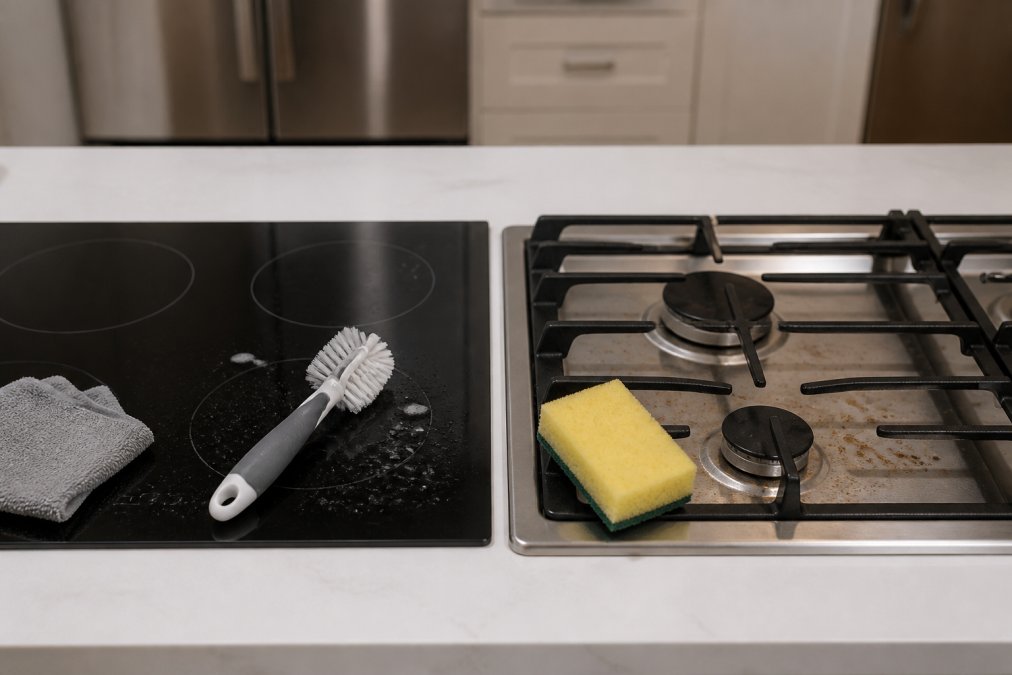
 comparison
Induction Cooktop Cleaning vs Gas Stove
Table of Contents
- How Induction Cooking Works vs Gas Heat
- How to Clean Induction Cooktop Surfaces
- Gas Stove Grate Cleaning Tips and Tools
- Best Cleaning Products for Glass Cooktops
- Maintenance Costs and Long-Term Care
- Safety, Performance, and Energy Efficiency
- Which Cooktop Type Is Right for You
- Frequently Asked Questions
Last Updated: September 22, 2026
How Induction Cooking Works vs Gas Heat
Induction cooktops use electromagnetism to heat cookware directly, while gas stoves rely on open flame combustion. The difference fundamentally changes how you clean and maintain each appliance.
With induction, a magnetic coil beneath the glass-ceramic surface generates heat only when compatible ferrous metal cookware sits on top. The cooktop surface itself stays relatively cool, which means spills don't bake on instantly. Gas stoves produce heat through combustion, and that open flame heats cast iron grates and surrounding surfaces to high temperatures. Food particles burn onto these hot surfaces immediately, creating stubborn buildup.
This heating mechanism determines everything about maintenance. Induction cooktop cleaning becomes simpler because the smooth glass surface has no crevices where food can hide. Gas stove grate cleaning requires disassembly and often soaking because heat bakes residue deep into the metal. Understanding this difference helps you choose the right appliance for your lifestyle and cleaning tolerance.
How to Clean Induction Cooktop Surfaces
Induction cooktop cleaning is faster and less labor-intensive than gas maintenance. The glass-ceramic surface requires gentle handling to prevent scratching, but the actual cleaning process takes minutes rather than hours.
Daily cleaning routine
Wipe your induction cooktop immediately after cooking while it's still warm but safe to touch. Use a damp microfiber cloth or soft sponge with a few drops of dish soap. This removes fresh spills and prevents them from hardening. For stubborn spots, apply a specialized glass cooktop cleaner like Weiman Glass Cooktop Cleaner & Polish, which offers a non-abrasive formula designed specifically for induction surfaces.
Avoid abrasive scrubbing pads, steel wool, or harsh scouring powders. These scratch the glass-ceramic surface and create permanent damage that worsens over time. After cleaning, dry the surface with a soft cloth to prevent water spots and mineral buildup from hard water.
Removing burnt-on food
For burnt-on residue, let the cooktop cool completely first. Sprinkle a small amount of cooktop cleaner directly onto the affected area and let it sit for 2-3 minutes. Use a plastic scraper, never metal, to gently lift the burnt food. The non-abrasive approach prevents surface damage while effectively removing stuck-on debris.
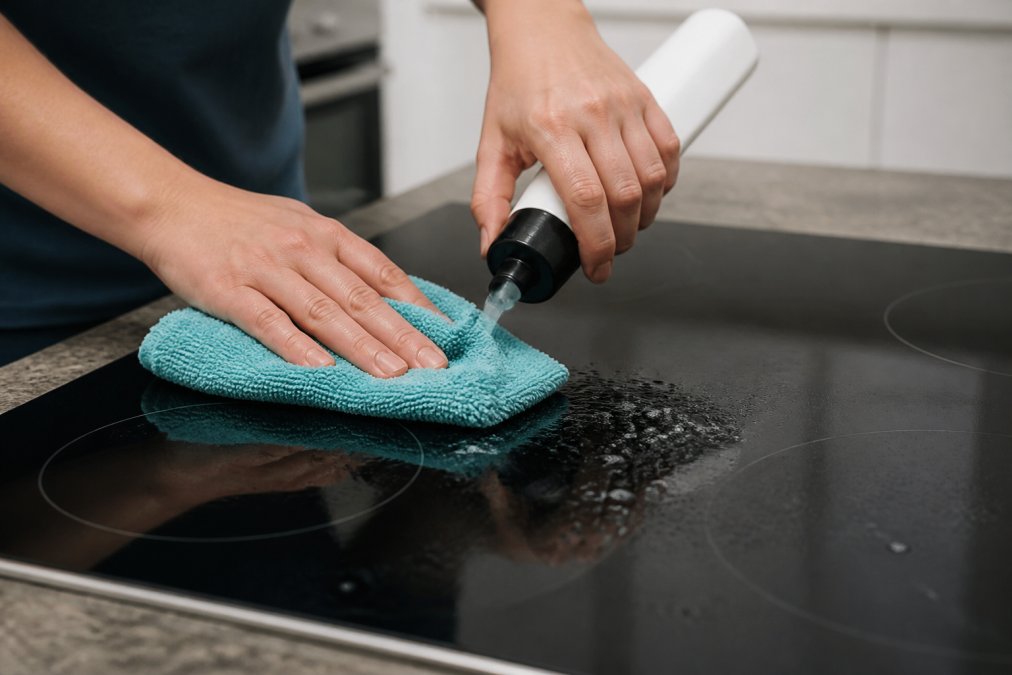
For really stubborn buildup, apply the cleaner, cover it with a damp cloth for 10 minutes to soften the residue, then scrape gently. This patience-based approach beats aggressive scrubbing. Never use vinegar or lemon juice directly on the surface, acidic cleaners can damage the finish over time.
Gas Stove Grate Cleaning Tips and Tools
Gas stove grate cleaning demands more time and effort because cast iron grates trap grease and burnt food in their textured surfaces. The open flame heats these grates to high temperatures, baking residue into the metal.
Disassembly and soaking
Remove the grates from your gas stove and place them in a bathtub or large sink filled with hot water and a degreasing dish soap. Let them soak for 30 minutes to 2 hours depending on buildup severity. This soaking step is essential, it softens baked-on food and makes scrubbing far easier.
For heavy grease, add a cup of baking soda to the water or use a commercial oven cleaner designed for cast iron. These products break down carbonized residue without damaging the metal. After soaking, use a stiff brush or old toothbrush to scrub away loosened food particles. Pay special attention to crevices where grease accumulates.
Dealing with stubborn buildup
Stubborn spots require a two-stage approach. First, scrub with your brush and degreaser. If residue remains, create a paste from baking soda and water, apply it to the problem area, and let it sit for 15 minutes. Scrub again with a soft-bristled brush. For extremely stubborn buildup, repeat the soaking process, sometimes two soaks work better than one aggressive scrubbing session.
Avoid wire brushes on cast iron grates, as they can scratch the protective coating. Once grates are clean, dry them thoroughly and apply a light coat of food-safe mineral oil to prevent rust and restore the protective surface.
Best Cleaning Products for Glass Cooktops
Specialized glass cooktop cleaners outperform general-purpose kitchen cleaners because they're formulated for glass-ceramic surfaces without abrasive particles. These cleaners typically contain mild surfactants and protective waxes that clean effectively while leaving a hydrophobic barrier that repels future spills.
Safe Cleaners for Induction Surfaces
For daily maintenance, plain dish soap and water handle most spills effectively. Liquid dish soaps like Dawn or Seventh Generation work well because they're gentle and rinse cleanly without leaving residue. Reserve specialized cleaners for weekly deep cleaning or when burnt-on food appears.
Specialized glass cooktop cleaners like Weiman Glass Cooktop Cleaner & Polish or Cerama Bryte are specifically formulated for induction and ceramic glass surfaces. These products contain no abrasive particles and include protective conditioning agents. Apply sparingly, a few drops go a long way, and buff with a microfiber cloth for a streak-free finish. These cleaners cost $8-$15 per bottle and last 3-4 months with regular use.
Baking soda paste (baking soda mixed with water) is safe for induction cooktops and works well on burnt-on food. The paste is mildly abrasive but won't scratch glass-ceramic when applied gently with a soft cloth. This budget-friendly option costs under $1 per application.
Cleaners to Avoid on Induction Surfaces
Never use bleach-based cleaners, which can damage the glass-ceramic finish and leave permanent discoloration. Avoid abrasive powders like Comet, Bar Keeper's Friend, or Old Dutch, these contain silica or feldspar particles that scratch the surface irreversibly. Acidic cleaners like vinegar or lemon juice can etch the finish over time, creating a dull appearance that no amount of polishing restores.
Cleaning Products for Gas Stove Grates
Gas grate cleaning requires heavier-duty degreasers because cast iron traps carbonized grease. Degreasing dish soaps like Dawn Platinum or Ecos Hypoallergenic work well for routine soaking. For heavy buildup, commercial oven cleaners designed for cast iron, such as Easy-Off Fume Free, break down baked-on residue without damaging the metal's protective coating.
Tools That Matter
Microfiber cloths are essential for induction cooktops. They clean effectively without scratching and trap grease and residue better than paper towels or cotton cloths. Keep several on hand so you always have a clean one available. For gas grates, stiff brushes with nylon bristles work better than microfiber for scrubbing away baked-on food.
Maintenance Costs and Long-Term Care
Induction cooktop cleaning requires minimal ongoing investment in supplies. A bottle of specialized cleaner costs $8-$15 and lasts 3-4 months with regular use. Microfiber cloths are inexpensive and reusable, typically $2-$5 per pack. Your primary investment is time: 5-10 minutes per week for routine maintenance.
Repair and Replacement Costs
This is where long-term ownership costs diverge sharply. Induction cooktops are sealed units with few moving parts. The glass-ceramic surface rarely requires replacement if properly maintained. Control board failures are the most common repair, typically costing $300-$600 in parts and labor. Most induction cooktops last 15+ years before major repairs become necessary.
Resale Value and Upgrade Costs
Induction cooktops appeal to modern home buyers and can increase resale value slightly, though the impact is modest. Gas cooktops remain popular in many markets, so resale value depends more on local preference than technology type.
Safety, Performance, and Energy Efficiency
Induction cooktops offer superior safety because the surface stays cool and heat only generates when compatible cookware is present. This prevents accidental burns from touching the cooktop surface. The instant response to temperature adjustments gives you precise control, making induction ideal for delicate cooking tasks like melting chocolate or simmering sauces.
Which Cooktop Type Is Right for You
Choose induction if you prioritize easy cleaning, energy efficiency, and precise heat control. The glass-ceramic surface wipes clean in minutes, and the lack of combustion byproducts benefits your home's air quality. Induction works best if you're willing to replace your cookware with magnetic-compatible options.
Frequently Asked Questions
Are induction cooktops significantly easier to clean than gas stoves?
Yes. Induction cooktops have a flat glass-ceramic surface with no grates or crevices, so spills wipe away quickly. Gas stoves have cast iron grates that must be removed, soaked, and scrubbed individually. Most homeowners find induction cleaning takes 5-10 minutes versus 20-30 minutes for gas grate maintenance. The smooth surface also prevents food from settling into hard-to-reach areas.
What tools should I use to clean an induction cooktop without scratching it?
Use a microfiber cloth or soft sponge with a non-abrasive cleaner. Avoid steel wool, scouring pads, and abrasive powders, which scratch the glass surface. A plastic scraper works for stubborn spots. Specialized glass cooktop cleaners like Weiman are formulated to be safe for induction surfaces while removing burnt-on food effectively without damaging the finish.
How does how to clean induction cooktop compare to maintaining gas burners in terms of time and effort?
Induction cleaning is faster and simpler. You wipe the flat surface immediately after cooking. Gas stove grate cleaning requires removing the grates, soaking them in hot water or degreaser, scrubbing each one, and reassembling. This process takes significantly longer and requires more physical effort. Induction also eliminates the risk of damaging grate finishes or misaligning burners during reassembly.
What are the best cleaning products for glass cooktops, and are they safe for induction?
Weiman Glass Cooktop Cleaner & Polish is specifically formulated for induction and glass surfaces. It removes burnt-on residue without scratching and leaves a protective barrier for easier future cleaning. Avoid ammonia-based cleaners and abrasive scouring powders. For daily cleaning, a damp microfiber cloth alone often suffices. Always check the cooktop manufacturer's recommendations before using any new product.