 listicle
Best Washer Dryer Sets for Families in 2026
Table of Contents
- Top Washer and Dryer Sets for Families
- 1. LG WashTower with Center Control, Best for Space-Saving Families
- 2. Samsung Bespoke AI Laundry Hub, Best for Tech-Forward Families
- 3. Speed Queen TR7 Washer and DR7 Dryer, Best for Durability and Heavy-Duty Use
- 4. Maytag Commercial Technology Washer and Dryer, Best for Budget-Conscious Heavy Users
- 5. GE Profile UltraFast Combo with Ventless Heat Pump Technology, Best for Energy Efficiency
- Large Capacity Washer and Dryer Sets for Heavy Loads
- Front Load vs Top Load for Families
- Key Features That Matter for Family Laundry
- Washer and Dryer Maintenance Tips to Extend Lifespan
- Energy Efficiency and Long-Term Cost Savings
- How to Choose the Right Washer Dryer Set for Your Family
- Frequently Asked Questions
Last Updated: August 19, 2026
Top Washer and Dryer Sets for Families
Families generate mountains of laundry. Between sports uniforms, bedding, towels, and everyday wear, the average household with children runs 8-10 loads per week. That's why choosing the right washer and dryer set matters, it's not just about capacity, it's about durability, cleaning power, and features that handle real family chaos without breaking down.
At Fast Appliances LLC, we offer a comprehensive online selection of essential home appliances to help families make informed decisions. The options range from compact all-in-one units for smaller spaces to machines built to withstand years of heavy use. Below, we've covered top performers across different needs and budgets.
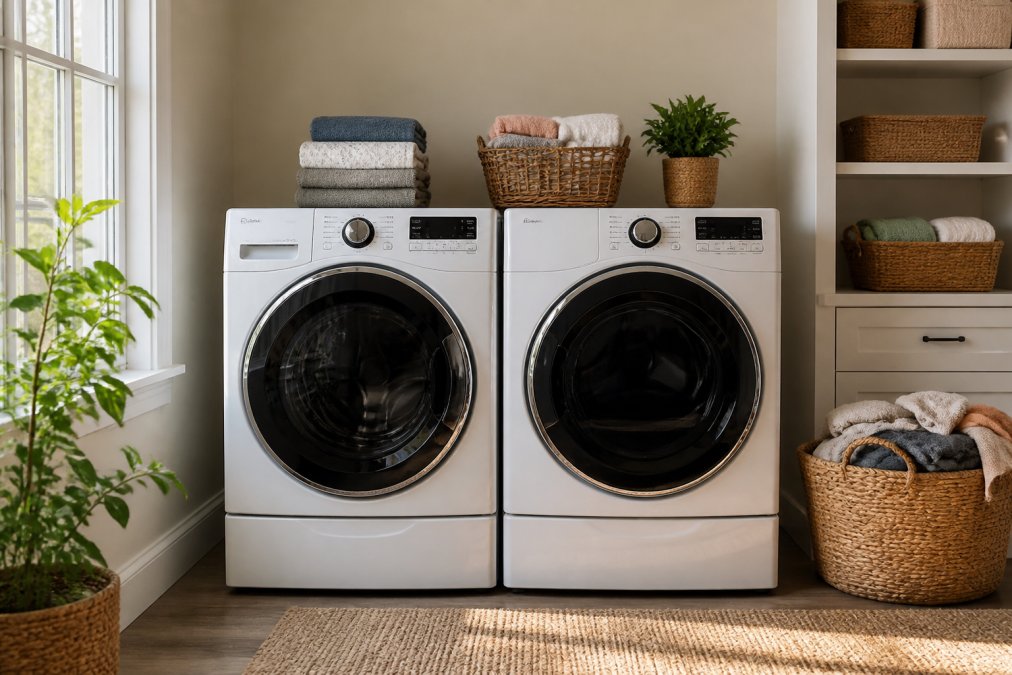
1. LG WashTower with Center Control, Best for Space-Saving Families
The LG WashTower solves a fundamental problem: most homes don't have room for side-by-side units. This vertical design stacks the washer and dryer into a single footprint while keeping both fully functional.
What makes it stand out is the Center Control panel positioned between the two units, no bending down to reach dryer controls or stretching to access the washer. The AI DD technology detects fabric texture and load size to adjust wash motions automatically. For families with allergies, the Allergiene Cycle uses steam to remove common household allergens like dust mites and pet dander. TurboWash 360° handles large loads in less time, which matters when you're running multiple cycles daily.
The main limitation: it's taller than most washers, which can make the dryer drum harder to reach for shorter family members. Setup also requires more planning since it's a single integrated unit, there's no flexibility to replace just the washer or dryer later.
Best for: Families with limited laundry room space who value allergen removal and smart features.
2. Samsung Bespoke AI Laundry Hub, Best for Tech-Forward Families
Samsung's approach centers on automation and customization. The AI OptiWash and AI Optimal Dry features analyze each load and adjust cycles in real time based on fabric type and soil level. The Auto Dispense System holds up to 32 loads of detergent and fabric softener, dispensing precise amounts automatically, eliminating the guesswork and waste.
Super Speed Wash and Super Speed Dry cut cycle times significantly, which appeals to busy families juggling schedules. The design is also highly customizable, with options to match your kitchen aesthetic through the Bespoke line.
The trade-off is cost and complexity. The smart features require a smartphone app to monitor cycles remotely, which adds another layer to manage. Some families find the reliance on connected features unnecessary.
Best for: Tech-savvy families who want automation and don't mind premium pricing for convenience.
3. Speed Queen TR7 Washer and DR7 Dryer, Best for Durability and Heavy-Duty Use
Speed Queen machines are built like commercial equipment, because they are. These top-load units use a Solid Mount Suspension System that reduces vibration and noise while extending machine lifespan. Families with pets, athletes, or heavy outdoor work appreciate the Pet Plus Cycles, which actively remove pet hair and sanitize loads at high temperatures.
The Classic Clean wash system is gentler than you'd expect from commercial-grade equipment, protecting fabrics while delivering thorough cleaning. The 7-year warranty on all parts and in-home labor is among the best in the industry, signaling the manufacturer's confidence in longevity.
Speed Queen machines lack smart features entirely, no Wi-Fi, no app, no automation. They're straightforward, mechanical, and built to last 15-20 years of heavy use. If you want simplicity and reliability over technology, this is the choice.
Best for: Families with heavy laundry demands, pets, or those who prioritize durability over smart features.
4. Maytag Commercial Technology Washer and Dryer, Best for Budget-Conscious Heavy Users
Maytag's Commercial Technology line brings industrial-strength components to residential prices. The PowerWash agitator tackles tough stains, dirt, grass, mud, without requiring pre-treatment. The Deep Fill option lets you add extra water when needed, which matters for heavily soiled loads.
The 10-year limited warranty on the direct drive motor and stainless steel wash basket reflects the durability of key components. For families on tighter budgets who still need serious cleaning power, this set delivers.
The trade-off is noise. Top-load washers with powerful agitators generate more sound than front-load machines. If your laundry room is near living spaces, this matters. Also, top-load machines use more water per cycle, which increases utility costs over time.
Best for: Budget-conscious families with consistently large or heavily soiled loads who can tolerate more noise.
5. GE Profile UltraFast Combo with Ventless Heat Pump Technology, Best for Energy Efficiency
This all-in-one unit uses heat pump technology to dry clothes using significantly less energy than traditional electric dryers. For families concerned about utility costs or environmental impact, the efficiency gains add up over years of use. The Adaptive SmartDispense holds 32 loads of detergent and automatically measures doses, reducing waste.
Microban Antimicrobial Technology prevents odors from building up in the gasket and drain system, a real advantage for families who sometimes leave wet clothes sitting longer than ideal. Built-in Wi-Fi allows remote cycle monitoring and notifications.
The main limitation is drying time. Heat pump dryers operate at lower temperatures, which means cycles take longer than traditional dryers. For families rushing to get clothes ready, this can be frustrating. The unit also carries a premium price point.
Best for: Environmentally conscious families willing to trade slightly longer drying times for lower energy consumption.
Large Capacity Washer and Dryer Sets for Heavy Loads
Family laundry isn't just frequent, it's voluminous. Bedding alone (sheets, pillowcases, comforters) can fill a standard washer. Add in towels, activewear, and everyday clothes, and capacity becomes the deciding factor.
Look for machines with at least 4.5 cubic feet of capacity in the washer. Front-load washers typically range from 4.5 to 5.8 cubic feet, while top-load machines vary more widely. Dryers should match the washer's capacity to handle the same load size without multiple drying cycles.
The benefit of larger capacity isn't just fitting more clothes per load, it's reducing the total number of cycles you run weekly. A family running 10 loads in a standard machine might run only 6-7 loads in a high-capacity set, saving time, water, and energy. However, larger machines require more space and often cost more upfront.
Families with multiple children, athletes, or those doing laundry for extended family benefit most from high-capacity sets. If you're running loads daily anyway, the extra capacity might not justify the cost.
Front Load vs Top Load for Families
The washer type you choose affects cleaning performance, water usage, cycle time, and long-term maintenance costs. Both have legitimate advantages for families.
Front-load washers use a tumbling motion similar to commercial laundries. They consume less water and detergent, which reduces utility costs over time. Cleaning performance is excellent, especially for stain removal and delicate fabrics. The main drawbacks: front-loaders are more expensive upfront, they require regular gasket cleaning to prevent mold and odor, and cycle times are longer. For families with allergies, the steam cycles available on many front-loaders provide an advantage.
Top-load washers with agitators or impellers offer faster cycles and simpler maintenance. They're generally less expensive than front-loaders and easier to load (no bending). Water usage is higher, which increases utility costs. Agitator-style top-loaders (like Maytag Commercial Technology) are more aggressive on stains but can be harder on delicate fabrics.
For families prioritizing low maintenance and fast cycles, top-load makes sense. For those focused on long-term cost savings and gentle fabric care, front-load is the better choice. Speed Queen and Maytag excel in the top-load category, while LG and Samsung lead in front-load innovation.
Key Features That Matter for Family Laundry
Not every feature matters equally. Here's what actually affects daily family life:
| Feature | Why It Matters | Best For |
|---|---|---|
| Cubic feet capacity | Handles large loads (bedding, towels) in fewer cycles | Families with 3+ children or heavy laundry volume |
| Sanitize/allergen cycle | Removes allergens and kills bacteria | Families with allergies or sensitive skin |
| Quick wash option | Reduces cycle time for lightly soiled loads | Busy families needing faster turnaround |
| Steam function | Lifts stains and reduces wrinkles without chemicals | Families wanting natural stain removal |
| Vibration reduction | Quieter operation, less floor damage | Laundry rooms near living spaces |
| Moisture sensor (dryer) | Prevents over-drying, saves energy | Families concerned about utility costs |
| Auto-dispense detergent | Reduces waste, simplifies routine | Families wanting less decision-making |
Spin speed matters less than you'd think. Higher spin speeds extract more water, reducing drying time, but the difference between 1,000 and 1,600 RPM is modest for most families. Focus on capacity and cycle options instead.
Washer and Dryer Maintenance Tips to Extend Lifespan
A washer and dryer set can last 10-15 years with proper care, or fail within 5 years without it. Maintenance isn't complicated, but consistency matters.
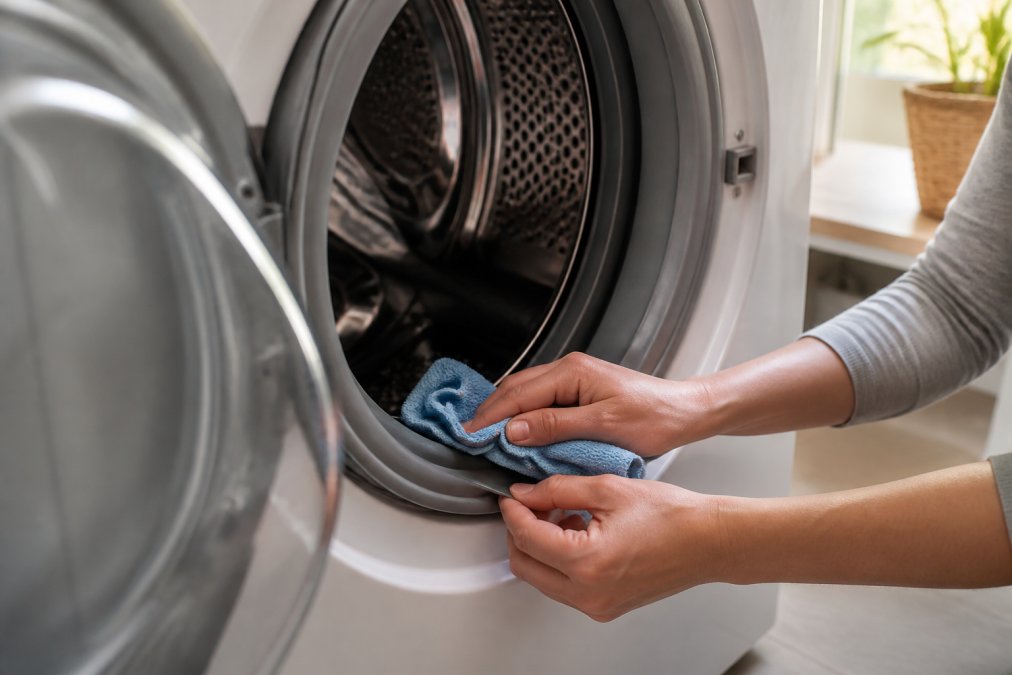
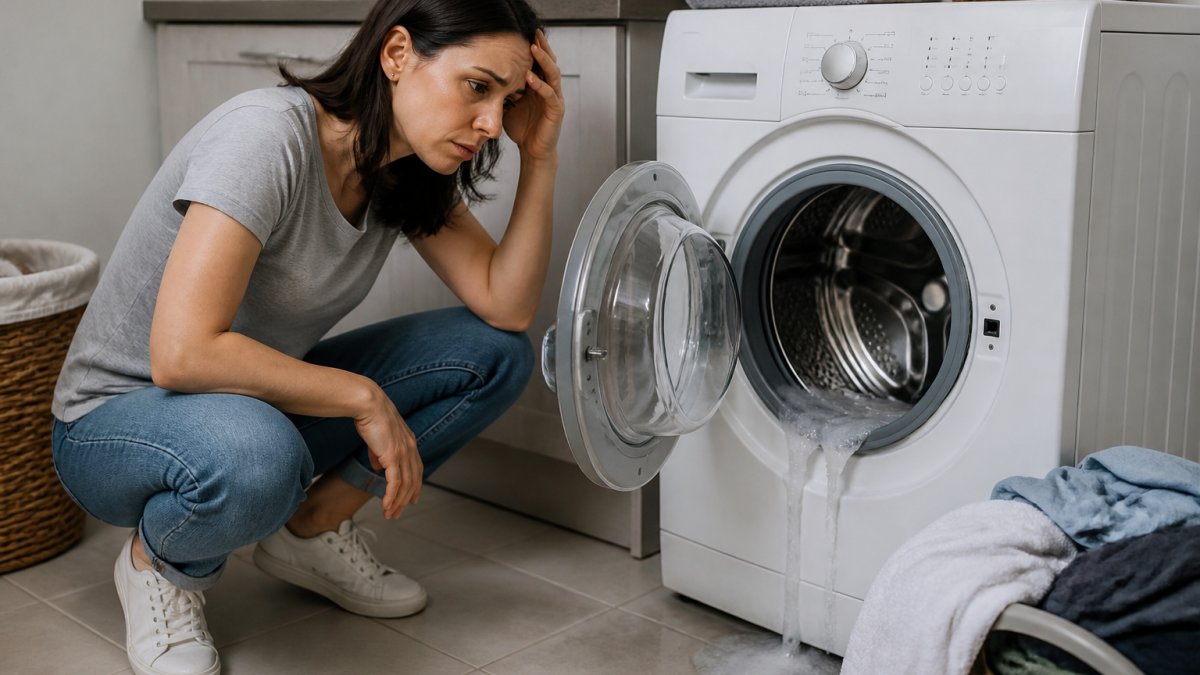
For washers: Run a cleaning cycle monthly using a commercial washer cleaner or white vinegar. This prevents mold and odor buildup in the drum and gasket. After each load, wipe the gasket dry, water sitting in the seal creates the perfect environment for mildew. Check inlet hoses annually for cracks or bulges and replace them every 5-7 years as a preventive measure. A burst hose can cause water damage costing thousands.
For dryers: Clean the lint trap before every load, this is non-negotiable. Lint buildup reduces efficiency and creates a fire hazard. Vacuum the vent duct annually to remove lint accumulation inside. If your dryer vents to the outside, check that the external vent flap opens freely. A blocked vent forces the dryer to work harder and shortens its lifespan significantly.
For both: Level the machines properly during installation. Vibration from unleveled units accelerates wear on suspension components and bearings. If your machines are vibrating excessively, check the leveling feet before calling for repairs.
Energy Efficiency and Long-Term Cost Savings
The upfront price of a washer and dryer set is only part of the equation. A high-efficiency front-load set costs more initially but saves money through lower water and energy consumption over its lifespan.
Energy Star certified machines use at least 25% less water and 20% less energy than standard models. For a family running 8-10 loads weekly, these savings accumulate. A front-load washer using 10-15 gallons per load versus a top-load using 25-40 gallons makes a measurable difference on your water bill over 10 years.
Dryer efficiency is equally important. Heat pump dryers like the GE Profile UltraFast use 50-60% less energy than traditional electric dryers, though they cost significantly more upfront. For families in areas with high electricity rates, the payback period is 5-7 years. In lower-cost energy regions, it might take 10+ years.
Calculate your total cost of ownership by adding the purchase price, estimated annual utility costs, and expected repair costs over the machine's lifespan. A cheaper machine that requires repairs at year 6 may cost more overall than a reliable set that runs 15 years with minimal service.
How to Choose the Right Washer Dryer Set for Your Family
Start with your space constraints. Measure your laundry room carefully, width, depth, and height. Stackable units work in tight spaces, but they're harder to access. Side-by-side units require more horizontal space but are more ergonomic for daily use.
Next, assess your laundry volume and soil level. Heavy-use families (sports, outdoor work, multiple children) benefit from commercial-grade machines like Speed Queen or Maytag. Lighter-use families can prioritize smart features or energy efficiency.
Consider your budget for the full lifecycle, not just purchase price. A set costing 30% more upfront might save money through lower repairs and utility costs. Ask about warranty coverage, longer warranties on key components (motor, drum, pump) indicate manufacturer confidence.
Finally, think about maintenance tolerance. Front-load machines require regular gasket cleaning. Top-loaders are simpler but use more water. All-in-one combos are space-efficient but have longer cycle times and potential drying limitations.
Fast Appliances LLC carries a comprehensive selection of washer and dryer sets from leading manufacturers. Our direct approach means you can compare models side-by-side and find exactly what your family needs without the pressure of a showroom environment. Browse our selection online and find the right set for your home.
Frequently Asked Questions
What is the best brand of washer and dryer for families?
The best brand depends on your priorities. Speed Queen excels in durability and reliability with a 7-year warranty, making it ideal for families with heavy laundry loads. Samsung and LG offer advanced smart features and excellent stain removal. Maytag provides powerful cleaning at a mid-range price point. For space-saving needs, GE Profile and Whirlpool combo units work well. Consider your family size, laundry volume, and budget when choosing.
How much capacity do I need in a washer for a family of four?
A family of four typically needs a washer with at least 4.5 to 5.0 cubic feet of capacity. This allows you to wash larger loads like bedding, comforters, and towels without multiple cycles. Front-load washers in this range are energy-efficient, while top-load models with this capacity offer faster wash times. Larger families or those with sports equipment may benefit from 5.5+ cubic feet.
What washer and dryer features are most important for families?
Key features include steam cycles for sanitizing and allergen removal, quick wash options for busy schedules, large capacity to reduce laundry days, and reliable stain removal technology. Spin speed matters for dryer efficiency. Noise level is important if your laundry room is near living spaces. Auto-dispense detergent systems save time. Look for Energy Star certification to reduce utility costs over time.
How do I maintain my washer and dryer to make them last longer?
Clean the rubber gasket monthly to prevent mold and odors. Leave the door open between cycles to dry the interior. Use the correct amount of detergent to avoid buildup. Check hoses for leaks annually and replace them every 5 years. Empty pockets before washing to prevent lint buildup in the dryer. Clean the dryer vent regularly for safety and efficiency. Run cleaning cycles monthly for front-loaders.
Are front-load or top-load washers better for families with allergies?
Front-load washers are generally better for allergy sufferers because they use less water and detergent, and many models include dedicated sanitize and allergen cycles that use steam. Top-load models with deep-fill options and steam cycles can also work well. Look for Energy Star models with allergen-removal certifications. Sanitize cycles typically run at higher temperatures to kill dust mites and pet dander.
Choosing a washer and dryer set is one of the most practical decisions you'll make for your home. The right machines handle years of family laundry without breaking down, while poor choices lead to frustration and expensive repairs. Fast Appliances LLC offers a wide variety of reliable washer and dryer sets from trusted brands, making it simple to find the perfect fit for your family's needs and budget. Explore our selection today and invest in laundry solutions that work as hard as you do.
This article was written using GrandRanker